Given the impulse provided by the U.S. executive branch, the plans for a future return to our natural satellite are underway.
Is it necessary to return to the Moon? Would it really be an advantage to have infrastructure there? Will it be scientifically beneficial and technologically feasible? Is that goal a priority? What spacecraft will travel there this time?
Questions that are already being debated, some of which are beginning to have answers.
In an article from Space.com, they report on a conference taking place about the astrophysical utilization of the return to the moon. The possibilities considered in the article range from establishing infrastructure that would lower costs for future space ventures, to placing telescopes and other instruments, etc. The central idea of the conference is to have a group of astronomers discuss whether it makes sense to conduct astrophysical experiments now that NASA has committed to sending people to the Moon.
As Univisión publishes, groups of astronomers are meeting this week to draw up a list of astronautical projects they would like to see carried out when the United States resumes exploration of the moon with a new crewed vehicle, Orion, and its new Ares rockets.
The meeting at the Space Telescope Science Institute at Johns Hopkins University, which coordinates the use of the Hubble Space Telescope, occurs a week before NASA presents its moon exploration strategy during a conference in Houston.
Unlike the Apollo missions in the late 1960s and early 1970s, the new technology would allow the National Aeronautics and Space Administration (NASA) to reach any part of the moon, such as areas constantly bathed in sunlight, which would allow for continuous solar power generation, and those that always turn their back on Earth and its radio signals.
Paul Spudis, from the Applied Physics Laboratory at Johns Hopkins, said the moon is full of advantages and risks.
Its surface is full of bowl-shaped craters, which can be adapted for use by astronomers who would take advantage of their natural parabolic shape to create huge antennas or reception systems, said Spudis.
The lack of atmosphere makes the moon an ideal point for astronomical observation because there are no clouds to obstruct the view. However, this means that even the smallest meteors reach its surface, which has been reduced to a fine dust, like talcum powder, in many areas. That dust could pose a risk to the health of astronauts, who could inhale it, said Spudis.
At least half of that dust is formed by meteor impacts that have melted the surface. Most of it contains iron, which has led some to recommend using microwaves to melt the surface and form a kind of road network that would keep the dust compacted, he said.
Despite all that, "I consider the moon to be a benign, not dangerous, environment," said Spudis.
Scott Horowitz, NASA associate administrator, told the astronomers that the space agency is still in the early design stages for the mission, but wants to have the capability to transport scientific instruments, habitats, and other types of cargo to the moon.
About a quarter of the 125-metric-ton launch vehicle will be designed to carry cargo, said Horowitz.
"We are still trying to determine how much we have available on the lander for exploration to carry payloads for scientific use. We don't have an exact figure yet," said Horowitz.
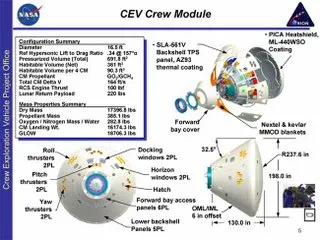
NASA plans to use a new vehicle, Orion, and its new Ares rockets to return to the moon. The space agency hopes to launch Orion for the first time with astronauts by 2014 and return to our satellite before 2020.
Regarding the way to travel, this note is published in Clarín highlighting that the next spacecraft (the Orion capsules), from Lockheed Martin, will be similar to the old Apollo ones.
On Space.com:
Lockheed Martin to Build NASA's Orion Spaceship
Project Orion: NASA's Next Spaceship Takes Shape
on Astoseti:
Proyecto Orión: La próxima nave espacial de la NASA toma forma