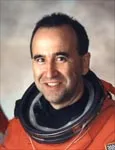
GENERAL INTEREST Interview with Adrian Brunini, deputy director of IALP
The prominent UNLP researcher stated that students, before graduating, already know they want to leave. He spoke about the responsibility of professors. "There are attitudes that lead students to end up thinking that to do good quality science you have to go abroad," he said
Via DiarioHoy de La Plata
Adrián Brunini holds a doctorate in Astronomy and is the deputy director of the Instituto de Astrofísica de La Plata (IALP) of the UNLP. For 25 years he has worked as a professor at the Facultad de Ciencias Astronómicas y Geofísicas of that university and is also a principal researcher for Conicet.
A specialist in the origin and evolution of the solar system, Brunini keeps his feet on the ground when referring to the situation of the local astronomical system. "There are attitudes that lead most students to end up thinking that to do good quality science you have to go abroad," he questioned.
At the same time, he spoke about his recent discovery regarding the origin of the seasons.
-What research is conducted at the Institute?
-At the institute, directed by Juan Carlos Muzzio, around 60 people work. We have several research groups. We cover a very broad field of astrophysics. We study from the closest things, such as planets, including Earth and the moon, to asteroids and comets.
On the other hand, cosmology, the origin of the universe and its evolution, including stars and galaxies.
-What research are you currently working on?
-I lead a group of nine people and we are working on topics related to planets, asteroids, and comets. We investigate the evolution of asteroids, the dynamic evolution of comets, and we are running simulations to try to understand how planets form.
-How are Argentine astronomers positioned compared to their colleagues from other countries?
-I think we are at a great disadvantage. There are many astronomers who work in collaboration with people from abroad. I don't judge them. I don't know if those collaborations are on an equal footing, but generally that's not the case. Especially with the more powerful countries that have very clear development policies, and one of them is to try to render us, as scientists, useless to develop their own interests.
-What do you think should be done to prevent this from happening?
-I believe astronomers from here have to work on their own projects. If one collaborates with others, they have to be shared projects.
-Does the Observatory try to encourage students not to work in collaboration?
-No. There are many signals that show the opposite. There are attitudes that lead most students to end up thinking that to do good quality science you have to go abroad.
-What are those signals?
-For example, national congresses are held and foreigners are invited to give lectures, instead of local people who are of excellent level. So, if a student sees that all the talks are given by foreigners, it's as if they are being told that the people doing serious work are abroad and that you have to go work with them.
-Are many astronomers going abroad?
-Half of the astronomers who graduate leave. Three years before graduating they already know they want to leave. There's a reason for it. And I think that reason is something we professors are instilling in them.
-Do you think they leave because salaries for researchers are low?
-That is not the reason. At some times, yes. Doctoral fellowship salaries abroad are as bad as the ones here. They live month to month more or less like in this country, because they earn more but everything is more expensive. The notion is established that the scientific mecca is in other places.
-And why do they go to other places?
-Generally, they go to developed countries, like the United States and also in Europe, which have doctoral fellowship programs for foreigners.
-What are those fellowships like?
-They are very cheap fellowships. It's the most miserable salary in the scientific system. So, these countries have capable people working on their projects. And out of the hundred who do the doctorate, they keep one, the one they consider the best and most adaptable to their system. The rest have to return and most continue working, for free, on the same projects they developed there.
-Is anything being done so that students don't leave?
-At the faculty, nothing. On the contrary, there are certain attitudes that facilitate students leaving.
Full article in Diario Hoy