By: Héctor Calvito de las Bárcenas
Note from the magazine Todo es Historia No. 326, September 1994
---------------
Can a young country, with meager resources and earthly problems, afford to spend time and money looking at the stars? According to the opinion of the immobilists, such an aspiration was premature and superfluous. The enlightened reformers argued that progress required incorporating the country into the movement of the natural sciences. Astronomy and meteorology should have Argentine citizenship. After all, by looking at the sky, one could think about improving the use of the land.
Next October 24 marks 123 years since the founding of the Astronomical Observatory of Córdoba by the then President of the Argentine Nation, Don Domingo Faustino Sarmiento.
"There is, however, a charge to which I must respond, and which, barely satisfied on one hand, reappears on the other in a new form.
"It is premature or superfluous, it is said, an observatory in nascent peoples and with an exhausted or overburdened treasury. Well, I say that we must renounce the rank of Nation, or the title of civilized people, if we do not take our part in the progress and movement of the natural sciences."
These words, undoubtedly prophetic, were spoken by Sarmiento on the occasion of the ceremony held on that day in 1871.
The First Verifications
Within the lands that later comprised the old territory of the Viceroyalty of the Río de la Plata, in prehistoric times, there existed observatories, the Inti-huatana, in which, using the gnomon in solar observations and reading its shadows, which varied with the seasons of the year and were made on appropriate circular platforms, the indigenous people carried out astronomical observation tasks.
If Posnansky's hypotheses about the ruins of Kalassoya, in Mahuanaco, were confirmed, the so-called building would have been another observatory, certainly of great precision in certain characteristics.
The first observation of an astronomical nature made in the Río de la Plata must be, probably, the one noted by the author of the navigation log of the Dutch ship Silveren Werelt on August 6, 1599, while his ship was anchored near Buenos Aires, offshore, approximately at the latitude of the city of Quilmes. The log indicates that "on August 6 there was a total eclipse of the Moon." Today there is sufficient certainty about the accuracy of the information.
The first observations with a determined scientific character were those carried out by the members of the boundary demarcation commissions with Brazil, at the end of the 18th century, whether in the disputed zones or in Buenos Aires, "on the balconies of the ancestral house of Don Agustín C. Aguirre, located at the southwest corner of the Plaza Mayor, on the street that faced the Cathedral," says Ratto. Previously, in 1745, Father José Quiroga, head of a scientific expedition to the Patagonian coasts, carried out astronomical studies with telescopes he had brought specially from Spain. In 1783, Azara, a member of one of the boundary demarcation commissions, installed an observatory in Buenos Aires, for instrument verification, from which some observations were made. In northeastern Argentina, in the Reduction of San Cosme, a true astronomical observatory operated, under the charge of Father Buenaventura Suárez. He began his tasks in 1706, with instruments built on site, among them, astronomical telescopes "with convex lenses of various graduations, of eight and ten feet which I used in the observations of eclipses of the sun and moon, and the larger ones of thirteen, fourteen, sixteen, eighteen, twenty and twenty-three feet in the immersions (eclipses) of the four satellites of Jupiter, which I observed over a period of thirteen years in the town of San Cosme and the most exact ones reached one hundred and forty-seven."
The observations about the satellites of Jupiter were sent to Europe and used, among many others, for scientific purposes. With the other data obtained, he calculated a lunar almanac with astronomical values from 1740 to December 1841, with the necessary supplements to calculate values until December 1, 1903.
These values, referring to the local meridian of San Cosme, could be transferred to other zones or places, using tables calculated by the priest. As can be seen, a true astronomical work. Until 1750, Father Suárez continued his work with instruments that were sent to him from Europe. Until then, observations of an astronomical type had been carried out occasionally, due to special circumstances, or by the action of one man, as in the case of Father Suárez.
Starting in 1821, when Minister Bernardino Rivadavia organized the University, the installation of an observatory began with the instruments that the greatest authorities in astronomy of the time advised using. -With higher studies, Buenos Aires lit luminaries to enlightenment and ceased to be only a port of lucrative trade, to become a center of scientific attraction; its professors drew the attention of Humboldt, Arago and the Astronomical Society of London."
In May 1822, Rivadavia sent instructions to Paris so that the firm Lauffet and Baillot would contact the directors of the Astronomical Observatory of that capital, professors Arago and Biot, for the purchase of instruments to be used in experimental physics and chemistry. While in Europe, in 1824, he connected with Pedro Carta Molino, who writes to him; "I am a sworn enemy of speculations that consist of nothing more than words, which still constitute a large part of the sciences taught in Europe."
Rivadavia, who in his private library had twelve volumes on astronomy and related topics, including works by Laplace, by Biot and by Jean B. Delambre, advised favorably when, in April 1825, Carta Molino writes to him; "It would also be indispensable to buy some astronomical instruments, either to make astronomical observations, or because there not being a particular course in that science, I believe I do a great service overall by presenting an idea of it in my Physics course," and he added, pointing out their practical utilities; "it is useful, moreover, because it gives a just idea of the system of the world; it is the most effective means to destroy any kind of superstition."
On June 5 of the same year, Carta Molino consulted with—in his words—"one of the best physicists and astronomers in Europe," the aforementioned Domingo F. Arago, about the acquisition of a theodolite, a purchase authorized by Rivadavia on July 2, and later, in response to a report dated July 14, authorized the purchase of other necessary instruments. When inaugurating his chair, Carta Molino said: "It is necessary first to examine phenomena as they appear; sometimes to interrogate nature through experiments; not to rush to establish general principles; to wait for this until a sufficient number of facts are available." And, from then on, the Argentine Republic—with the reduced instrumentation of the old boundary commissions, which Professor Octavio Fabricio Mossotti had repaired, and with those acquired by Carta Molino—began, from the small observatory installed in the upper cells of the Convento de Santo Domingo, to make its real existence known to the scholars of Europe. Several necessary geographic coordinates were determined, and, in addition to the results of six years of meteorological observations used by Humboldt and later by Arago, they were presented to the Institut de France as a contribution of Argentine science.
An astronomical calendar for the year 1832, also the work of Mossotti, was published. Two contributions by him, concerning observations of a solar eclipse and of Comet Encke, made from the cells of the Convento de Santo Domingo, were published in the memoirs of the Royal Astronomical Society of London.
Mossotti returned to his native country in 1834. Those tasks were abandoned and, in the corresponding part, "the lights of enlightenment were extinguished." Shortly after, Juan Manuel de Rosas took charge of the government, in his second stage, having been removed from the first by the defeat inflicted on him by the "federales de categoría," the "botarates de las luces y de los principios," as Ibarguren would say. With Carta Molino and Mossotti, professor of physics and director of the small observatory respectively, gone, the precision, measurement, and observation instruments were abandoned. In 1852, after Caseros, they were found almost destroyed.
Astronomical observations
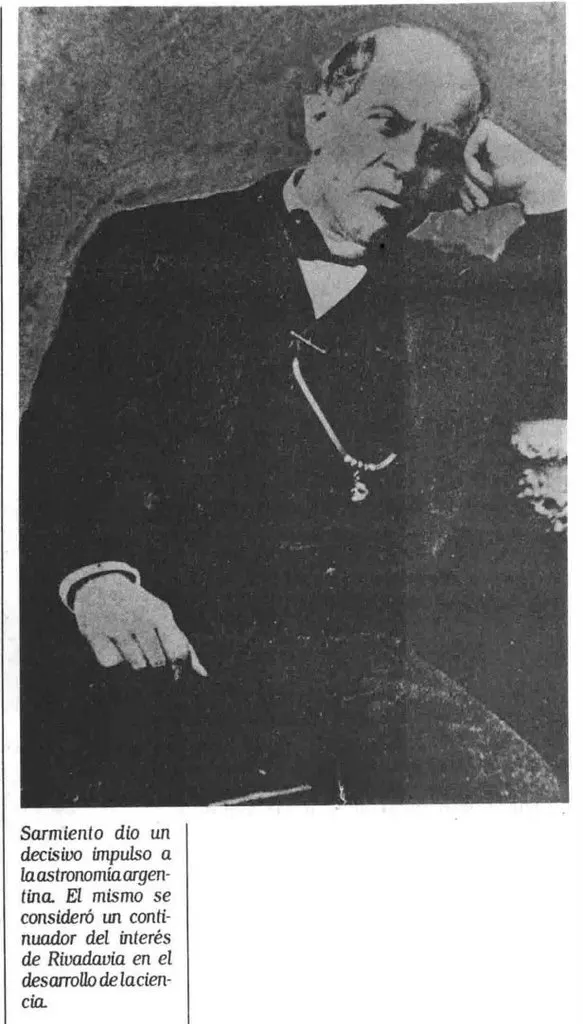
But astronomical studies, approached scientifically, began in our country only during the presidency of Domingo Faustino Sarmiento, and specifically, thanks to his efforts.
In June 1866, Sarmiento wrote: "Rivadavia, my predecessor in efforts to organize the country, returned to England and imported with him the English elements: credit, banks, emigration, responsible government. I could present myself carrying the North American genius, the spirit of go ahead that everyone recognizes in me." And it was precisely in the United States where he realized his idea of the astronomical observatory of Córdoba, which today is a scientific center of great importance among its peers in the world.
His connections with astronomical sciences had originally been with a U.S. Navy lieutenant, named Gillies, in the city of Santiago de Chile, shortly before embarking for Buenos Aires, on the eve of the battle of Caseros.
Later, in 1865, sent by the national government as plenipotentiary minister of the Argentine Republic in Washington, he arrived in New York on May 15 of that year, and because his credentials had been lost, he had to wait for new ones. He did not waste time, however, and in that period, free from his diplomatic status, he began various types of investigations and initiated connections that would last for the rest of his life. On
July 14, he sent a copy of Civilización y barbarie to James C. Watson, a scientist at the University of Michigan Observatory.
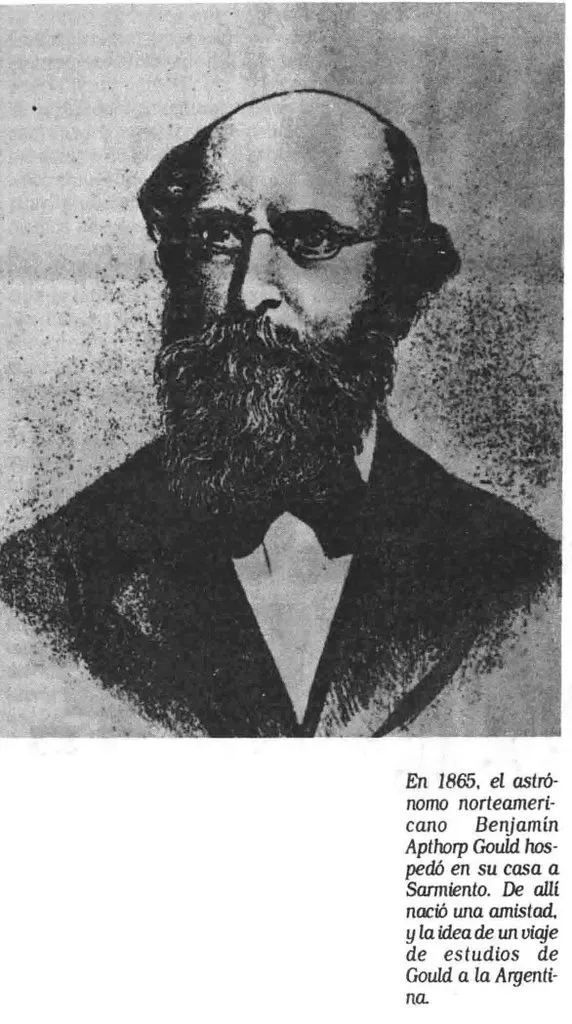
In September he had the opportunity to stay at the home of Dr. Benjamin Apthorp Gould, a distinguished American astronomer, with whom he managed to begin a close friendship.
In October, Gould, who had been a student of famous European astronomers such as Bessel, Argelander, Krüger, and Schönfeld, and who was at that time one of the most active promoters of the nascent American astronomy, wrote to Sarmiento asking for permission and protection to lead an astronomical expedition to Córdoba, in the Argentine Republic, which was to be funded by friends of science in the North American city of Boston.
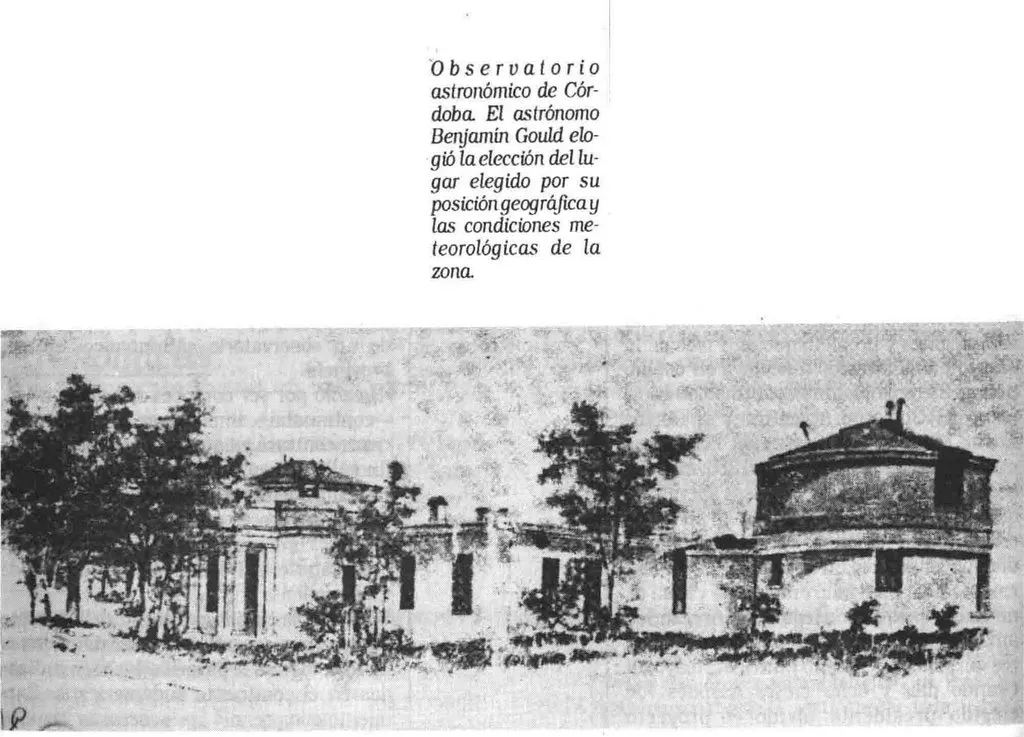
Gould explained in his request that he wished to carry out a three-year astronomical study of the southern sky in the city of Córdoba, "for its geographical position, the purity of its atmosphere, the excellence and healthiness of its climate and the convenient access for the materials required for an observatory."
All the requested material would serve as the basis for the national observatory, once the mentioned task was completed. Gould invoked, when making the request, "how deep is Your Excellency's (Sarmiento's) interest in everything concerning the intellectual progress of the world, as well as of your own Nation."
Sarmiento's response was a very broad offer, so much so that it foresaw the succession in the position of director of the observatory, whenever Gould left.
"His reply—as Gould himself would later say—was the most cordial, responding favorably to all my aspirations and promising even more than I had dared to ask for; in due time a complete confirmation was received from the Argentine Government and Doctor Costa, Minister of Public Instruction in a note dated January 1866, expressed regret because the onerous sacrifices the nation was making in its struggle with the tyrant López of Paraguay prevented it from offering more effective support to the enterprise. My plan then failed due to not being able to obtain the necessary pecuniary assistance; however, Mr. Sarmiento's interest never flagged, nor when eighteen months later he was elected president did he forget the astronomical project among his official concerns, work for education and political affairs. One of his first acts, after assuming the presidency in 1868, was to recommend the creation of a National Observatory. This was voted by the Argentine Congress in its first subsequent session and in the second half of 1869 I received from Doctor Avellaneda, then Minister of Public Instruction, an invitation to organize the permanent National Observatory provided with the necessary buildings and instruments; a sufficient credit was opened to realize the idea in an adequate though modest form."
From the preceding note it is inferred that, at Sarmiento's recommendation, the observatory would have been founded under the government of Bartolomé Mitre, had it not been for the Paraguayan War.
A few months before Gould directed his request to Sarmiento, on February 21, 1866, the lens invented by Rutherford in 1865 was used for the first time in astronomy to take impressions of a group of stars.
Between October 15 and 16, Sarmiento wrote to Aurelia Vélez Sársfield: 'tell tatita to set the Cordobans in motion to have an astronomical observatory. The proposal is real even if I don't put in the necessary heat to incubate it.' This was followed by an account of the nighttime observations he had made with Gould during the period of his stay at the astronomer's residence.
He wrote to Dr. Dalmacio Vélez Sársfield so that he would take 'the necessary steps, as far as Córdoba is concerned, in order to obtain assurances that the idea and the realization of an astronomical observatory' in that province would be received with due interest.
'I address you not only because you are Cordoban,' he continued, 'but because I know how much pleasure you will find in astronomy being finally cultivated in our country.'
He also asked Vélez Sársfield for reports about suitable places on the Cordoban bluffs for the installation of the observatory, as well as for the residence of a family.
Gould had chosen this place because its geographical position and its meteorological conditions seemed to him the most suitable in the South American continent. Sarmiento understood the powerful scientific reasons that had led Gould to communicate with him, and foreseeing the enormous cultural benefit that such an enterprise could have for the country, he promised more than was asked. (Unfortunately, the expedition had to be postponed because neither the friends from Boston nor the Argentine government, engaged in the war with Paraguay, could provide Gould with the necessary means.) At that time, astronomers from the northern hemisphere had completed the exploration of the sky visible from their latitudes. The southern sky, on the other hand, with its rich population of stars, was practically unexplored. Some observations made at the Cape of Good Hope, in Santiago de Chile and in Australia had yielded small catalogs and lists of stars. But what the astronomical world longed to have was a complete record of the position and magnitude of the southern stars within reach of the instruments of the time.
This gigantic exploration was yet to begin, and Benjamin Gould, then in the prime of his life, had decided to carry it out. Sarmiento had been so impressed by his project that he decided to make it a national work.
Putting the project into practice immediately was not possible; it had to be postponed until after Sarmiento's assumption of the presidency of the Nation, on October 12, 1868.
Nevertheless, Sarmiento maintained close contact with the astronomer and his family during that period. He connected him with Argentine families descended from North American families, and sent him Buenos Aires newspapers where his political opponents denied him the authority to recommend the installation of observatories, for lacking university degrees.
In the meantime, Gould traveled to Europe. Sarmiento continued to maintain epistolary contact with him during that year and the next, and even sent him a newspaper denouncing the collaboration that several English technicians were providing to the Paraguayan army, at that time facing ours in the War of the Triple Alliance.
As we had already pointed out, in 1866, Rutherford would have used his special lens to take photographs of the stars. Gould, convinced of its usefulness for highly accurate observations, managed to obtain the original lens for his tasks in Córdoba.
On June 22, 1868, Sarmiento set out on a trip to Buenos Aires. 'We must have a national observatory, directed by Mr. Gould,' he states. 'I will arrange everything necessary there upon my arrival.' He reiterates this in the month of September. On November 21, a month after being president of the Republic, he repeats it once more, along with the news of having decreed twelve schools for the Red. In December he says in turn; 'regards to Mr. Gould, whose moment will come.' Previously he had inquired about costs and informed the astronomer that Congress had interrupted its sessions until May of the following year, making it impossible to deal with the installation of the observatory.
In March 1869 he received budgets and details, which he presented in May, when the sessions opened. In June he communicated that the observatory was included in the budget. In September it had been approved in the Chamber of Deputies, and in October he was able to communicate to Gould that 'he should start preparing.' The budget was twenty-five thousand gold pesos, and included buildings, instruments and salaries. Astronomer Gould was entrusted with the direction, the purchase of telescopes and other apparatus, and the hiring of personnel.
Gould arrived in the city of Córdoba in September 1870, 'with the aim of establishing the observations necessary to form an extensive catalog of the principal fixed stars of the southern hemisphere.' Except for masonry materials, everything else was built in the United States, under the director's plans. Immediately upon his arrival, the task began. With him came the technicians Miles Rock, Juan M. Thome, Guillermo Davis and Clarence Hathaway.
As the delicate material to be installed required protection against the relentless dust storms, he began by transforming the five hectares of woodland that the province had ceded in the surroundings of Córdoba to erect the observatory into a park.
While the instruments were being installed and regulated, the relative magnitudes of the southern stars were carefully determined, in order to form a southern uranometry, similar to the one already existing for the northern hemisphere. The Franco-Prussian War and its consequences hindered the arrival of some materials and books. And as if this were not enough, the ship carrying the meridian circle was quarantined in Rosario due to the yellow fever epidemic. These circumstances forced Gould to postpone the execution of the planned programs, but he nevertheless managed to give rise to one of the most notable astronomical works of the last century, the Uranometría argentina, analogous to the Uranometría nova that Argelander had produced for the northern hemisphere.
Thus, on October 24, 1871, the day President Sarmiento officially inaugurated the Argentine National Observatory, Gould was able to say with satisfaction that they had already observed 7,200 stars, beginning in this way the uninterrupted collaboration of our country with international astronomical science.
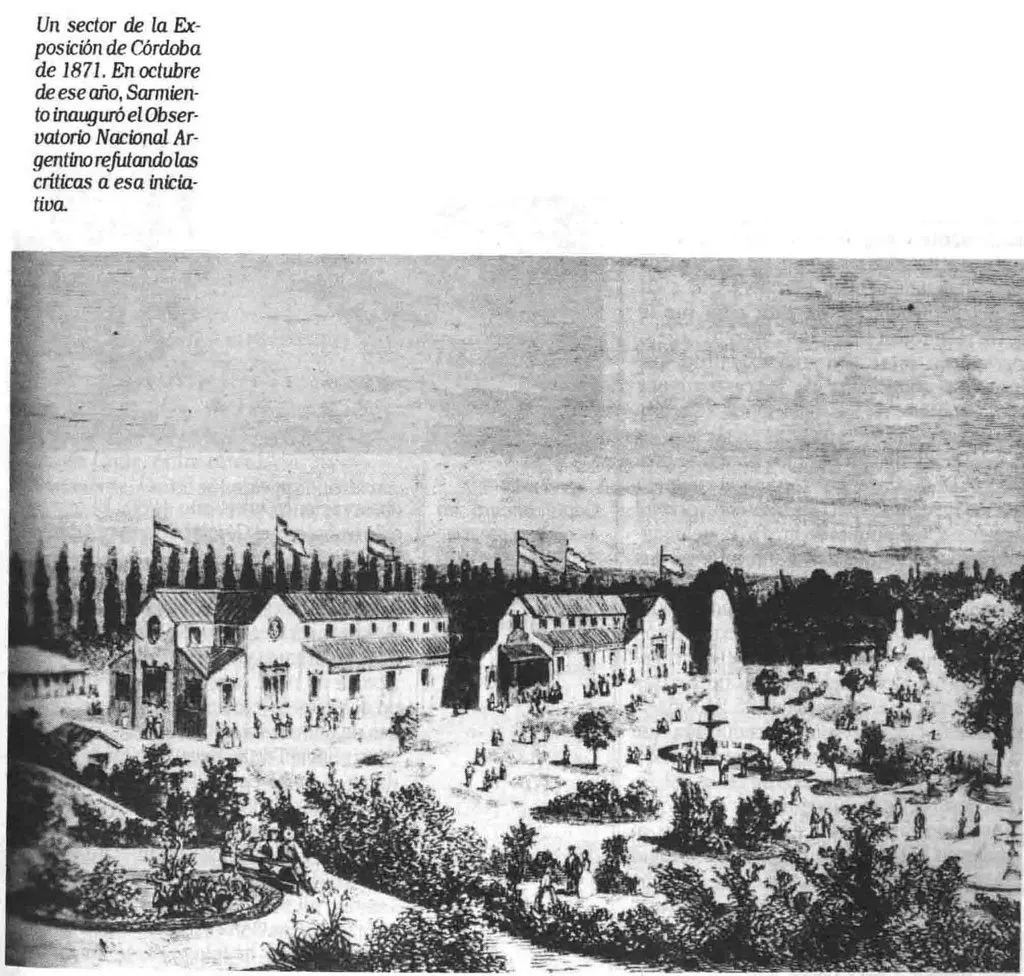
As we already pointed out in the prologue, in the vigorous and prophetic inaugural speech, Sarmiento brilliantly defended himself from the criticisms that the foundation of the observatory had provoked. He said, among other things: "There is, however, a charge to which I must respond, and which, barely satisfied by one part, reappears in another under a new form. It is premature or superfluous, it is said, an observatory in nascent peoples and with a treasury either exhausted or overburdened. And well, I say that we must renounce the rank of Nation, or the title of civilized people, if we do not take our part in the progress and in the movement of the natural sciences." To which he later adds: "when the observatories of the world receive the communications that you will send them and your works belong to the catalog of scientific conquests, your country and ours will feel proud and rewarded for the cooperation they lend each other, to dominate the great and immeasurable expanses, which is your mission to explore and reveal."
The research task that would lead, eight years later, to the appearance of the Uranometría argentina, had begun immediately upon Gould's arrival. With the stars visible to the naked eye, so much so that he, in replying to President Sarmiento's speech, could tell him: "When you raise your eyes tonight, after the moon sets, towards the starry sky, and straining your attention, the smallest stars present themselves to you, one after another, you will not find a single one whose position and magnitude is not already recorded by someone, if not by more than one, of the astronomers of your observatory."
A London publication said of the observatory that it was located "on the heights overlooking the park, where the exhibition was held". The main instruments that formed the observatory's first equipment were a Repsold meridian circle and a 285 mm aperture refractor,
In the southern hemisphere, the Córdoba Observatory was the most important of those years. Astronomer Mullre said: "Suddenly, with Gould's work, the knowledge of the southern sky, which until then had been deficient, was extended and completed in an unexpected way. The Uranometría argentina and the star catalogs of the south are the most precious fruits of Gould's laborious life, which will immortalize his name and assure him the gratitude of astronomers of all times and all countries." Shortly after its inauguration, the Meridian Circle was installed, and observations began shortly thereafter. Gould had brought the original Rutherford lens, which broke during the journey. Sarmiento wrote about it: "We are thinking of repairing the loss, by purchasing another." He also says: "Of all the steps taken by my administration to improve education or advance the civilization of the country, the Astronomical Observatory is the one that promises the most success, thanks to the dedication, talent and instruction of Professor Gould, our friend." For the time being, the damaged lens was mounted in all its parts by the assistants of Mr. Perrin, a skilled watchmaker from Córdoba, says Gould. With it, in 187 a great number of stellar photographs were obtained. The subject of photographers worried Gould. "John A. Heard and Edwin C. Thompson, very skillful photographers, who, suffering from pneumonia, had been forced to seek a dry and warm climate and gladly accepted the opportunity that I was in a position to offer them," says Gould. They worked for several years, and by 1885, twelve hundred photographic plates containing eleven thousand different stars had been obtained. There were also three hundred fifteen plates with photographs of double stars. At the Universal Exposition in Philadelphia in 1876, the Córdoba Observatory won prizes for the beauty of the photographs exhibited, among those of other observatories.
Uranometría Argentina
(Urano: sky; metría: measurement). This work is a catalog of all the southern stars and even the northern ones up to 10 degrees north declination, perceptible to the naked eye --approximately up to the seventh magnitude-- which were observed without any instrument or with a hand telescope, the faintest ones.
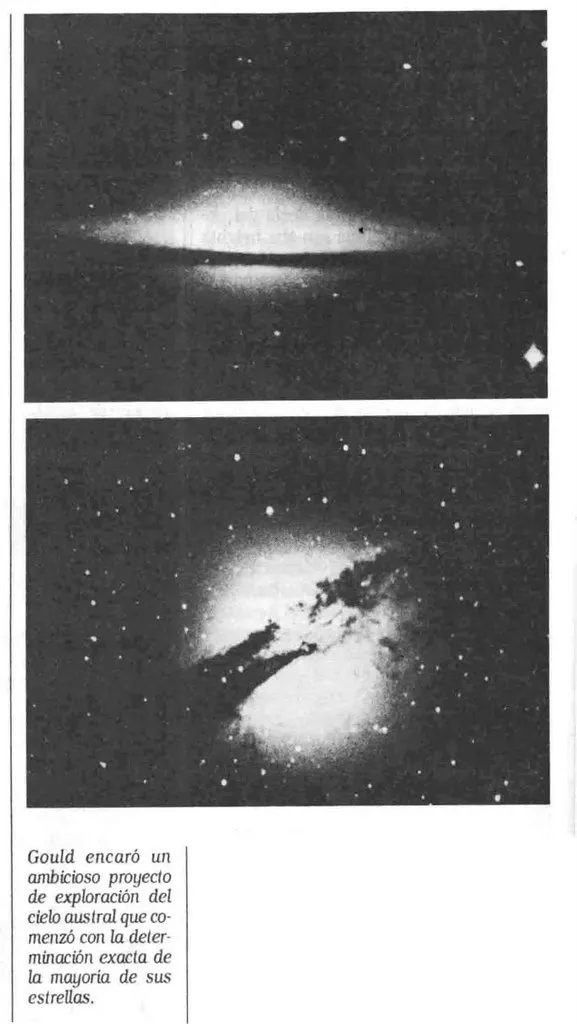
The primary object of this work was the determination of magnitudes, achieving these with an accuracy that caused the admiration of contemporary astronomers. The positions were recorded as they were seen in the sky, on blank maps prepared for this purpose. The catalog, which forms volume I of the Resultados del Observatorio Nacional Argentino, was published in 1879, accompanied by an atlas that had been printed two years earlier.
Almost two years after his arrival, Gould could finally begin the exploration of the southern sky by zones, the main objective of the foundation of the observatory. In three years, the number of 105,240 observations was obtained, whose revision and reduction was completed in 1882, leading in 1884 to the publication of the Catálogo de zonas estelares (Resultados, volumes VII and VIII).
Simultaneously with this work, and at the beginning only in his spare time, Gould began to determine the exact positions of the majority of the southern stars down to magnitude 8 1/2. After finishing the zone observations, he devoted more and more time to this task, concluding the observations in the year 1880. The fruit of this work is the Catálogo General Argentino (Resultados, volume XIV), published in 1886, comparable in importance to that of the zones, but whose positions were determined with much greater precision. To the already described programs, photographic observations of various celestial objects were added, starting in 1872, first of star clusters. This work was a continuation of the research undertaken in the north by Rutherford, who for this purpose had designed his special objective. As we already mentioned, this was brought by Gould to Córdoba to continue the study of the clusters of the southern hemisphere. The difficulties he had to overcome were enormous. It is worth remembering that at that time photography used wet plates, and the particularly dry air of Córdoba ruined many of the exposures, which were necessarily prolonged. Furthermore, one of the lenses of the objective broke during transport, and several years passed before it could be replaced. As if all that were not enough, the photographer hired in the United States "turned out to be unworthy and careless" with the work. Finally, having obtained the services of an expert photographer, the results improved to such an extent that, in the year 1876, a series of lunar and stellar photographs sent by the observatory to the Centennial Exposition in Philadelphia were awarded a prize.
With intervals, the photographic observations continued until 1885, the year of Dr. Gould's resignation from his position as director. Upon returning to his country, Gould took with him the 1350 plates obtained, to whose measurement and reduction he dedicated a large part of the ten years of life that remained to him. At his death, the work was almost finished, and in 1897 it was published in volume XIX of the Resultados. Thus, posthumously, Gould—one of the initiators of photographic astrometry—offered conclusive proof of the goodness of the new procedure, much fought against at that time and even well into the 20th century by many partisans of the classic methods of visual observation.
Also due to Gould is the determination, by means of telegraphy, of the differences in longitude between Córdoba and several important geographical points such as Buenos Aires, Rosario, Río Cuarto, Mendoza and Santiago de Chile, among others.
Initially, Gould had proposed to carry out his programs in three years, but he only managed to complete them after three lustra. The enormous work—represented by fifteen voluminous tomes—carried out between 1870 and 1885, gave, due to its extent and quality, a solid scientific reputation to the Institution in all astronomical circles of the world.
Gould's self-sacrificing and capable collaborators, without whom, as he repeatedly stated, he would never have been able to carry out such a vast work, were, without exception, foreigners, who came to the country attracted by the fame of the great astronomer. Young Argentina, still faced with vital problems of security and material evolution, had not been able to form, in such a short time, a generation of scientific researchers. Consequently, the National Observatory had to rely on workers educated in foreign cultural centers. When Gould concluded his observation programs, and considering that his presence was no longer essential for the good running of the institution, he presented his resignation, even though a large part of his work still remained to be reduced and published.
What the observatory inherited from that brilliant initial period was the tradition of scientific work, which requires the sacrifice of a life with no other compensation than the appreciation and encouragement of a small circle of specialists. That spirit helped it survive multiple subsequent difficulties, periods of apparent inactivity and violent struggles throughout the years of its existence.
The direction of Thome
When Dr. Gould retired from Córdoba in 1885, his main concern was the publication of the work done by him, or under his direction, of which only a part had been published. It was natural, then, that he proposed to the national government as his successor one of his closest collaborators, familiar with his working methods and with the material to be published. That is how Juan M. Thome succeeded him as director of the observatory. Thome had arrived in Córdoba together with Gould in 1870. Without being a career astronomer, he had acquired in the fifteen years of work with the latter deep knowledge in the subject, and had replaced him in the direction of the observations during his prolonged absences from Córdoba.
The collaboration between the two continued, for Gould, from the United States, continued directing the publication of the most important works until his death, which occurred in 1896.
Then Thome published, in eight volumes, the remaining material. At the same time he initiated the program of the Córdoba Durchmusterung, which had been projected by Gould himself. Thome managed to observe, until his death, almost nine tenths of the total work. The first three volumes were published between 1892 and 1900. Then the pace of work declined. The situation of the observatory had become difficult. There was no personal contact between the ministerial authorities and the observatory's direction.
The country was going through critical moments; revolutions and threats of war diminished the financial support for the observatory. In the initial period there had always been at least four assistants, almost all educated abroad. Thome, as director, had to resort for many years to the help of his wife to carry out the observations for the Durchmusterung, for in the observatory there was only one assistant available.
By then another adverse factor presented itself. The atmospheric conditions, from the astronomical point of view, worsened. The number of nights suitable for astronomical observations decreased, making the obtaining of material slower. Despite everything, between the years 1885 and 1890 the observations for volume XX, a continuation of the General Catalogue, were completed. In 1891 another program was started: the observation of the catalogues of the Astronomische Gesellschaft, of which, under Thome's direction, the material for volumes A, B and C was observed. Starting in 1895 the observatory published annually ephemerides of circumpolar and time stars, intended to serve as a guide for surveyors and geodesists, a practice that continued until the year 1917. In 1900, when Thome made a trip to participate in the Astronomical Congress in Paris, the government provided him with the necessary funds to purchase an astrographic telescope of the international type. This acquisition made it possible for the Córdoba Observatory to take part in the international program of the "Carte du Ciel", whose object was to make a photographic map of the entire sky and at the same time obtain the positions of the stars for the so-called Astrographic Catalogue.
As soon as the new instrument was installed, the taking and measurement of the photographs began, but Thome did not live to see the fruits of this work. The observation of asteroids and comets as a regular program was also actively continued by Thome, who managed to discover a comet that bears his name.
The third director
In 1908, Juan M. Thome died suddenly. His position was occupied, from 1909, by Dr. Charles Dillon Perrine, an American astronomer from Lick Observatory, an expert in celestial photography and famous as the discoverer of two satellites of Jupiter. Perrine too, upon taking charge of his duties, found a great amount of unpublished astronomical material, which he published between 1911 and 1925. He also found, unfinished, the program of the Durchmusterung and the work of the Carte du Ciel. While Thome's original observations for the fourth part of the Durchmusterung were published in 1914, the final installment was completed in 1932, twenty-four years after the death of its initiator. The second of the programs begun, that of the Carte du Ciel, was resumed in 1909. Its result, the Astrographic Catalogue of Córdoba, comprised eight volumes and a supplementary volume that appeared in 1934. The second part of the program, the production of celestial maps, was reduced to a single zone. The technique adopted by the International Commission of the Carte du Ciel for these maps had not yielded the expected results, as more modern and satisfactory procedures had been invented in the many years that had passed since the work began. Therefore Córdoba, along with other observatories committed to the program, resolved not to continue the production of these maps. However, the astrographic telescope continued to be extremely useful for observations of comets and asteroids.
During the directorship of Dr. Perrine, astronomer Zimmer observed a group of seven hundred sixty-one stars that formed the two fundamental catalogues of the observatory, published in 1929 and 1941 respectively.
All the work of the Córdoba Observatory described up to here pertains to the field of classical astronomy, which covers, mainly, the determination of the positions and magnitudes of stars and the calculation of orbits of celestial objects.
In the second half of the last century a new branch of astronomy began to develop: astrophysics. Perrine arrived in Córdoba with the idea of orienting the observatory's future work towards astrophysical research, as was happening in several large northern observatories. For this purpose, the existing instrumentation was no longer adequate. He therefore planned the creation of an astrophysical station in the hills of Córdoba, whose main instrument was to be a reflecting telescope with a 154 cm aperture. Given the circumstances, the attempts to carry out this vast and audacious project absorbed a large part of his personal strength and the available financial resources.
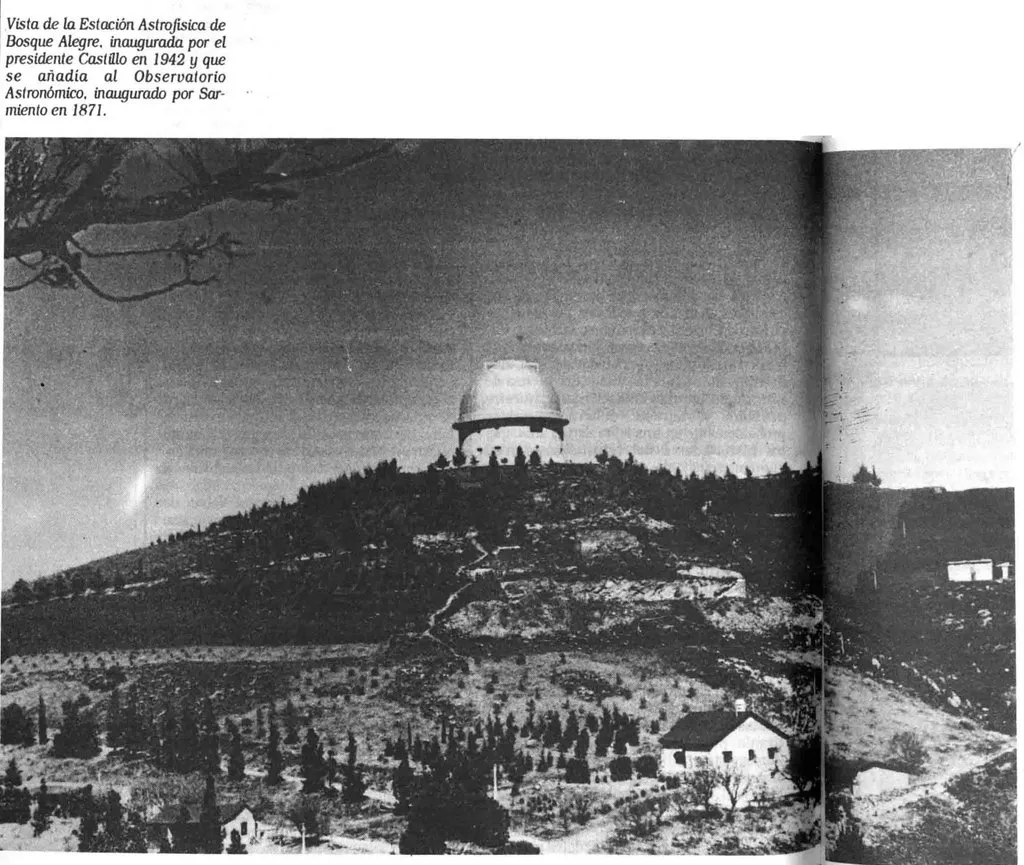
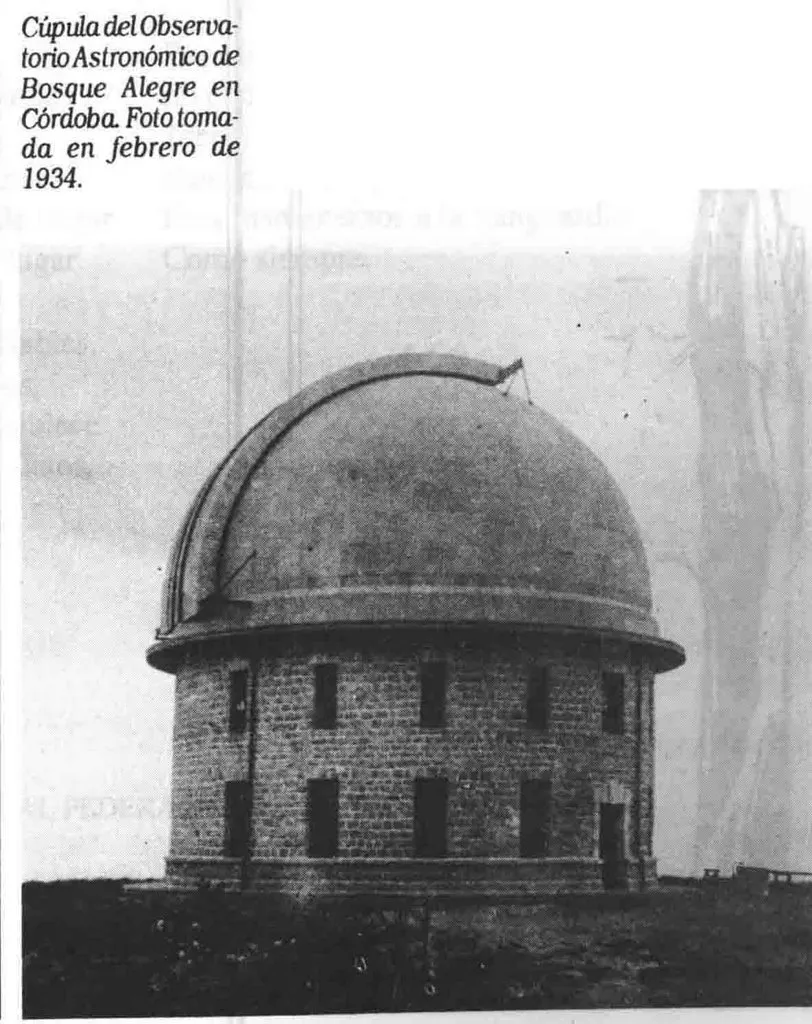
For the new station, land donated for this purpose by the owners of the Bosque Alegre ranch was used, at an altitude of one thousand two hundred fifty meters and fifty-three kilometers from the city of Córdoba.
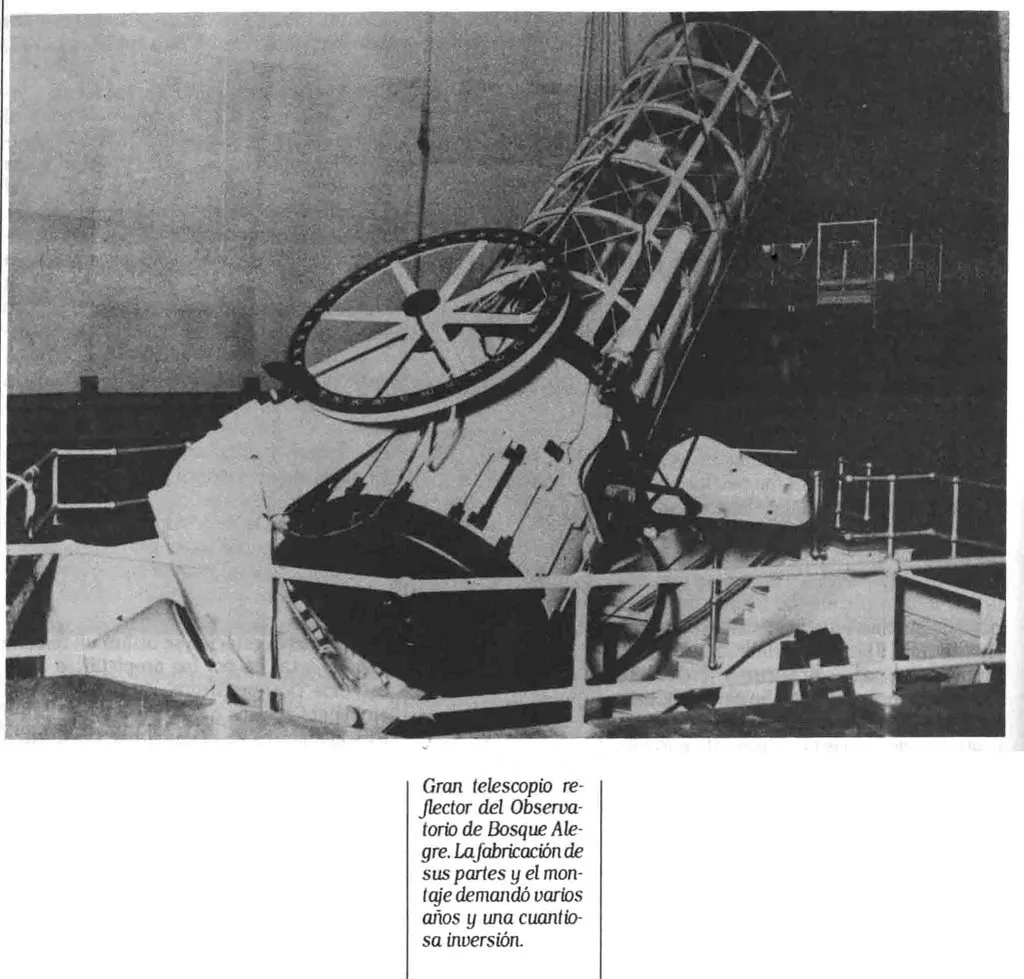
In 1912, Perrine obtained from the Nation the necessary funds to acquire a large glass disk with dimensions of: 155 cm in diameter and 20 cm thick, weighing one ton. This disk, once optimally worked --configured-- was to become the objective, the primary mirror of the large telescope. Years later, he commissioned in the United States the mechanical part of the instrument and a rotating dome 19 meters in diameter. Subsequently, the National Directorate of Architecture installed said dome on a beautiful and spacious building.
When the project for the large reflector was conceived, there existed in the entire world only one telescope of equal dimensions: the one at Mount Wilson, in the United States. The optician involved in its construction was perhaps the only one capable of configuring another like it. Therefore, Perrine's idea of carrying out this task in the rudimentary Córdoba workshops, without expert personnel, was destined to fail, a fact that delayed the experience of the next 25 years.
Given the slowness of the preparations to put the astrophysical station into operation, Perrine left the astrometric programs in the hands of his collaborators and tried to carry out the first astrophysical investigations with the instrumentation, inadequate for these purposes, available in Córdoba. Thus the situation of the observatory in the first years of the century was repeated; the eagerness to elevate it to a scientific level comparable to the best similar institutes in the world was far ahead of the technical possibilities.
As the primitive constructions on the grounds of the Córdoba observatory were insufficient and outdated, a spacious building was erected during Perrine's directorship, equipped with five domes and numerous rooms for offices, studies, library and workshops, which it was thought could satisfy the institute's needs for many years.
Having obtained the necessary funds from the Argentine government, Perrine commissioned a 154 cm mount from Wagner and Swasey, and molded glass disks from St. Gobain, which would serve to configure the parabolic mirror of the future reflecting telescope.
Finally, the roughing work and control of the optical surface of the new mirror was carried out in 1939, by Fecker, in Pittsburgh, on the order of Perrine's successor, Mr. Juan José Nissen.
The old astrometric tradition was not neglected with the advent of astrophysics and the installation of the new telescope. On the contrary, under the direction of Charles Perrine, as we have already established, the so-called Carte du Ciel was brought to a successful conclusion, a work of incalculable scientific value, which consisted of applying photography to the survey of a great chart, or rather, a series of charts, that would cover the sky down to a magnitude considerably fainter than the limit of existing or in-preparation charts.
Córdoba contributed to the "Carte du Ciel" with the publication of eight volumes covering the zones -24° to -31°.
After Perrine
In 1936, Dr. Charles Perrine retired. Since then the directorship of the observatory has been in the hands of Argentine men of science. Engineer Félix Aguilar, then director of La Plata Observatory, acted as interim head of the institution until the appointment of Mr. Juan J. Nissen in 1937.
During the three years of Nissen's directorship, in addition to continuing the ongoing astrometric programs, the main efforts were directed at finishing the Astrophysical Station. Given the substantial sums already invested and the national importance that the commissioning of the large telescope promised to have ---considered large even 25 years after it had been planned---, the project had found supporters in official and private circles beyond the strictly astronomical field. Fortunately, the installations made on the Bosque Alegre land had escaped ruin thanks to the self-denial and sense of responsibility of some employees of the observatory. The large glass disk was still unfinished in those days. The completed objective was delivered in 1940.
During Nissen's directorship, an important contribution was made to world astronomy. Thirty-six observatories distributed around the world were in charge of determining the orbit of Eros as a means to more accurately determine the Earth-Sun distance. This task earned the Córdoba Observatory, together with the one in Cape Town, praise for the great precision of the results obtained.
In 1940, Juan J. Nissen retired from the directorship. He was succeeded in the position by the deputy director, Dr. Enrique Gaviola, to whose drive and dedication it is owed that the 154-centimeter diameter telescope was finally put into operation. This new director gave great impetus to the mechanical and optical workshops, raising them to the level of the problems that needed to be solved. The need to enable Bosque Alegre in the shortest time and with the least possible means made the workshops evolve, whose traditional function was to repair damage and make secondary repairs, so that they were able to build high-precision optical and mechanical parts, making the observatory independent regarding the importation of such apparatus. Among the works of the mechanical workshop was the construction of the platform used for observation at the primary focus.
On Sunday, July 5, 1942, at 12 noon, with engineer Rodolfo Martínez as rector of the National University of Córdoba, the inauguration of the brand-new telescope finally took place, with the attendance at the event of the President of the Nation, Ramón S. Castillo, the Governor of Córdoba, Santiago H. del Castillo, the ambassadors of Uruguay, Chile, Bolivia and Brazil, and numerous scientific and political personalities.
The event, of great importance, placed Sarmiento's legacy on an equal footing with its counterparts around the world and even more, as the first in the southern hemisphere capable of investigating extragalactic objects.
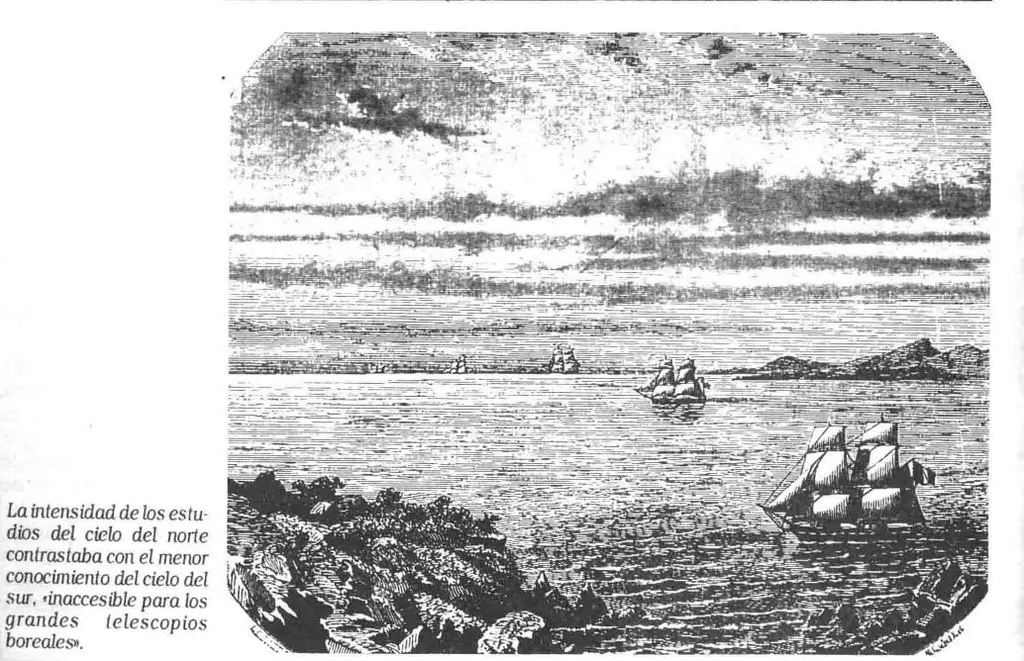
These are part of the words spoken on that occasion by the Minister of Justice and Public Instruction of the Nation, Guillermo Rothe: 'With respect to astrophysics, the same situation exists as existed in 1870 with respect to positional astronomy. The northern sky has been and continues to be intensely studied, but the southern sky, inaccessible to the great northern telescopes, remains almost unexplored.'
'Córdoba is now offered the possibility of contributing to world science in the field of astrophysics in the highly honorable way in which it contributed to astronomy sixty years ago. The National Government, with this purpose, added to its prestigious observatory the Bosque Alegre Astrophysical Station that we inaugurate, whose main instrument consists of the great one-and-a-half meter reflector (...). After a long time of studies in various sites of the sierras, this place in the Cumbres Chicas at 1,250 meters above sea level was preferred (...),'
'In placing such a precious research instrument in the hands of the prestigious director of the observatory, the State destines it primarily to disinterested studies, with the certainty that the lofty speculations of astronomy, so fascinating in themselves, will contribute to completing public culture and to giving prestige with the importance of its contributions to the Argentine name in universal science.' The director of the observatory responded to these words: 'The attendance of such elevated and illustrious personalities at this event is a very high honor and a powerful stimulus for us astronomers, technicians, assistants and servants of the observatory. It would be too easy to express our gratitude with words. Easy and inadequate. Our gratitude must be shown with the scientific work expected of us. We remain, therefore, today, in debt for the very high honor with which we have been graced, a debt that we will pay off to the extent that we dedicate our energies, our capacity and our will to the clear purpose of making this Astrophysical Station and the Córdoba Observatory, of which it is a part, one of the foremost centers of astronomical science in the southern hemisphere. If we do not achieve it, we would have betrayed the trust that the Nation has placed in us.'
The thought contained in the words of Dr. Enrique Gaviola was the tone that governed the scientific work developed in the following years. The year 1971, which marked the centenary of the institution, found the Córdoba Observatory in a privileged position within the world concert of observatories.
After Gaviola came the names of Platzeck, Sahade, Bobone, Cratton, Landi Dessy, José Luis Sersic, and finally Gustavo Carranza, from 1983 to the present, who, following in the footsteps of their predecessors, day by day raised in the consideration of the scientific world the work carried out by the observatory, which at first had depended on the Ministry of Justice and Public Instruction of the Nation, and from 1955 onwards came to depend on the National University of Córdoba. The initiative of the work with the great telescope largely filled the needs of astrophysics in our hemisphere, just as 70 years earlier the first works of the observatory covered the existing gap in classical astronomy.
Two former directors of the observatory have been vice-presidents of the International Astronomical Union, and also five of its astronomers are currently members of as many commissions of the same organization.
The recognition of the observatory's work, outside the academic sphere, has also materialized in numerous national and foreign grants awarded to the institution or to the researchers working there, which has allowed maintaining a reasonable work pace despite the critical economic situations it has gone through in its long life.
The present
Within the scope of the University, the Córdoba Astronomical Observatory is an institute that depends directly on the rector's office. Given its condition as a basic research center, this organic relationship with the university leadership is the only viable way to develop this specific activity.
The observatory is physically composed of its central building and auxiliary facilities (mechanical and optical workshops) located on the Laprida street property in the city of Córdoba, as well as the Bosque Alegre Astrophysical Station situated in the Cumbres Chicas, 60 kilometers from Córdoba. This station houses the largest reflecting telescope existing in Latin America and is funded with entirely local funds. The aforementioned instrument, whose main optical piece has a diameter of 154 cm, was considerably modernized in the sixties, equipping it with accessories that make it more efficient in its fundamental task, which is to collect the light of distant objects at its optical foci. The Astrophysical Station has lodging facilities for local and visiting astronomers, both from the country and abroad.
The observatory is currently engaged in changing the main optical piece of the telescope for another made of material with a very low coefficient of expansion, for which it has requested funds from the National Secretariat of State for Science and Technology, through the University Research Council. The La Plata Astronomical Observatory has committed its collaboration for the figuring of the new glass in its workshops, with the indispensable collaboration of local personnel.
After a long exploratory campaign that lasted almost a decade, the region called 'El Leoncito', in the Calingasta valley, province of San Juan, has turned out to be the one with the best sky quality in the country. The Córdoba Observatory, together with the University of San Juan Observatory and through an agreement, has installed a 76 cm reflecting telescope in that location. Its intensive use as a telescope suitable for photoelectric photometry is just beginning, with very good performance.
The design and construction of the modern telescope structure was carried out by technicians and engineers from the observatory, at minimal cost, in a true example that often ingenuity and will are the best substitutes for scarcity.
The utilization of what has come to be called the 'El Leoncito Astronomical Complex', through the installation of a 214 cm telescope purchased a decade ago by the National University of La Plata, has led to the formation of a working group from the Secretariat of State for Science and Technology, made up of representatives from said secretariat, the National University of La Plata, the National University of San Juan and, of course, the National University of Córdoba. After a year of intense activity in which the Córdoba Observatory made significant contributions, the installation of the new telescope for use by the astronomical community has already been put out to tender and rapid progress is being made in inter-institutional programs to equip the new observatory with the most modern facilities.
Teaching activity
The astronomers of the observatory provide their collaboration as astronomy professors at the Institute of Mathematics, Astronomy and Physics. Furthermore, they welcome, in their respective working groups within the observatory, advanced students and graduates in astronomy from said institute, so that they can carry out their thesis work and begin research. It can be stated that at the observatory, postgraduate teaching receives very special emphasis, as it is this that will ultimately define the true orientation of the graduates.
Meteorological observations
For their part, meteorological observations began in our country in the city of Buenos Aires, in 1801, with readings of thermometers and barometers and notes on the state of the wind and atmosphere, from August 1 to September 24, the first ones. They continued in 1805, continued by Cerviño. They were interrupted until 1817, when they resumed until 1821, continuing until June 1823. They comprised three daily readings of barometers and thermometers. At 12 o'clock, hygrometers and state of the weather and wind direction. In November 1829, the Topographic Department began its work, continuing it until December 1830. They were followed by those of Octavio F. Mossotti, from 1831 to 1835, first in the Convent of Santo Domingo and then in the lookout of a house numbered 24 at the time, on Calle de Mayo (25 de Mayo between Rivadavia and Bartolomé Mitre). From September 1853 until March of the following year and from May 1855 to January 1856, Dr. Kennedy carried out meteorological observations. They are followed by those of Manuel Eguía, from the beginning of 1856 until the end of 1875.
They were continued by Professor Emilio Rosetti of the Colegio Nacional, until the end of 1897. To these were added those that were carried out in parallel at 2156 Independencia street, performing simultaneous operations with those of the Colegio Nacional and continuing them until September 1902. In 1901, others began, between the outer part of dock number 4 and the outer wall, which continued until April 1908. In January of that year, the Villa Ortúzar observatory was installed. Since 1894, in all these installations, automatic recording instruments were used. When Gould arrived in the country, he learned that the prevailing climatic and meteorological conditions in Argentina were practically unknown. Therefore, he suggested to the government, in 1872, the organization of the Meteorological Office, which he directed ad honorem. Given the personal link of the Córdoba institute with the Meteorological Office, the observatory also carried out, during the first years, observations of this type as a local station.
On a national level, Gould's proposal to create a national meteorological service was favorably received by President Sarmiento, given 'the theoretical and practical, scientific and economic importance of these studies which are also related to valuable and visible interests.
The National Meteorological Office, created in 1873, annexed to the Córdoba Observatory. The office moved to Buenos Aires in 19,01. The total unification of the values obtained by each of the stations, with great advantage due to their coordination, was achieved in 1935 when the old Meteorological Office was transformed into the Directorate of Meteorology, Geophysics and Hydrology, and later into the National Meteorological Service of the Ministry of Technical Affairs, which centralized and published the results recorded by a wide network of observatories and stations ranging from La Quiaca to Antarctica and from the Atlantic to the Andes, centralizing aerological services to facilitate air navigation, having climatology, agricultural meteorology, etc. services, and also in addition to its charge the seismometric and geomagnetic services, as well as the pluviometric and hydrometric ones.
-------------
Captions
Page 8:
View of the Bosque Alegre Astrophysical Station, inaugurated by President Castillo in 1942 and added to the Astronomical Observatory, inaugurated by Sarmiento in 1871.
Page 10:
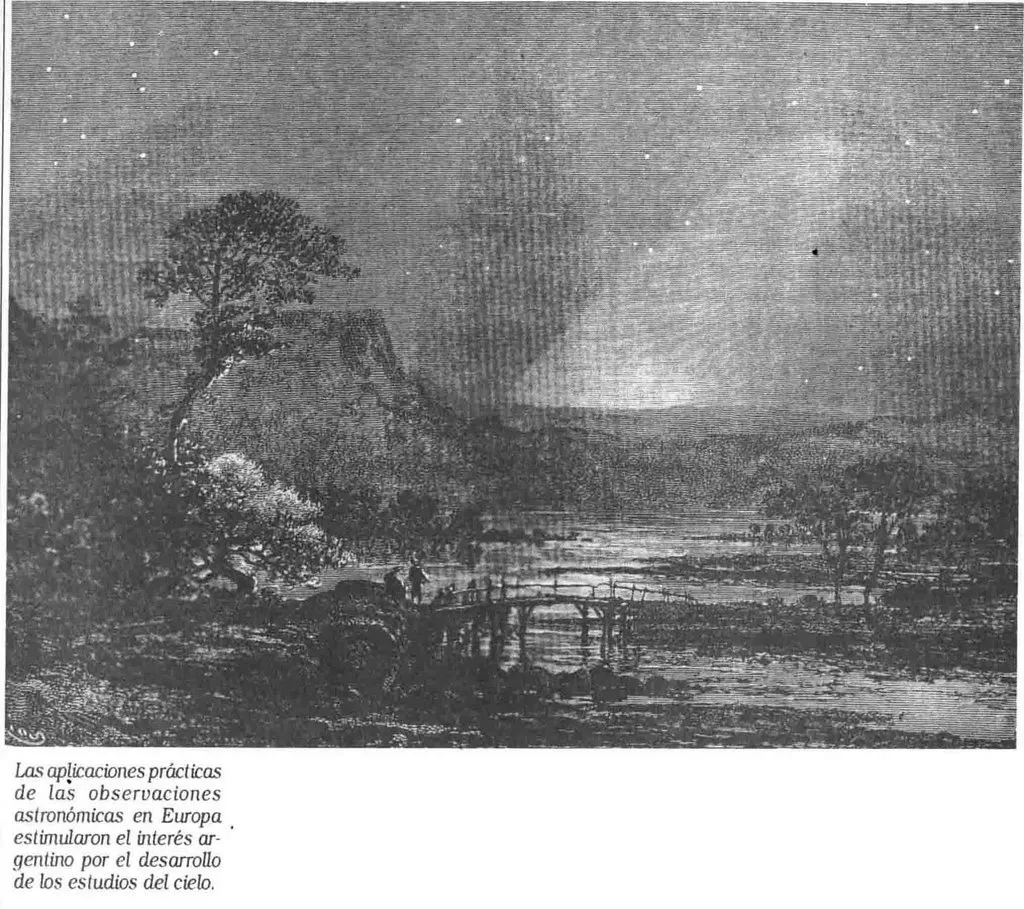
The practical applications of astronomical observations in Europe stimulated Argentine interest in the development of sky studies.
The intensity of studies of the northern sky contrasted with the lesser knowledge of the southern sky, "inaccessible to the great northern telescopes"
Page 12:
Sarmiento gave a decisive boost to Argentine astronomy. He considered himself a continuator of Rivadavia's interest in the development of science
Page 14:
Astronomical Observatory of Córdoba. The astronomer Benjamin Gould praised the choice of the selected place for its geographical position and the meteorological conditions of the area.
Page 16:
In 1865, the American astronomer Benjamin Apthorp Gould hosted Sarmiento in his home. From there a friendship was born and the idea of a study trip by Gould to Argentina
Page 17:
A sector of the Córdoba Exposition of 1871. In October of that year, Sarmiento inaugurated the Argentine National Observatory, refuting the criticisms of that initiative.
Page 18
Gould undertook an ambitious project to explore the southern sky that began with the exact determination of the majority of its stars.
Page 19:
Galaxy located about eight million light-years away. Starting from the Córdoba Observatory and the work of Gould, knowledge of the southern sky improved notably.
Page 20:
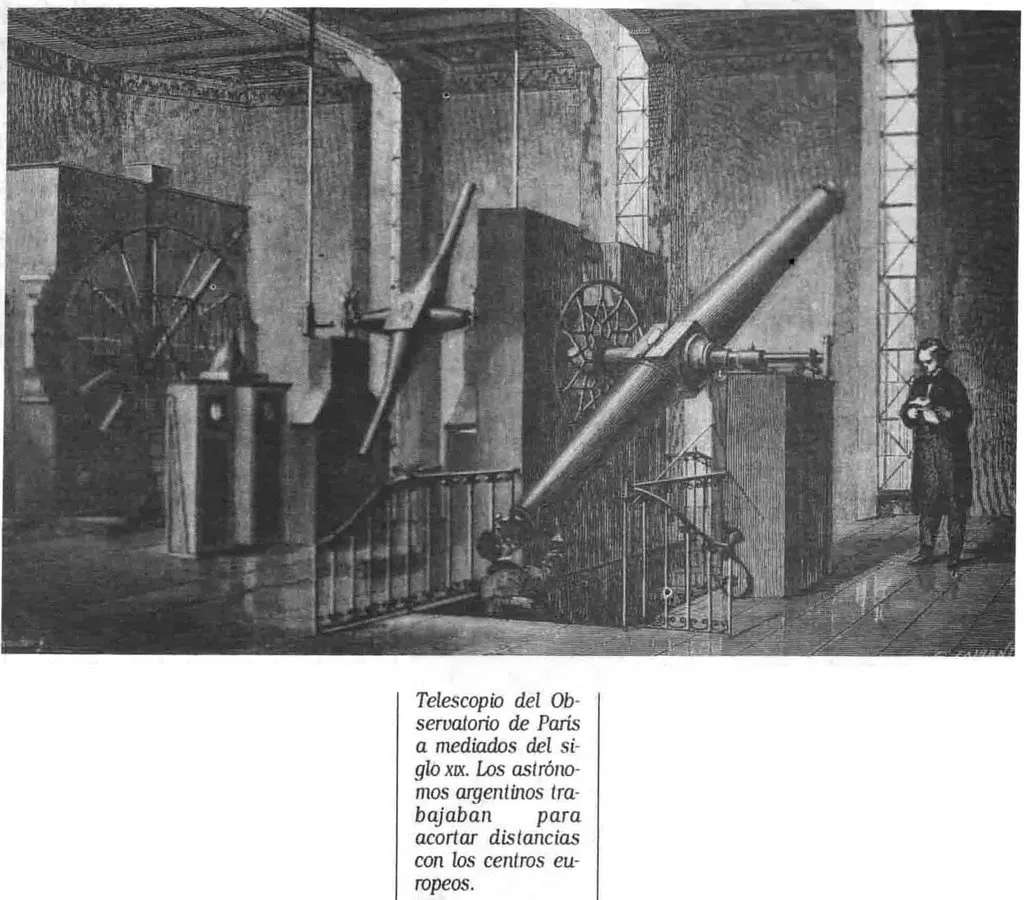
Telescope of the Paris Observatory in the mid-19th century. Argentine astronomers worked to shorten distances with European centers.
Interior view of a crater.
Page 22:
Large reflecting telescope of the Bosque Alegre Observatory. The manufacture of its parts and assembly took several years and a substantial investment.
Page 25:
Dome of the Bosque Alegre Astronomical Observatory in Córdoba. Photo taken in February 1934.