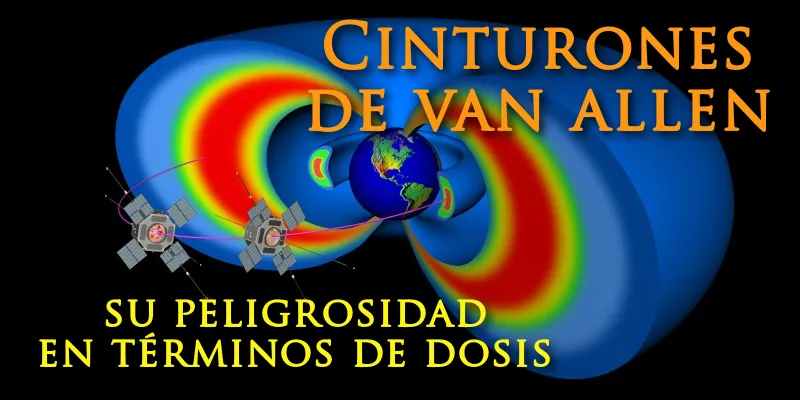
The scientific authorities of NASA, the United States space agency, have turned their attention to cosmic radiation, a danger that could threaten the future of space travel.
Via Terra
Two years ago, U.S. President George W. Bush announced that the U.S. would put a man back on the Moon by the end of the next decade and that, afterwards, it would prepare manned missions to other planets, including Mars.
Regarding those plans, the National Aeronautics and Space Administration (NASA) has already begun designing the future spacecraft, while construction continues on the International Space Station (ISS), one of the platforms for future missions that is protected by Earth's magnetic belt.
At the same time, its scientists are considering the dangers that astronauts could face, including the lack of medical attention, the psychosocial pressures of a journey that will last not months but years, and the loss of muscle and bone mass as a result of space weightlessness.
Until now, the danger of radiation from cosmic particles that would bombard a spacecraft beyond Earth's orbit was considered last.
However, a report from the National Research Council released this week indicated that scientists at the U.S. space agency must step up efforts to understand and protect astronauts from radiation consisting of cosmic rays and solar winds.
The particles from that radiation pass through the human body and can destroy a person's DNA in cells that can lose their normal function and the ability to heal themselves, according to John Charles, a physicist specializing in space travel on the portal spaceref.com.
Even more dangerous is galactic radiation, a shower of ions produced by the explosion of supernovae that travel through space at the speed of light.
According to scientists, those particles induce cancer as they pass through a person's body.
On Earth, the planet's magnetic field and atmosphere block the passage of those particles, against which the spacecraft of the future will have to protect themselves.
In current ones, the protective shield only reduces the danger by between 20 and 30 percent, according to Frank Cucinotta, of the Radiation Health Project at NASA's Johnson Space Center in Houston, Texas.
Therefore, 'it is necessary that we have a full understanding of the biological effects of the heavy ions' that are part of that radiation, he adds.
For his part, Daniel Baker, from the Laboratory for Atmospheric and Space Physics at the University of Colorado (USA), told the Fox television network that by reducing the uncertainty 'about the biological effect of radiation...we could improve confidence in what we can do and cannot do,'
Baker, who participated in preparing the report, added that scientists must improve space weather forecasting instruments to ensure the protection of astronauts on space journeys.
During the missions of the Apollo program that took man to the Moon in the late 1960s, astronauts spent less than two weeks in space on each of them.
But now, trips to Earth's natural satellite will last several weeks and those that will be made to Mars will last months and even years.
'All of that increases the time that astronauts could be exposed to potentially dangerous solar wind phenomena,' according to Baker.
The warnings about the dangers of cosmic radiation and the need to investigate it thoroughly have not gone unnoticed by NASA.
The U.S. space agency announced last month the selection of 12 research projects to increase knowledge and reduce the risk for future astronauts.
And this week it launched the STEREO mission (Solar Terrestrial Relations Observatory) whose two capsules, which will operate in separate orbits, will observe the turbulence of high-energy particles that occur in the solar corona.
'I think they are very timely and will contribute to achieving the objectives and solving the problems raised in our report,' Baker stated in reference to STEREO and the studies on radiation.
Terra Actualidad - EFE
-------
See also NASA launched two satellites