Truths and lies about the radiation belts.
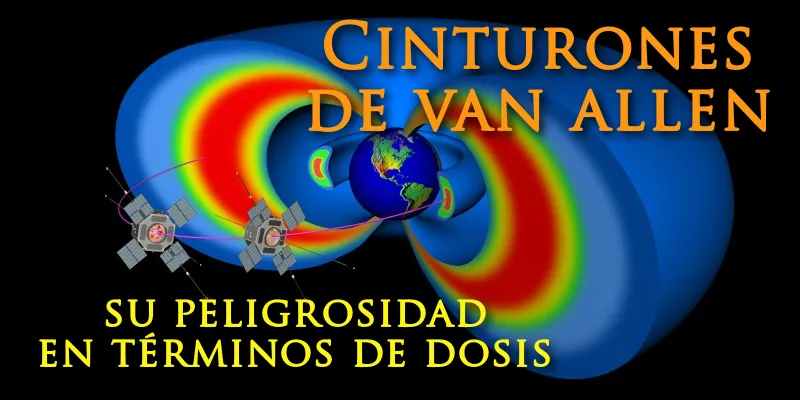
Some people say that the Van Allen belts, which surround Earth, prevent space exploration, so all the data collected in the last 60 years is a hoax carried out by an international conspiracy of scientists.
The truth is very different. Yes, such radiation exists, but it does not prevent space exploration, although it is dangerous. How dangerous? How is that danger measured?
The story goes that almost 60 years ago, a Geiger counter began to sound quickly. The device was on board the first U.S. spacecraft, Explorer 1, launched a few months after the Soviets began the Space Age with Sputnik 1 and 2.
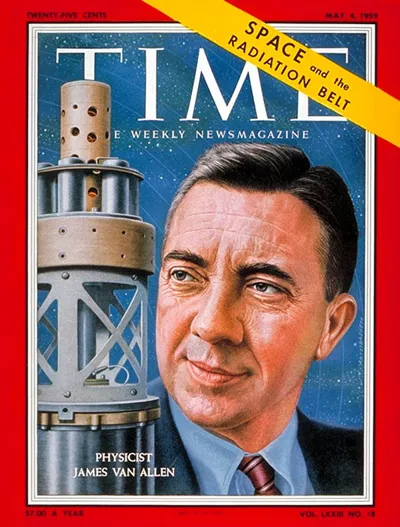
The mission was not intended to discover that radiation, but to investigate cosmic rays. But what that spacecraft detected far exceeded expectations, as it was not just cosmic rays, but the first evidence of what is now called "Radiation Belts." The scientist in charge was named Van Allen, so the region is also called the "Van Allen Belts."
Therefore, not only does this radiation not prevent space exploration, but it is thanks to it that the existence of these radiation zones was discovered.
At first, two regions were found, an outer belt and an inner one. The outer belt is composed of billions of high-energy particles from the Sun, trapped in Earth's magnetic field, the magnetosphere. They extend from about 15,000 km above the surface. The inner belt results from the interaction of cosmic rays with the atmosphere. Satellites orbiting in these regions can be damaged. This radiation is also dangerous to health, for example for astronauts. It extends from 500 km above the surface to 5,000 km.
The inner belt interferes with the International Space Station and the Hubble Space Telescope, located at 400 and 540 km in altitude, respectively, due to the South Atlantic Anomaly. This is an area where Earth's magnetic field is closer to the surface and, therefore, it is a region where the radiation from the inner belt is also closer. When Hubble passes through this region, its instruments are turned off.
To reach the Moon, the Apollo missions passed through the inner belt for about an hour on each trip (outbound).
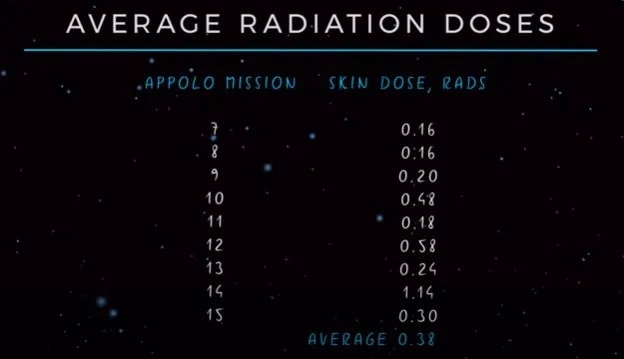
Fig. 2: average radiation dose in rads, for the Apollo missions. Source: Seeker/YouTube.
The investigation of these radiation zones that began in 1958 was continued throughout all these years, not only by the U.S. Several other spacecraft, from other countries, also detected these radiation zones. And in all cases, it was thanks to spacecraft.
In 2012, NASA launched the Van Allen Probes, two twin spacecraft to study the dynamics of the region. Equipped with the appropriate instruments and the necessary protection, researchers managed to collect new data to discover, among other things, that during periods of higher solar activity, a third belt appears.
THE VAN ALLEN PROBES
Also known as RBSP (Radiation Belt Storm Probes), these probes are an excellent way to explain how these regions can be studied despite their danger.
On the probes' site created by the physics laboratory at Johns Hopkins University there is a page for students. There is a "Design Challenge," which is a kind of game that informs through texts and videos (all in English) about the challenges of creating a spacecraft and its instruments. Finally, the user must answer a brief questionnaire to decide how to design the spacecraft. The idea is to explain basic issues. I will use that outreach game as a basis.
RADIATION: CATEGORIES
There are different ways to classify radiation. Radiation is light, which can be thought of as an electromagnetic wave or as a particle. So radiation can be divided as waves of different wavelengths, frequencies and energies or as particles of different energies.
Another way to classify radiation is by its origin: cosmic rays, Earth's magnetic field, solar events.
And another way to differentiate radiation is by its energy level: the most energetic radiations are ionizing, meaning they generate ions, while other radiations are less energetic and are non-ionizing. Ions can be positive or negative. Since electrons have a negative charge and nuclei have a positive charge, when electrons are removed from atoms, they become positive. When electrons are added, they become negative. There is a myth that negative ions would have beneficial effects on health. Devices that supposedly generate negative ions are even sold, which is false. See more information on this in a linked video (below).
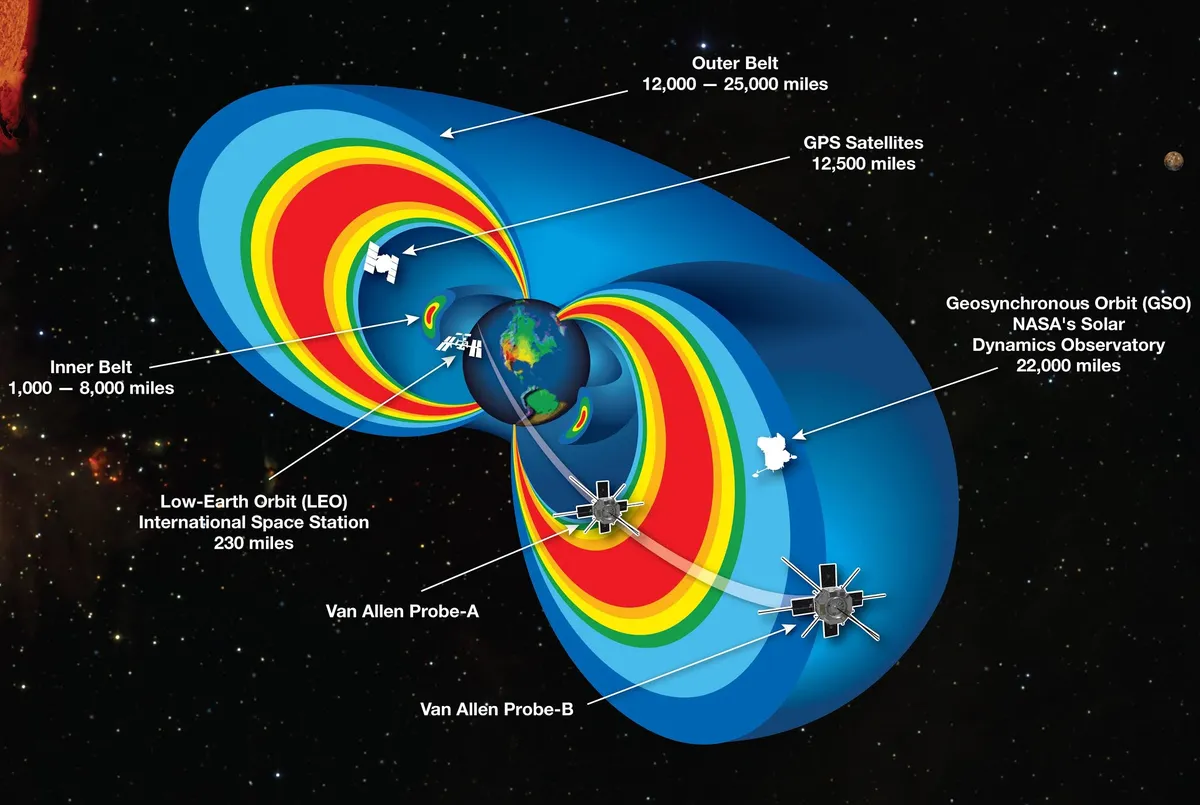
Fig. 3: Radiation belts: the Space Station, the twin probes and the location of GPS satellites are shown.
We all know that the Sun is indispensable for human life, but also dangerous. Our star emits radiation of all wavelengths, some of which are ionizing. Some of these are blocked by the atmosphere. But prolonged exposure to the sun, especially when it is high, is dangerous. That's why Ultra Violet (UV) radiation blockers are used, whether creams or sprays.
Blockers are sold with different "sun protection factors (SPF)." These factors are related to the duration of the blocker. The higher the factor, the less quickly the application needs to be renewed. But in all cases, it is necessary to renew it after a certain time, as part of the cream or spray evaporates or is absorbed.
This leads us to a very useful concept: the dose. There are certain doses that can be considered safe and others that are not. Each dose is an amount that must always be thought of in relation to time.
The same goes for ionizing radiation in general. For this, units of measurement are used, namely:
Traditional units: the Röntgen, the Rad, the REM.
International System units: the most commonly used are the Coulomb/kg, the Gray (Gy) and the Sievert (Sv).
Ionizing radiation can cause different health damages, such as cancer due to uncontrolled cell division and degeneration of organ tissue.
On the other hand, this radiation can also damage electronic equipment.
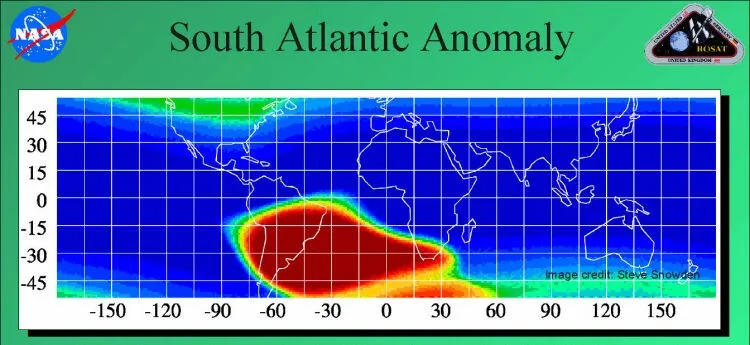
Fig. 4: South Atlantic Anomaly. Rosat-NASA.
PROTECTION AGAINST RADIATION
So now we must think about two things:
1-How much radiation is harmful?
2-How to protect people and spacecraft?
Since astronauts travel in spacecraft, the spacecraft itself is their first and fundamental protection. Therefore, having a protective "shield" on the spacecraft is essential. But it must be taken into account that the material of such a shield can produce secondary particles, which can also be harmful. So the composition of the material is important. A very suitable component is hydrogen. Having one electron (which absorbs photons) and a single proton that does not generate a secondary shower of particles, and being a very common element in the universe, it is ideal.
Two materials widely used in spacecraft are aluminum and polyethylene.
Different materials can be evaluated, namely:
Aluminum, copper, stainless steel, tantalum, titanium, fiberglass.
Each material has different density and economic cost.
So these materials are tested in laboratories. It is known that 1 MeV electrons (one mega electron-volt) are the fastest (i.e., the most damaging) that a spacecraft could encounter in the Van Allen belts. So a beam of electrons of that energy is fired at a material. If the particles penetrate the material, another layer is added and it is tested again. This continues until the particles can no longer pass through.
Different layers are required for each material. And that is given by its density, so denser materials are better, but also heavier. In less dense materials, which are also lighter, more layers need to be added.
To be safer, once the minimum suitable thickness is known through the previous procedure, the thickness is multiplied by 10, to have greater confidence that such particles cannot enter the spacecraft, both to protect the astronauts and the instruments. These tests are usually done in particle accelerators.
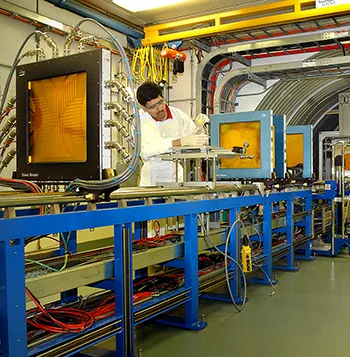
Fig. 5: At NASA's Space Radiation Laboratory (NSRL) at Brookhaven, a researcher places a sample in the beamline where materials are subjected to an ion beam that simulates cosmic radiation to study their suitability as protection for spacecraft.
Here we see the results of doing these tests with different materials. The minimum thickness and the "to be safe" thickness (ten times greater) are indicated. Then the results of the same materials against 10 MeV protons are shown.
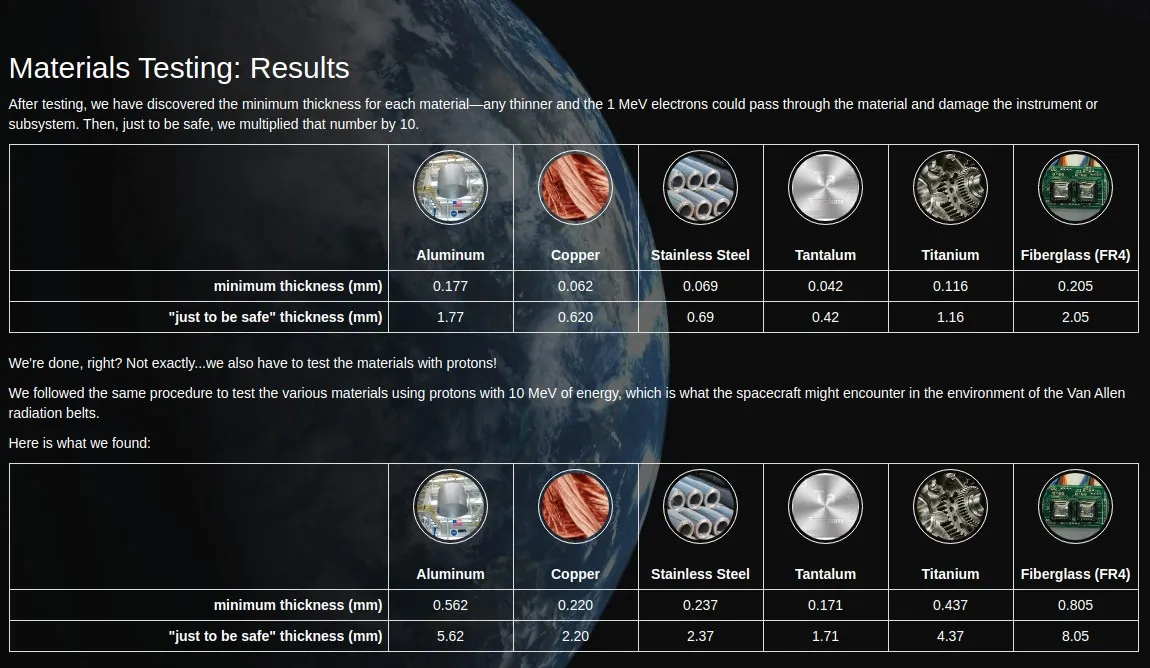
Fig. 6: Test Materials results
But besides thickness, other factors must be taken into account. Here is a table with other data to consider, such as density, mass, weight, and economic cost.
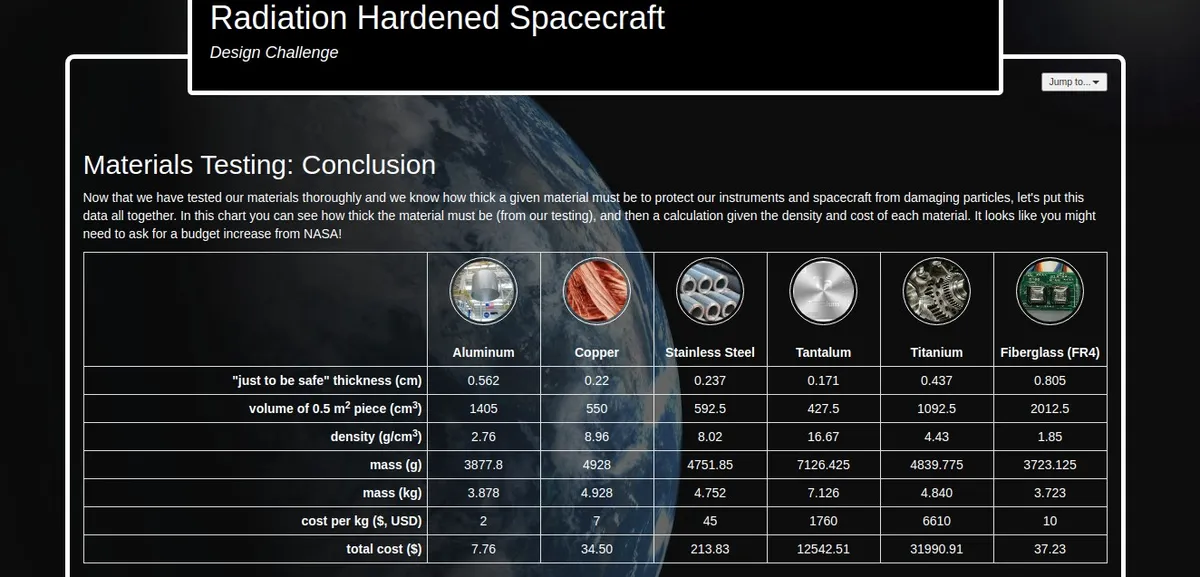
Fig. 7: Test Materials summary
As is evident, a small amount of tantalum (0.17 cm) is sufficient protection, but it weighs 7 kg and costs USD 12,000.
In contrast, with a larger amount of aluminum (0.56 cm) the same protection is achieved, but it weighs 3.8 kg and costs USD 8.
Which one would you use?
The Electron-Volt
An eV is a unit used to measure energy. It corresponds to the energy needed to move an electron through a Volt of potential, meaning the potential difference of the electric field is 1 volt. An eV has the amount of energy needed to affect individual particles like those found in space. For example, 13.6 eV of energy will remove an electron from a Hydrogen atom. That type of ionized hydrogen atom is very common in the Universe, for example in HII regions.
RADIATION DOSE: MATHEMATICS TO THE RESCUE
All very nice, but we have to translate the concept of dose into numbers. On the Van Allen Probes site there are some introductory materials (and more advanced ones) about radiation doses, which we will see next.
Two of the most used units are the Sievert (Sv) and the Gray (Gy). Gray is the amount of energy deposited in the material, while Sievert is the amount of energy and damage that the radiation causes in organic tissue.
1 Gy = 1 Sv multiplied by the damage caused.
For X-rays and Gamma Rays, 1 Gy = 1.0 Sv
For electrons, 1 Gy = 1.0 Sv
For protons, 1 Gy = 2.0 Sv
1 millisievert (1 mSv = 0.001 Sv) and 1 microsievert (1 μSv = 0.000001 Sv).
1 millisievert /1000 = 1 microsievert.
In daily life, we receive radiation permanently, but since its dose is very low, it is not harmful. Measured in milliSv, less than 200 milliSv produces no symptoms.
In one year, we can receive 2.4 milliSv of natural radiation (global average). When we get a chest X-ray, we receive 0.05 milliSv. On a round trip between Tokyo and New York, we can receive 0.19 milliSv of cosmic rays. Part of the radiation we can receive is produced by radon (see link below).
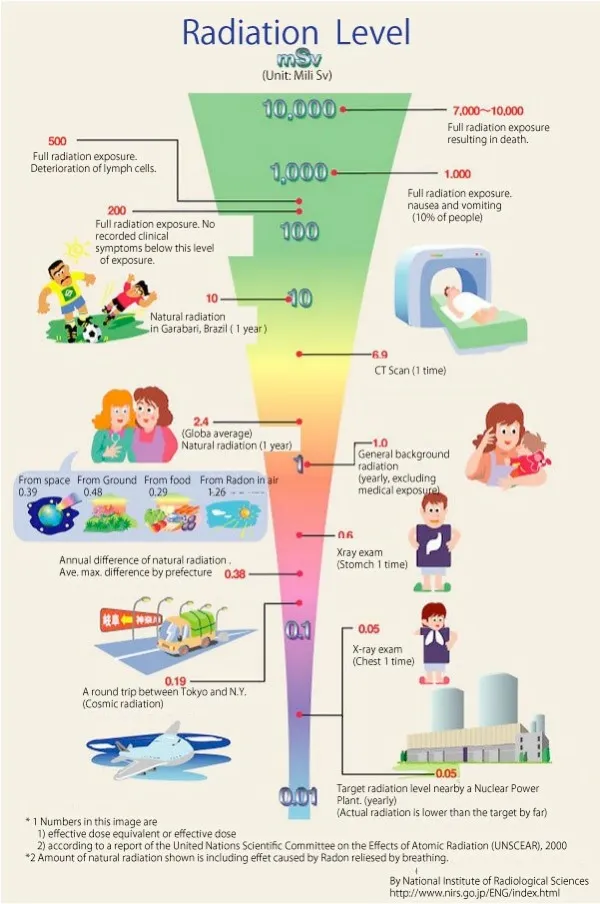
Fig.8: Radiations in daily life, dose in milliSv.
FOUR DOSE PROBLEMS
Problem 1: A human on Earth receives a total dose of 4 milliSv each year from the natural environment, food, and other sources over which there is little control. What is the radiation dose in A) microSv/day B) microSv/hour?
Answer:
A) 4 milliSv/365 days = 0.010 milliSv/day or 10 microSv/day.
B) 10 microSv/day x 1 day /24 hours= 0.4 microSv/hour.
Problem 2: The radiation dose rate on the International Space Station (ISS) is 1 milliSv/Day. How many days of natural background radiation on the surface does this equate to?
Answer: one day on the surface equals 10 microSv or 0.010 milliSv. So each day on the ISS equals 100 days on the surface.
Problem 3: In the Van Allen belts, the average radiation dose for a satellite is 50 Gray per year. If an astronaut had the same protection as the satellite and requires 1 hour of travel through the belts, what will be the dose at the end of the trip if 1 Gray = 1 Sievert?
Answer: 50 Gy /365 days / 24 hours = 0.0057 Sv/hour (0.006 to round).
For 1 hour of exposure on the spacecraft, that equals a total dose of 6 milliSv.
The average background radiation on the surface is 4 milliSv in one year, so the astronaut in the Van Allen belts would accumulate a year's worth of radiation dose in less than an hour. Additional protection would considerably reduce the dose.
Problem 4: Satellites are finally damaged by the effects of radiation accumulated over the years. A satellite that accumulates 1000 Grays (100 kilorads) of radiation is usually at the end of its useful life. How long will a satellite last in the Van Allen belts if its annual dose is 50 Gray per year for a lightly protected satellite?
Answer: 1000/50= 20 years.
CONCLUSION
Just as with sunscreens that protect us from the danger of UV radiation based on a dose, measured over time, that can be blocked, the ionizing radiation from cosmic rays and the Sun in the Van Allen belts can also be blocked with the proper shields.
The radiation belts are dangerous for spacecraft and humans, but they do not prevent space exploration. On the contrary, thanks to such exploration they were discovered.
In short: exposure to the Sun's UV rays is dangerous. But, with proper precautions, that does not prevent us from living a normal life. In the same way, the study of the radiation belts allows the creation of spacecraft sufficiently protected from solar radiation and cosmic rays.
Sources and related links
- Wikipedia Van Allen Probes
https://es.wikipedia.org/wiki/Sondas_de_Van_Allen - Ten highlights of NASA's Van Allen mission
https://ciencia.nasa.gov/diez-aspectos-destacados-de-la-misi%C3%B3n-van-allen-de-la-nasa - NASA RBSP
https://www.nasa.gov/mission_pages/rbsp/mission/index.html - John Hopkins NASA site
http://vanallenprobes.jhuapl.edu/ - Studying the Van Allen Belts 60 Years After America’s First Spacecraft
https://www.nasa.gov/feature/goddard/2018/studying-the-van-allen-belts-60-years-after-america-s-first-spacecraft - Radiation Hardened Spacecraft - Design Challenge
http://vanallenprobes.jhuapl.edu/Education/games/radiationHardening/ - The Van Allen Probes and Radiation Dose
http://vanallenprobes.jhuapl.edu/Education/docs/10Page119.pdf - Radon and its health effects
https://www.who.int/es/news-room/fact-sheets/detail/radon-and-health - Veritasium: Are Negative Ions Good For You?
https://www.youtube.com/watch?v=ZQ--scjcAZ4&ab_channel=Veritasium - Wikipedia: Exposure to ionizing radiation in humans.
https://es.wikipedia.org/wiki/Radiaci%C3%B3n_ionizante - A “SPACE ODDITY”*
https://desayunoconfotones.org/2014/02/20/una-rareza-espacial/ - Hubblecast 77: Hubble and the Bermuda Triangle of space
https://www.youtube.com/watch?v=avogF2_d5EU - Seeker: The Van Allen Belts Are Lethal, This Is How Astronauts Fly Through Them
https://www.youtube.com/watch?v=NEwMM0REZJQ - ROSAT: SAA
https://heasarc.gsfc.nasa.gov/docs/rosat/gallery/display/saa.html
About the images
Initial image Radiation Belt
Credit: Johns Hopkins University Applied Physics Laboratory
Fig. 2: Average Apollo radiation dose table: Seeker YouTube
Fig. 4: NASA/ROSAT
Fig. 5: Brookhaven National Laboratory
Fig. 3-6-7: NASA JPUAPL
Fig. 8: NIRS.go.jp at NASA JHUAPL
Time magazine cover, 5/4/1959 http://content.time.com/time/covers/0,16641,19590504,00.html