A few days ago, I was reading a post published by Microsiervos under the title "Henrietta Leavitt: a small tribute to an ingenious astronomer", who certainly is not a very well-known astronomer for the general public, although I wonder if the general public can name any other astronomer besides Carl Sagan, for example. And even less, any woman.
In the post in question, there is an allusion to the mention of Leavitt in two books (A Short History of Nearly Everything by Bill Bryson and in the video of a lecture by Alan Lightman titled The Discoveries: The Great Breakthroughs in 20th-Century Science about his book of the same title)
I must confess that on my list of books to buy is the first of the books but, if it's on the list it's because I haven't yet had the pleasure of reading it. (Note: on January 14, it's my birthday)
However, I had read about Henrietta... where? Two possibilities occurred to me:
"Lonely Hearts of the Cosmos" by David Overbye and "El Big Bang, la génesis de nuestra cosmología actual" by our Alejandro Gangui. I went to the first one and I don't find any mention of the astronomer there (Yes, of other astronomers like Vera Rubin and Tinsley). Instead I find her mentioned in the book by the Argentine physicist, in whose name index she appears as cited on pages 152 to 154, 158, 171 and 381.
What I just typed (at home I don't have a scanner to do OCR), is an extract from Gangui's book, what goes from pages 152 to 154.
One more laurel (as if he needed it) to the great Argentine physicist, a talent highly recognized in the academic field and who does so much for scientific dissemination, specifically cosmological.
(Some articles available on the web, from his page on the IAFE site)
Will I ever be able to interview him?
Cepheid stars are important in our history not only because they serve as good distance indicators, but also because of the main role they played in the gestation of the idea of the expanding universe. Cepheids are very luminous stars, with brightnesses ranging between one hundred and ten thousand times the brightness of our Sun, although they have variable luminosity. And these two aspects are essential for their usefulness: their high luminosity allows them to be visible from remote, say cosmological, distances, while the variability of their light makes it possible to infer their true energy emission. Indeed, their oscillation periods (quantities we can measure, between 1 and 100 days) are related in a precise way to their absolute luminosities (quantities that, as we saw, are inaccessible to us directly); in particular, the longer the period, the greater the luminosity as well, a relationship that was discovered in 1912 by the American astronomer Henrietta Leavitt.
Working as a "computer" at the Harvard College Observatory (*), Leavitt (1868-1921) studied dozens of Cepheids in the Magellanic Clouds, determining their periods. Today we know that these "clouds" are actually small neighboring galaxies of the Milky Way, separated from it by about 150 thousand light-years. This distance is so large that, to a good approximation, all the Cepheids studied by Leavitt could be considered at the same distance from us, in the same way that all the bees in a hive are approximately at the same distance from a prudent person.
With this hypothesis, Leavitt was able to deduce the period-luminosity relationship already mentioned. From her work it was then possible to know the "relative" distance between the Cepheids of the Magellanic Clouds and any other in our galaxy, but not the absolute distances. To estimate the latter, she needed to know at least the distance to one of these Cepheids, in order to "calibrate" her measurements. This new ingredient came only in 1917, when Shapley used the period-luminosity relationship to obtain absolute luminosities for the Cepheids in some star clusters of our own galaxy, using color and magnitude techniques like those we explained above. With this, Leavitt's measurements could be calibrated, and thus know where (at what precise luminosity) the linear relationship in the luminosity versus period graph really began. Thus, the two combined tools allowed calculating the distances to the Cepheids of any relatively nearby star cluster and using the period-luminosity relationship for every other distant galaxy that contained these variable stars. Today, the Cepheid method allows estimating distances of up to about 30 Mpc.
(*) A "computer"... No, we are not praising her, nor are we being derogatory. That was simply the name given at the beginning of the 20th century to the women who did astronomy in the United States of America. Because "they" did not have permission to operate the telescopes and thus be able to make their own observations. So, then, they could only analyze the photographic plates of the "masculine" observations, if they really wanted to have access to the data. Masculine astronomy? And to think that several centuries before our era, Epicurus of Samos already allowed women to study at his school in Athens.
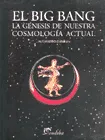
El Big Bang
The genesis of our current cosmology
Alejandro Gangui
Eudeba, 2005.
ISBN 950-23-1386-0
416 pp.; 25x18 cm.
----------------------
Related notes:
The UNLP loses Virpi Niemela, one of the most important astronomers in the world
Virpi Niemela distinguished by the “Royal Astronomical Society” of the United Kingdom.
Renowned Argentine astronomer to have asteroid named after her
Women in astronomy