On the same day, though three hundred years apart, two human events linked by the history of science occurred. In 1642 Galileo Galilei died and in 1943 Stephen Hawking was born.
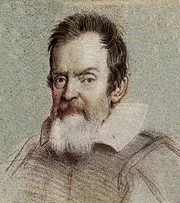
Galileo Galilei (Pisa, February 15, 1564 - Florence, January 8, 1642), was an astronomer, philosopher, mathematician and physicist who was closely related to the scientific revolution. An eminent man of the Renaissance, he showed interest in almost all sciences and arts (music, literature, painting). His achievements include the improvement of the telescope, a great variety of astronomical observations, the first law of motion and decisive support for Copernicanism. He has been considered the "father of modern astronomy", the "father of modern physics" and the "father of science".
His experimental work is considered complementary to the writings of Francis Bacon in establishing the modern scientific method and his scientific career is complementary to that of Johannes Kepler. His work is considered a break from the established Aristotelian ideas and his confrontation with the Roman Catholic Church is often taken as the best example of conflict between authority and freedom of thought in Western society.
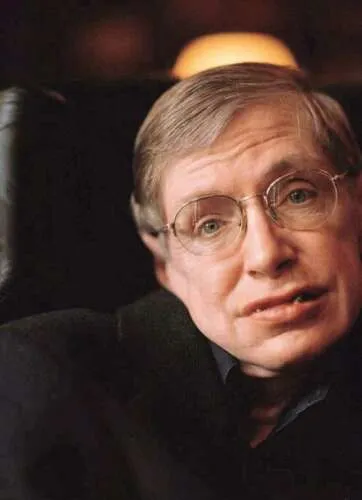
Stephen William Hawking (*January 8, 1942, Oxford), physicist, cosmologist and science communicator from the United Kingdom.
The world's best-known scientist has suffered from amyotrophic lateral sclerosis since 1963. At that time they gave him only three years to live. He researched black holes.
London, England.- In reality, if the prognosis had been correct, Stephen Hawking should have died many years ago, around 1966, as a result of a progressive neurological disease, amyotrophic lateral sclerosis, which attacks the neurons that control voluntary muscles.
But fortunately the doctors, the young students from the elitist University of Cambridge who made the prognosis back then, were wrong. And so, four decades later, Hawking is still alive, though with severe disabilities. But at the same time he is the world's best-known scientist.
On Monday, January 8, this British astrophysicist turns 65. Up until that fateful date predicted by the doctors, Hawking's life unfolded almost normally.
In school and at university he was considered intelligent, but by no means a genius.
After studying a few semesters of physics at Oxford, Hawking had decided to pursue university studies in cosmology at Cambridge, when he began to have health problems.
In 1963 doctors diagnosed him with amyotrophic lateral sclerosis, an incurable disease that was going to quickly destroy his nervous system. They then gave him three years to live. "I dreamed that I was going to be executed," he later recounted about those times.
Perhaps it is one of those strange coincidences of fate that January 8, 1943 was both the tercentenary of the death of one of the greatest intellectual figures in history, the Italian scientist Galileo Galilei, and the day Stephen William Hawking was born into a world torn by war and global conflict. But, as Hawking himself points out, around two hundred thousand other babies were born that same day, so perhaps, after all, it is not such a surprising coincidence.
From the biography "A Life for Science"
"Suddenly I realized that there were a number of valuable things I could do if they suspended the execution." Hawking wrote his doctoral thesis, got married, had three children and began to develop his theories about the origin of the Cosmos. In the early 1970s he predicted that black holes - cosmic bodies of great mass that create a very large gravitational field - lose energy under certain conditions.
Today this phenomenon is called "Hawking radiation". At 32 he was admitted to the "Royal Society" of British sciences, at 37 he was assigned the famous Lucasian Chair of Mathematics at the University of Cambridge, which was once held by Sir Isaac Newton.
Outside the scientific community, the Briton only became known when he had long been confined to a wheelchair and, after emergency surgery in which he underwent a tracheotomy, had also lost his voice: it was in 1988, with his popular science book "A Brief History of Time".
More than 20 million copies were published worldwide. Since then, Hawking has lived in a wheelchair, and can only communicate with the outside world through a computer that he operates with slight movements of his head and eyes.
On a Pink Floyd album ("Keep Talking") Hawking spoke the introductory phrases with his synthesizer voice, on television he participated in the animated series "The Simpsons" and in film he played himself in one of the episodes of "Star Trek".

Currently, the prestigious professor, who can often brilliantly simplify his theories, is filming a new movie and writing a children's book.
"It will be a bit like Harry Potter in space, about science, only without magic," he revealed. Furthermore, he made headlines for his separation from his second wife Elaine.
The tabloid "The Sun", which generally rarely covers the astrophysicist, did not miss the opportunity to joke that Hawking's marriage "had fallen into a black hole". But this also shows how much fascination the disabled scientist arouses: the small, hunched body, which can no longer move, is for many proof that everything is possible with the power of the mind.
The magazine "Der Spiegel" named Hawking "the genius of the century", the British broadcaster BBC even called him "Master of the Universe".
On the other hand, among colleagues he is just one renowned scientist among many. For many, however, he is a candidate for the Nobel Prize. Furthermore, the prominent professor has attracted attention for some time less for his scientific results and more for his gloomy prophecies. Hawking believes that humanity can only survive in the long term on other planets, because on Earth the temperature will rise to 250 degrees Celsius and it will rain sulfuric acid.
But, as he knows from his own experience: forecasts can be wrong.
Professor Hawking holds twelve honorary doctorates, received the CBE in 1982 and was appointed Companion of Honour in 1989. He is the recipient of numerous awards (for example, the Prince of Asturias Award for Concord in 1989), prizes and medals and is an Honorary Fellow of the Royal Society and the U S National Academy of Sciences.
Sources:
La Gaceta:Against All Odds, Stephen Hawking Turns 65
Official Website of Stephen Hawking
The Universe in a Nutshell
A Briefer History of Time
Stephen Hawking Books at Librería Santa Fe
A good biography of the physicist is "Stephen Hawking. A Life for Science" by Michael White and John Gribbin