NASA announces a teleconference to discuss the THEMIS mission (Time History of Events and Macroscale Interactions during Substorms) on Wednesday, January 17.
Via NASA
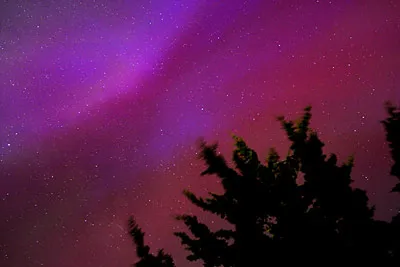
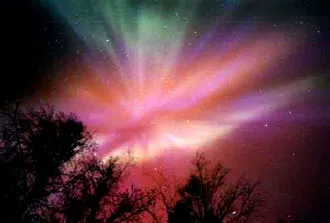
THEMIS consists of five probes that will study the violent and colorful eruptions called Auroras.
Understanding and predicting space weather is important to describe the environment in which spacecraft and astronauts operate and to make missions safer. Just as tornadoes and hail accompany the most severe thunderstorms, substorms accompany the most intense space storms, those that disrupt communications and cause failures in power transmission lines. THEMIS will study these substorms to better understand the most severe storms in space.
Substorms occur when the magnetosphere suddenly releases extensive amounts of energy stored from the solar wind.
They begin in a small region of space but within minutes cover an immense region of the magnetosphere. Different triggers have different locations, which is why the key to solving the mystery is to place spacecraft in various locations of Earth's magnetic field to try to find the point of origin of these substorms.
For the first time NASA will launch a constellation of five satellites to study this phenomenon. During the two-year life of the mission, the probes should be able to observe about 30 substorms.
THEMIS is the fifth medium-class mission under NASA's Explorer program, which was conceived to provide frequent flight opportunities for worldwide scientific space research in areas such as heliophysics and astrophysics. The mission is managed by the Goddard Space Flight Center and the THEMIS probes were built by the University of California, the Space Sciences Laboratory at Berkeley, and Swales Aerospace.
Why THEMIS?
Themis is the goddess of justice, wisdom, and good counsel, and the interpreter of divine will in Greek mythology. The daughter of Uranus (the sky) and Gaia (the earth) was the second consort of Zeus and mother of the Horae (the seasons).
The THEMIS mission will impartially distinguish, as implied by the goddess's name, between two distinct phenomenological and plasma physics models for the formation of substorms.