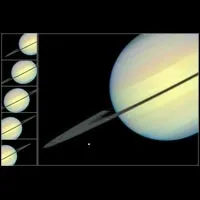
The first images were taken with Hubble and the Planetary Camera 2 in 1995 and another series of sequences were captured in 2003 with the Advanced Camera for Surveys.
Via Milenio and HubbleSite
Miami.- The National Aeronautics and Space Administration (NASA) released videos on its website about the rotation of the planet Saturn, which according to the agency "has become a movie star."
NASA indicated that Saturn's rings and several of its moons are the protagonists of three "movies," each of which is unique in showing "that planet's waltz around the sun" over the last 30 years.
The first two films show the movement of several of Saturn's moons when that planet's rings "tilted" over the edges of Earth and the Sun.
That "edge alignment" of the rings occurs once every 15 years, NASA stated in an article published on its website.
The third film presents a "clear view of Saturn's southeastern hemisphere," at the moment when the planet's rings are at their maximum tilt toward Earth.
Hubble only managed to capture a dozen images during the previously described events, so agency astronomers created software to "extend the photos" and turn them into hundreds of shots for the films.
The first images were taken with Hubble and the Planetary Camera 2 in 1995 and another series of sequences were captured in 2003 with the Advanced Camera for Surveys.
The movies have a duration of between 15 and 30 seconds and can be viewed at the address:
http://hubblesite.org/newscenter/archive/releases/2007/13/video/