Standing on the Moon in 1971, Apollo 15 astronaut Dave Scott raised his arms to shoulder height, a hammer in one hand and a feather in the other. And as the world watched on TV, he dropped them.
It was a rare sight: the feather did not fall as we would expect in everyday life, floating, but instead plummeted, as fast as the hammer. Without air resistance to slow the feather, the two objects touched the lunar surface at the same time.
Via Science@NASA
Scott exclaimed at the time: "Galileo was right," clearly referring to the great Galileo Galilei. Legend has it that Galileo Galilei began dropping objects from the top of the Leaning Tower of Pisa: cannonballs, musket balls, gold, silver, and wood. Possibly he initially expected heavier objects to fall faster. But that was not the case. They all hit the ground at the same time, and in this way he made a great discovery: gravity accelerates all objects in the same way, regardless of their mass or composition.
Today this is known as the "Universality of Free Fall" or the "Equivalence Principle (EP)", and it is one of the foundations of modern physics. In particular, Einstein built his theory of gravity, that is, the general theory of relativity, assuming that the Equivalence Principle is true.
But, what if it weren't true?
Galileo's experiments were precise, but with a margin of error. Physicists, however, need to check things over and over again, and since then the principle has been tested with the most precise experiments possible. Modern limits are given by the laser. NASA has tested the technique they called "lunar ranging": calculating the Earth-Moon distance by firing lasers. This experiment is possible because, more than 30 years ago, Apollo mission astronauts placed mirrors on the Moon -- small arrays of retroreflectors that can intercept laser beams from Earth and bounce them back in the same direction. Using laser beams and mirrors, researchers can send a signal to the Moon and precisely monitor its motion around Earth. It is a modern version of the Leaning Tower of Pisa experiment. Only instead of dropping cannonballs to the ground, the researchers will observe how the Earth and the Moon fall toward the Sun. Like cannonballs and musket balls, which are thrown from the top of the Tower, the Earth and the Moon are made of a different mixture of elements, and have different masses. Are the two celestial bodies accelerated toward the Sun at the same speed? If so, the Equivalence Principle remains valid, but if not, then the revolution begins. Scientists have been sending signals to the Moon since the Apollo days. So far, the theory of gravity -- and the equivalence principle -- have remained unshaken to a precision of a few parts in 1013. But this is still not accurate enough to test all the theories that attempt to overthrow Einstein's.
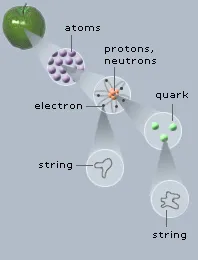
Testing the principle would also allow a way to test string theory.
"Some variants of the theory predict the existence of a very weak force that would make gravity a little different depending on the composition of the objects," explains Clifford Will, a physicist at the University of Washington.
"Finding a variation in gravity for different materials would not immediately prove the theory but would give it a dose of evidence."
A test mission, called the Satellite Test of the Equivalence Principle (STEP), is being developed by Stanford University and an international team of collaborators. STEP would be capable of detecting a deviation in the EP as small as one part in 10^18.
Currently, that mission is still in the design phase. Another experiment, a French one called MICROSCOPE, is planned for 2010 and would be capable of detecting an EP violation of one part in 10^15.
There is a third experiment, the Italian Galileo Galilei (GG) with a sensitivity of one part in 10^17.
Meanwhile, trying to perform these tests at home, for example, by throwing a hammer out the window, would not be a good idea. Let's keep our feet on the ground, we are not on the Moon!
References:
Images and videos of the Apollo 15 experiment on the Moon