No one knows more about how complicated it is to assemble a spacecraft in orbit than the astronauts building the International Space Station.
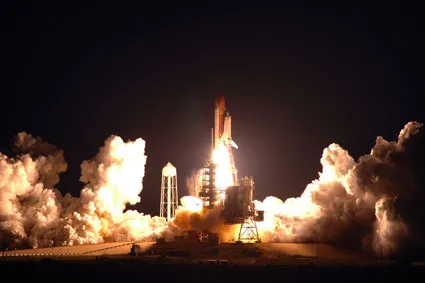
After leaving the first part of a new Japanese laboratory and assembling a robot to help with maintenance, the crew of the Endeavour conducted an experiment that could make things much easier—and cheaper—for future space construction.
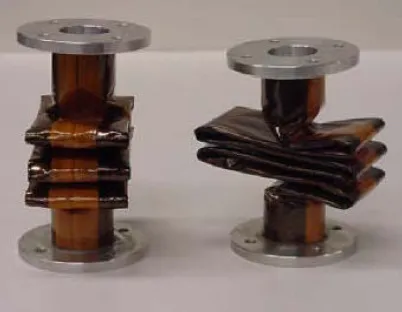
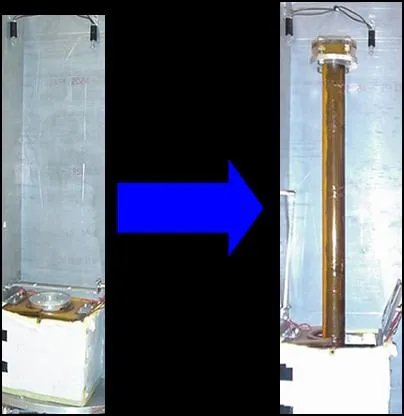
They inflated three tubes housed inside a chamber in the cargo section with pressurized nitrogen and then heated it. The tubes then cooled, forming rigid structures.
"It's a great experiment to test some structures that could have good application for the space station or the development of lunar habitats," says Mike Moses, Shuttle flight director.
The experiment called RIGEX was designed to test how well computer models and simulations predict what happens to inflatable structures in weightlessness. Once rigid, the test tubes aboard Endeavour underwent vibrations to test their structural integrity.
The experiment returned to Earth with the space shuttle this Wednesday. It will be removed from the cargo area for scientific analysis.
In the 1990s, the space agency developed a habitable prototype called TransHab. Originally designed for use on Mars, the system was renovated for use as crew quarters aboard the space station.
Budget cuts forced NASA to cancel the project in 2000, but the technology was transferred to private industry. The company Bigelow Aerospace is using TransHab for a possible complex of orbital stations and habitats for commercial use.
Two prototypes of inflatable spacecraft, Genesis 1 and 2, are already in orbit.
Bigelow plans to launch the first habitable inflatable, Sundancer, in about two years.
Sources and related links
- Discovery News:Inflatables Make Space Construction Easy
- NASA:Rigidizable Inflatable Get-Away-Special Experiment (RIGEX)
- Genesis (inflatable orbiting module)
About the images
The top image shows folded inflatable tubes.
The image within the note shows a laboratory demonstration of RIGEX. There you can see, on the left a tube before being inflated and on the right the tube after inflation.
Images from NASA, Johnson Space Center.