Unprecedented Discovery Channel series celebrates NASA's 50th birthday
Discovery Channel digitized the American Space Agency's film archive to create an exclusive six-episode series that revives the glorious history of space exploration.

GREAT NASA MISSIONS premieres Sunday, July 6 at 21:00 (Buenos Aires, Bogotá, Caracas and Mexico City time); and at 22:00 (Santiago de Chile time). From July 7 to August 4, the remaining five episodes will air on Mondays at 21:00 (Buenos Aires, Bogotá, Caracas and Mexico City time); and at 22:00 (Santiago de Chile time).
Discovery Channel celebrates the 50 years of existence of the American Space Agency with an unprecedented six-episode series, titled GREAT NASA MISSIONS. Through exclusive images never before broadcast by a television channel, this production presents in detail and in a very innovative way the history of space travel, reviving the glorious moments that marked several generations.
Along with the broadcast of GREAT NASA MISSIONS, Discovery Channel will also exhibit a series of vignettes that aim to highlight the work of Latin American professionals who have succeeded within the American Space Agency and what it means for them to be part of one of the most interesting organizations in the world.
For the production of this series, the original images that were part of NASA's archives were meticulously processed and digitized in high definition by Discovery Channel. The different sequences allow unprecedented access to the preparation processes of space missions, the spacecraft used and the onboard tasks, allowing viewers to gain a new vision of the space age.
GREAT NASA MISSIONS revives historic moments that marked several generations, narrated by the astronauts themselves. Among the selected sequences, the presentation of the pioneering Mercury program, man's arrival on the Moon, the difficulties of some aborted missions and the memory of two tragedies that shook the world stand out: the accidents of the space shuttles Challenger and Columbia, in the years 1986 and 2003, respectively.
The series confirms the evolution of space exploration in each of its episodes. Thus, it shows the insecurity and fear of the unknown that space represented for the first astronauts, when they wondered if they would bring incurable diseases to Earth or if they would go mad with the loss of the notion of time and space. Moving closer to the present, special emphasis is placed on NASA's intention to send missions to the Moon and the planet Mars, as well as to any other place where our desire to explore space leads us.
GREAT NASA MISSIONS is the incredible story of the greatest adventure ever undertaken by humanity, narrated exactly as it happened by its own protagonists.
The series GREAT NASA MISSIONS was produced for Discovery Channel by Dangerous Films. Richard Dale served as executive producer for Dangerous Films, while Bill Howard did so for Discovery Channel.
For more information, I recommend visiting the Discovery Channel site: Great NASA Missions, where it is possible to learn about the different activities of the North American Space Agency, access downloads and a contest with very good prizes.
Episode 1 - Sunday, July 6, at 21:00 (Buenos Aires, Bogotá, Caracas and Mexico City time); 22:00 (Santiago de Chile time)
In this episode, NASA selects seven men to become the country's first astronauts. They are all test pilots who are used to risking their lives. None of them, however, has piloted a rocket before. NASA and the seven astronauts of the Mercury program embark on a journey into the unknown. But... will the capsule explode on the launch pad?, will the astronauts withstand the stress of traveling at over 23,300 kilometers per hour in a modified intercontinental ballistic missile?, will space drive the astronauts mad forever?, will their blood boil or will their eyes pop out of their sockets? Six of these men ventured into the universe, allowing NASA to take a step forward in its race to consolidate space leadership.
Episode 2 – Monday, July 7, at 21:00 (Buenos Aires, Bogotá, Caracas and Mexico City time); 22:00 (Santiago de Chile time)
Nine new astronauts arrived at NASA. Their mission was to successfully carry out the first manned landing on the Moon. This plan, better known as Project Gemini, was named after the zodiac sign that represents two twins. This was because it intended to send two men into space at the same time. The nine astronauts had a dangerous and ambitious program to complete. Under absolute secrecy, Ed White trained to carry out NASA's first spacewalk. Meanwhile, his companions, led by the Mercury veterans, docked two spacecraft separated by mere centimeters.
Both were capable of traveling at a speed exceeding 28,000 kilometers per hour. Some of the most famous astronauts of all time, including Jim Lovell, Buzz Aldrin and Neil Armstrong, met in Project Gemini. Unfortunately, some of the most experienced died.
Episode 3 – Monday, July 14, at 21:00 (Buenos Aires, Bogotá, Caracas and Mexico City time); 22:00 (Santiago de Chile time)
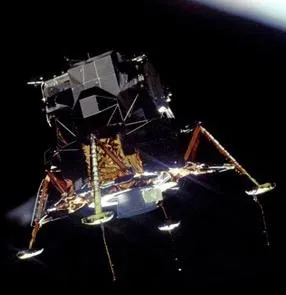
Just a few years from the deadline set by Kennedy, the first manned mission of the Saturn V rocket, which many considered suicidal, transported three astronauts to just a few kilometers from the Moon. To support the Apollo 8 crew, the collaboration of the three men who had been selected for the first lunar landing attempt was available: Neil Armstrong, Buzz Aldrin and Michael Collins. Just two missions later, NASA was already prepared to take on the challenge, although no one knew for sure what would happen once they got there. At that moment, a multitude of questions arose: will the lunar module disappear in the space dust?, will the crew be attacked by lunar bacteria?, will they manage to take off from the lunar surface once they have completed the mission?
Episode 4 – Monday, July 21, at 21:00 (Buenos Aires, Bogotá, Caracas and Mexico City time); 22:00 (Santiago de Chile time)
Man had already orbited the Earth, walked in space, crossed from one spacecraft to another, and inhabited the universe for three consecutive days. It was time to unleash a new journey. Much research was still needed to advance in everything related to prolonged space flights. Using a Saturn V rocket that had never been used before, NASA presented Skylab, the first American space station.
However, prolonged space flights took their toll on the minds and bodies of astronauts. What most concerned doctors was the harmful effect of radiation, although the mental impact of living in space for an extended period of time also represented a great danger. Until the Americans joined forces with the Soviets, the collisions, fires, and few chances of escape that existed in space proved that the universe was full of dangers.
Episode 5 – Monday, July 28, at 21:00 (Buenos Aires, Bogotá, Caracas and Mexico City time); 22:00 (Santiago de Chile time)
During the last 20 years, the capsules NASA launched into space carried a maximum of three people. However, the need for a larger area for cargo fostered innovation in spacecraft design. The development of shuttles that could be used more than once led to a revolutionary way of understanding space travel. For the first time, groups of six or seven astronauts could travel together.
The first man to travel on the shuttle, often described as "a butterfly on a bullet," was John Young, the former companion of Gus Grissom during the first Gemini flight. The pioneers of NASA's manned programs set the pace for the well-known space age. However, traveling to space is still as risky as in the past. This was demonstrated by the Challenger disaster in 1986. The most dangerous moments consist of liftoff and landing, which is why the Columbia accident, just a few minutes after the end of the mission, was as tragic as it was unexpected.
Episode 6 – Monday, August 4, at 21:00 (Buenos Aires, Bogotá, Caracas and Mexico City time); 22:00 (Santiago de Chile time)
The Hubble Space Telescope, one of the most complex instruments ever built, confronted NASA with a serious problem. It was discovered that human error was to blame for one of the telescope's main mirrors being defective.
Hubble, which was expected to function as a kind of all-seeing eye in space, suffered from myopia. To solve the problem, NASA decided to send a team of astronauts. It was the largest project since the Apollo era. On the other hand, the Hubble mission had another unexpected result: attracting public attention. The telescope's feats were widely followed by the audience, reminiscent of Apollo times. After several decades of debate about who or what should be sent into space, astronauts proved that machines and humans needed each other in the universe.
Sources and related links
About the images
Image from the Discovery Channel site