The Institute of Astronomy and Space Physics (CONICET-UBA) invites you to the talk: "Shadows of Other Worlds: Studying Extrasolar Planets Through Their Transits" by Lic. Rodrigo Díaz, on Wednesday, October 22 at 18:00 hours in the Classroom of the IAFE building - Ciudad Universitaria
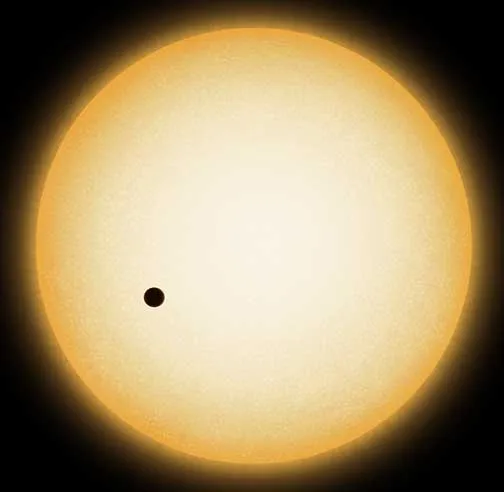
The discovery of the first extrasolar planet orbiting a solar-type star (51 Peg) aroused enormous interest in the scientific community and stimulated the development of the study of these bodies. Today more than 300 planets outside the solar system are known, of which just over 50 present transits, meaning their orbits are aligned with the line of sight from Earth, which produces small decreases in the star's brightness each time the planet passes in front.
Planets with transits have provided fundamental data (in particular the planetary radius) for the study and understanding of their formation and structure. The alignment of their orbits allows the study of their atmospheres, enabling for the first time the detection of the elements that compose them. Furthermore, these planets can be used to detect very low-mass planets (around the mass of Earth), through perturbations in the transit period.
In this talk we will discuss the methods used to make these observations and the latest advances in the field.
Sources and related links
- Talks at the IAFE
About the images
IAFE logo
HD149026 and planet. Illustration by Lynette Cook