Would you like to have a small piece of the Moon? July 20, 2009 is the 40th anniversary of the first moon landing. NewScientist is celebrating the date with a contest offering the fabulous prize. Let's participate.
The requirements are simple: Be over 18 years old, answer a simple (or not so simple) question in the comment form on the contest page, and provide a valid email address (in the box for that purpose, not in the body of the comment).
You undoubtedly know the words transmitted by Neil Armstrong as he stepped off the Apollo 11 lunar module onto the Moon: "That's one small step for a man, one giant leap for mankind."
The question to answer is: Can you think of something better that he could have said, something even more memorable, or perhaps something funnier?
The entry must be less than 75 characters (including spaces). We must leave our phrase in the comment form on the contest page, starting a new reply (not replying to a previous one). A valid email address must be included (in the corresponding box) which will only be used to contact the winner.
The winning entry will be chosen from those received by 5 pm GMT on June 29 and will be published in the July 18 edition of New Scientist.
No language or country of residence limitation for participants is specified, but I suggest entering the entry in English. You can translate a phrase from Spanish to English with Google Translate.
For more details, consult the terms and conditions.
The prize
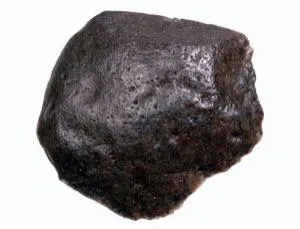
The piece of rock is part of a lunar meteorite found by French collector Luc Labenne, in the Dhofar region in southeastern Oman, on the border with Yemen.
The small piece weighs almost 1.4 grams and has been authenticated as a lunar meteorite by researchers at the University of California, Los Angeles.
The piece was brought to Colin Pillinger of the Open University in the United Kingdom, who worked with the original Apollo 11 samples. With the help of Richard Greenwood, Andy Tindle, Ian Franchi, Michelle Higgins and Diane Johnson, the piece was subjected to a battery of tests, so NewScientist is confident that their prize is genuine.
In the process, the piece fractured into two pieces which, in the June 20 edition of NewScientist, will be described in detail.
Sources and related links
- NewScientist:Competition: Win a piece of moon rock
About the images
Credit: New Scientist