Two Argentines will embark on a journey across Latin America, from their city, Rosario, in a motorhome, to visit schools and develop workshops. Itinerant astronomy. To learn to look at the sky. To learn to look at oneself. The Miradas Project.
The Miradas Project was conceived and will be carried out by Sofía Méndez and Daniel Ekdesman. Both are from Rosario and in their thirties. But the most important thing, beyond their place of origin or age, is their social commitment. It brings great happiness (and is contagious) that there are people committed to their ideas, supportive and enthusiastic.
That's how Daniel, whom everyone calls "Yayo", seemed to me when I spoke with him on the phone today.
I learned about the project through LIADA, thanks to Jorge Coghlan giving them a hand, and it's possible to learn more details about the project in a document uploaded to the LIADA Network.
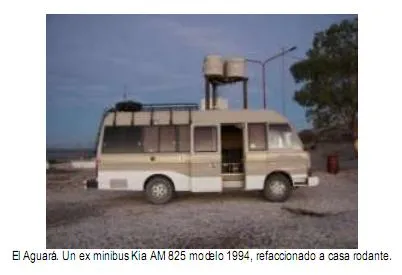
The idea is very similar to the one carried out in its time by Galileo Mobile or Galileo Mobile. In a motorhome, Yayo and his girlfriend will set out early next year to travel across Latin America. On their journey, they will visit schools they are contacting in advance. They will spend about two weeks in each place, so as not to be mere "parachutists" and to immerse themselves in the context to then develop workshops on optical experiments, question the kids about the meaning of the world, and promote the exchange of experiences.
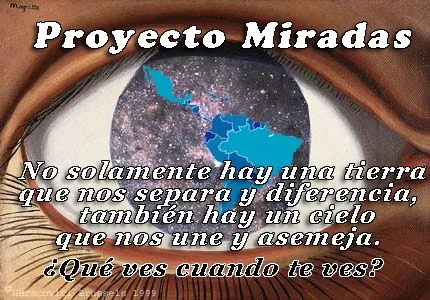
Optical instruments like the microscope and telescope allow us to investigate who we are and what place we occupy in the world, in the universe. They allow us to glimpse that, although we share the same sky, we are very different. A phrase, almost a leitmotif of the project is:
"Not only is there an earth that separates and differentiates us, there is also a sky that unites and makes us alike.
What do you see when you see yourself?"
"That is to say, by sharpening our gaze, we will try to see and collectively understand visual records that in everyday life are not always perceived. In that sense, observation will cover as broad a spectrum as possible, ranging from the farthest point (the macro) to the closest (the micro); to lead to a deep, intimate focus inward, towards oneself. Therefore, on this journey, we will seek to reflect on what we have that is plural and singular, what we have in common with others and what is particularly our own, what makes us similar and what makes us different," they point out.
THE NETWORK
The project will try to understand the interrelationship between the different educational communities, for which they will create (it's still under construction) a web page to record the chronicle of their journey. The page will be at http://www.proyectomiradas.org/
The route
The estimated time to cover this route is between one year and a year and a half.
Argentina (northwest), Chile (north), Bolivia, Peru, Ecuador, Colombia, Panama, Costa Rica, Nicaragua, Honduras, Guatemala, Mexico (south and north), Venezuela, Brazil, Uruguay. There is also the possibility of traveling through French Guiana, Cuba, and Paraguay.
Can we collaborate?
They need support, of course. In my communication with Yayo, I could sense that the financial issue is a difficult subject. Because the couple does not have the desire to take a free vacation traveling the world at the expense of others, not at all. That's why it's a subject that Daniel finds hard to address, but he knows that at least the cost of fuel or teaching materials could be covered by sponsors.
On the website they are developing, there will be, as he told me, the possibility for ordinary citizens to give them a hand. It's also a way for us to be part of the initiative, to indirectly help make the idea a reality.
We can be supportive and committed in many ways. One is to generate an idea like this and undertake it, but we can't always or are not in a position to do so. But perhaps we can help in other ways, by collaborating with a direct donation or if we know of a company or entity that might be interested.
Upon finishing the journey, they will publish a book accompanied by a DVD which will be distributed free of charge to the institutions visited during the trip.
It is important to note that two major figures very connected to Argentine astronomy are helping the project move forward. I refer to Roberto Aquilano (Doctor in Astronomy, UNLP. Director of the Astronomical Observatory, Planetarium and Experimental Science Museum of Rosario) and Horacio Tignanelli (UNLP teacher and researcher), whose assistance guarantees professional advice of the highest level and also indicates the commitment of those experts beyond astronomy.
I don't know about you, but it brings me immense happiness when a group of people gets together to carry out actions for the common good for others. That alone is wonderful. But it must be emphasized that the intention, in this case, is very well stated by the couple, with two central objectives:
Develop observation as a form of critical analysis of daily life and Promote cultural exchange and the meeting between peoples.
I hope the initiative materializes and is as good as the one being developed by Galileo Mobile or other traveling education projects, like the Itinerant Telescope.
Contact
[email protected] [email protected] [email protected]
(54-0341) 155-623045/155-044767
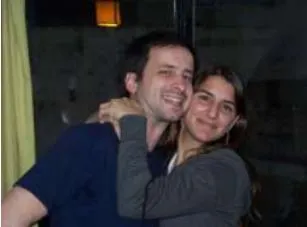
About the couple
Sofía Méndez
She is a preschool teacher and a community operator in Social Psychology. For ten years she has worked at a small school located in the Belgrano neighborhood, in the west of our city, the Private School No. 1358 Vivir y Convivir. This institution carries out an integration project, an educational practice with a proposal for an "open school," based on respect for humanity. She also worked at a family development center of the Municipality of Rosario, CRECER No. 17. She carried out experiences in detention centers independently (early stimulation, communication workshop, among other things). She participated in community experiences such as in the neighborhood of the indigenous Toba community 5 for six years. There she developed school support, recreation, and other workshops. Furthermore, one of the most significant activities carried out was the formation of female and male soccer teams between the ages of ten and eighteen within the framework of an inter-neighborhood project known as Centro a la Olla. On the other hand, recently she coordinated teacher training workshops in the area of games and dynamics for learning. She worked in a nursing home with memory stimulation workshops. Currently, in addition to working at the school, she is part of a teacher cooperative, Vivir y convivir, dedicated to conducting artistic and playful workshops for children at the La Rigoberta community center, in the República de la Sexta neighborhood of our city. She is also a hockey coach for the little school of Club Atlético Newell's Old Boys.
Daniel Ekdesman (Yayo)
He is a Social Communication student at the Universidad Nacional de Rosario (UNR), a degree from which he only has his doctoral Thesis left to finish (which he will do precisely on this project). During his university studies, he worked for several years as a journalist in some independent media in the city of Rosario, in print, radio, and virtual formats. In that sense, he was a radio producer for journalists like Quique Pessoa and Carlos Del Frade, as well as general producer of the radio program of the investigative newspaper El Eslabón. In this last print medium, of importance in the city and surrounding areas in the field of investigative journalism, he served as editor-in-chief. At the same time, while studying at university, he began coordinating communication workshops in different neighborhoods of the city: the indigenous Toba community, Nuevo Alberdi, and in Ludueña, at the Bodegón Cultural Casa de Pocho Lepratti. In all these spaces –vulnerable and independent– the work done in the workshop was poured into self-managed print publications. He also jointly conducted a communication workshop at Penitentiary Unit No. I in the city of Coronda, province of Santa Fe, a self-managed project by the prison inmates, who produced a magazine called Ciudad Interna, a radio space, and a virtual one. From there he also participated in the formation of another similar workshop at Penitentiary Unit No. II in the city of Rosario. He was co-editor of the book Pocho Vive!, year 2003, published by Biblioteca Popular Pocho Lepratti. Currently, he works as a professional carpenter, a trade in which he is an official instructor. He also coordinates a carpentry workshop at the La Rigoberta community center, in the República de la Sexta neighborhood, in our city. The space aims to train young people at social risk in the trade so that with it they can defend themselves in the difficult framework of the labor market, in addition to learning techniques that foster creativity and psycho-motor development.
Sources and related links
- Project Miradas (page under construction)
- LIADA Network: Presentation of Project Miradas
- Latinquasar: Astronomy project for Latin America
- Nova Persei II: "Itinerant astronomy for Latin America"
About the images
- Image composition using "The False Mirror" by René Magritte and Milky Way image (ESO).
- Photo of the "Aguará" and of the couple, credit: Daniel and Sofía.