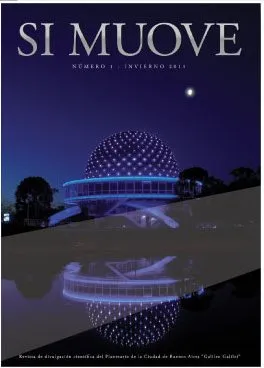
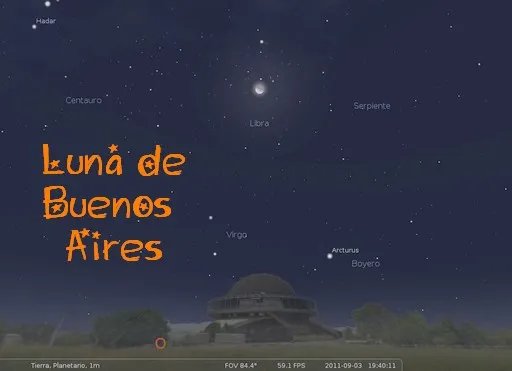
Yesterday "Si muove" was presented, the new publication made by the staff of the Planetario Galileo Galilei, and some details of the renovations being carried out were revealed.
19:00 h. Wednesday, July 13, 2011. Planetario Galileo Galilei building.
In front of almost a hundred people, Lic. Lucía Sendón de Valery recalled the beginnings of the Planetario Galileo Galilei through a video from "Sucesos Argentinos". After its inauguration on December 20, 1966, when it was still unfinished, a story began that would become part of the lives of the people of Buenos Aires and all visitors from the rest of the country and abroad to the iconic building. The first show was on June 13, 1967. The planetarium instrument had been purchased simultaneously with the one for Rosario, although the latter's building was completed two decades later (in 1984). Therefore, it was a true novelty, both the building and the instrument and its ability to observe the night sky as if it were real, with the educational potential that entails.
"Activities multiplied and, soon, this institution ranked among the ten most visited planetariums in the world," said Sendón de Valery, adding, "currently we receive more than 350 thousand people."
Over the years, activities were added, beyond the projection room: courses, planetariums for the blind and deaf, outdoor events, the itinerant planetarium with the motto 'we go so that they come' and observation outings. Also the remodeling tasks.
For this bicentennial, the renovation works included changing the external lighting fixtures, which renewed the building's appearance, and the tasks of modernizing the room began: the inner dome was changed, the lighting, and the software for the new technology was implemented.
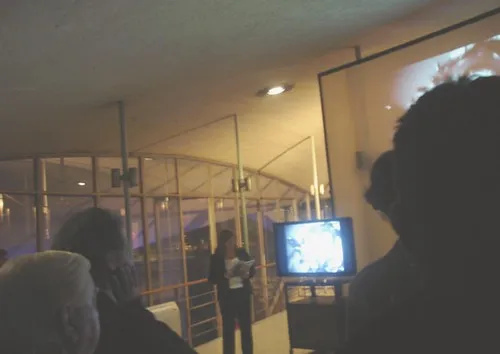
"For all of us who work and practically live at the Planetarium, it is a historic moment because we are facing a great change that causes us much restlessness, uncertainty, we don't know what will happen, when changing from analog to digital technology," indicated the director of the institution, who added that it is also "A change in the way of working. We produce our shows entirely and we have to learn this new technology, we are preparing for that, it's a great challenge, but it is what is being installed in most planetariums in the world."
Licenciada Sendón was thus alluding to the change of the Planetarium instrument, which until now was analog, for a digital one, like those currently used in the world.
"This moment, which is a turning point for the Planetarium, we believe was ideal to launch something we were missing: a publication, a magazine," commented the licenciada to present "Si muove", a project they have had at the Planetarium for two years.
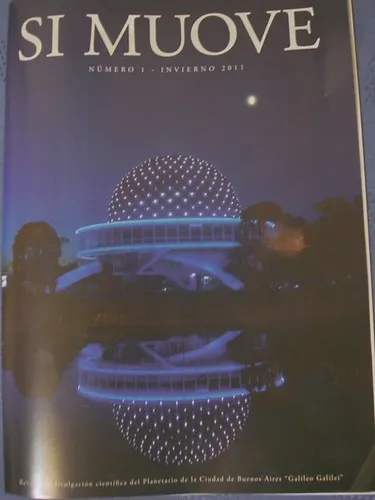
The magazine, handed out to those present at the presentation, is of great quality. It has 48 pages of glossy paper, in four colors, and a great variety of content. The cover indicates "Winter 2011" for this first issue.
As the director later explained, it is planned to be semiannual at first and then seasonal (that is, quarterly), and it is possible that a new issue will be published before the end of the year.
The magazine has advertisements (Citroën, Exo, Óptica Cosentino, Fundación YPF) and although this first copy is free, it will later have a cost. The idea of the latter is that the magazine be valued. It is expected, therefore, that its cost will be low, but that it will have one so that those who have it do so out of a true desire to read and learn and that it is not quickly discarded or thrown away for not having an economic value.
The objective is for it to be a science popularization magazine, focused on astronomy, but open to other related sciences and open to the public to send suggestions and especially photographs (the address [email protected] was indicated for this purpose).
Eppur si muove
Eppur si muove or E pur si muove (and yet it moves, in Spanish) is the phrase that Galileo Galilei would have pronounced to the tribunal of the Inquisition. Some historians question the famous phrase, others point out that he would have pronounced it, but in another context. In any case, it indicates a vision and perseverance, as well as a challenge. What better phrase, synthesized, for the new era of the Planetarium that bears the name of the astronomer from Pisa.
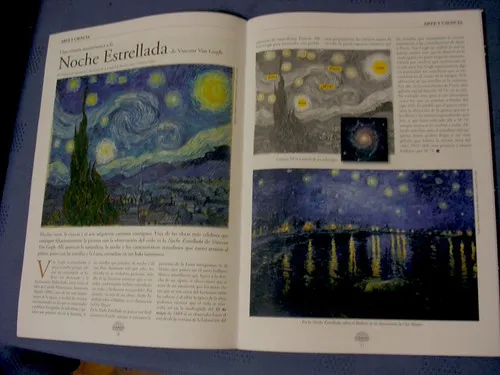
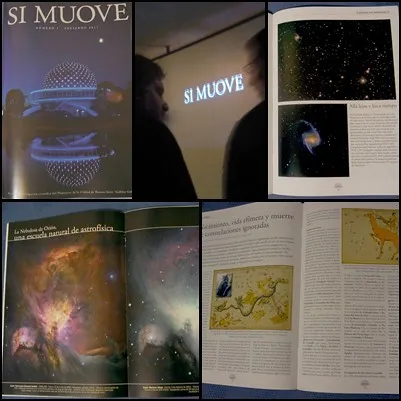
This first issue features an editorial, an article by Mariano Ribas (Life on neighboring worlds), a wonderful note by Diego Luis Hernández about Starry Night by Vincent Van Gogh, a note about the superconjunction of planets in May. Then, Andrea Clérici publishes an article about the space race and Yuri Gagarin and later another about The Age of Aquarius, about the SAC-D satellite, the director of the Planetarium then recounts the history of the institution in The Times to Come. There is a note about the Planetarium's relationship with similar institutions in the world (at the VI Meeting of Planetariums of the Southern Cone).
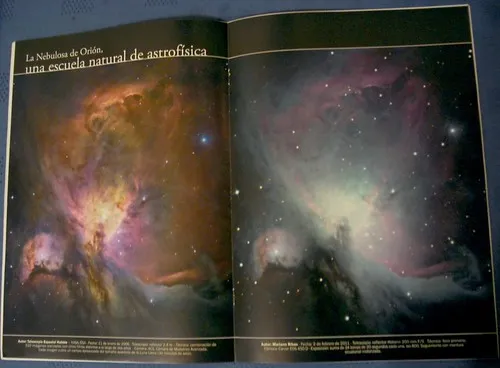
Here we must stop and observe with our mouths open. The central pages contain on the left a photo of the Orion Nebula taken by Hubble and, next to it, a photograph of the same object taken by Mariano Ribas through 24 shots of 20 seconds. The result is incredibly similar, although the instruments used are vastly different (Hubble has a 2.4m reflector and Ribas made the image with a 200 mm f/5 reflector). The image is followed by a note about the nebula.
Then Mariano interviews Paul Crowther, leader of the scientific team that studied R136a1, the most massive and luminous star ever studied.
Rafael Girola and Magdalena Ruiz Alejos tell us about the moon and the origin of its cartography.
Graciela Toledo and Walter Germaná allow us to know what to look at in Paths in the Sky.
There is a page of brief news and at the end a photo gallery with images from regular attendees of the Planetarium like Diego Hernán Sassone. Also photos by Ezequiel Bellochio and Sergio Eguivar. The sky of Yamay, photographed by Jorge Weselka, a photo of M16 by Omar Mangini and a photo of Jupiter by Máximo Ruiz de Áger, Lleida.
The magazine concludes with an article by Diego Hernández about the ignored constellations. It is wonderful because it allows us to know that, for example, up there in the sky someone believed they saw a cat (Felis), even though it is no longer part of the 88 official constellations. Diego, also, on observation trips, has inspired us with other constellations of his, like the snail.
The magazine, entirely produced by the Planetarium staff, is directed by the Planetarium's own director, with journalistic direction by Diego Hernández and art direction by Alfredo Maestroni.
The cover photograph was taken by Alberto Russomando.
At the gathering, accompanied by a delicious Syrah and some crustless sandwiches, I was able to talk with several of the attendees, many of whom expressed surprise at the announcement of the technology change. In an interview I conducted with the director at the beginning of the year (See The Planetarium to Come) this change had not been indicated as planned. In fact, the idea seemed to be to continue with the old Carl Zeiss instrument, with renovations.
According to comments later made by Licenciada Sendón, the new seats are being made in our country (they cannot be imported) and they still don't know what will become of the old Carl Zeiss instrument. It would be good if it were renovated a bit and continued to be used by some institution, instead of wasting its functionality in some warehouse. Although it is a piece worthy of exhibition, I think it can still be used for shows.
In conversation with Mariano Ribas, he pointed out that it is possible that future issues could be online on some page of the City government. It was not a promise, it is something that could be done and, therefore, a possibility. I think it would be a good idea so that the publication, in electronic format, could reach a more diverse and distant public from the big city.
Although there are not so many activities currently at the Planetarium because the showroom, where courses were also given, is closed, the launch of the publication indicates that, nevertheless, the Planetarium, it moves.
Sources and related links
- Planetario Galileo Galilei
About the images
- Photographs of the event and the magazine taken by me (Sony W55). The images of the magazine were taken for illustrative purposes only.