A collection of links to music, images and videos relating art and science. Today: Images of the Carina Nebula; Supernovas in NGC 6984. Music by Shelta. Video: Light of the Night.

Images of the decade
Carina
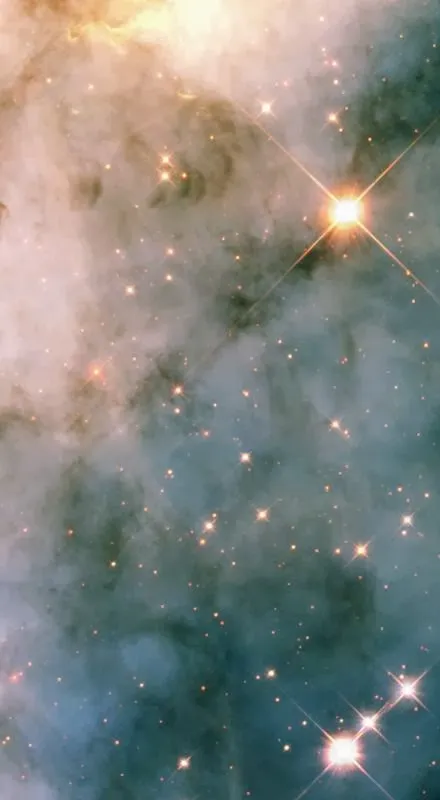
The complex structure we see in the image was sculpted by the winds of very fast stars and the high-energy radiation from the ultraluminous variable star Eta Carinae. The image shows a region in the Carina Nebula between two long clusters of some of the most massive and hottest known stars. This Hubble close-up shows only a portion three light-years across of the Nebula, whose diameter is greater than 200 light-years. The color is composed from ultraviolet, visible and infrared filters to which the colors blue, green and red were assigned, respectively.
The Carina Nebula lies 8000 light-years away. Eta Car is a variable star containing as much mass as 100 suns. It was one of the brightest stars in the southern sky in the 1800s, but since then its brightness has faded.
The image was published on HubbleSite on November 6, 2003.
Credits: NASA and The Hubble Heritage Team (AURA/STScI)
Acknowledgement: S. Casertano (STScI)
Images of the week
Stellar explosions in NGC 6984
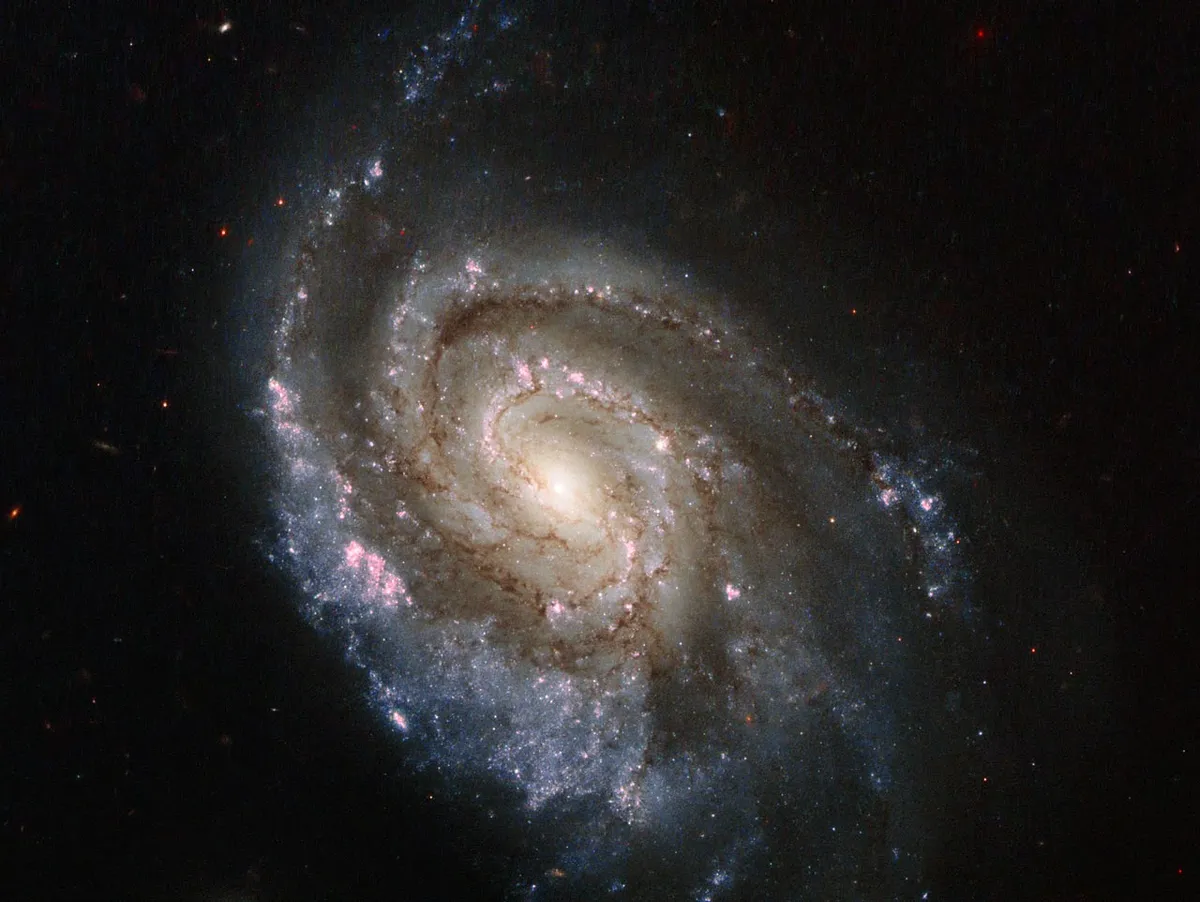
Supernovas are very bright events. They form when a star reaches the end of a stage with a dramatic explosion, ejecting most of its material into space. The object in this image is the spiral galaxy NGC 6984, host to one of those explosions in 2012, known as SN 2012im. Now, another star has exploded, forming SN 2013ek, visible in the image as the prominent bright object just above and to the right of the galaxy's center.
SN 2012im is a type Ic supernova, while the more recent one is type Ib. Both types are caused by the core collapse of a massive star that has lost its outer hydrogen layers. Type Ic supernovas lose more of their outer layers than type Ib ones, including a layer of helium.
The observations that allowed this new image to be made were taken on August 19, 2013 and aimed to locate the new explosion more precisely. It is so close to where SN 2012im occurred that the two events could be related, as the probability of two completely independent supernovas occurring so close and of the same explosion class with a time difference of one year is very low.
NGC 6984 is located 180 million light-years away.
It was the Space Telescope Image of the Week.
Credit: ESA/Hubble & NASA
Space Music
This album on BandCamp by the artist Shelta is titled "Complex Nebula In Orion and The Cone Region in Monoceros", that is "Complex Nebula in Orion and the Cone Region in Monoceros".
It contains 6 tracks referring to notable astronomical objects like the Crab and Eta Carina.
Animated Science
Light of the Night
Photographer Christopher Georgia made this video with more than 12,500 photographs, traveling thousands of kilometers and climbing mountains to finish, 500 hours later, with a short film about the sky of New England.
It is interesting how it is possible to "do astronomy" even during the day, as the author set his camera fixed on a point and over time the apparent motion of the sun can be seen.
Light Of The Night from Christopher Georgia on Vimeo.
To access previous editions of this section, consult the Multimedia Selection Series. The series attempts to show that the immensity of the universe can be perceived in different ways. I choose some images from a decade ago -so they don't fall into oblivion- and from the current week that is ending, as well as sounds/music and videos that are artistic forms of expression with content related to astronomy and related sciences. I am also collecting these materials in the Pinterest account