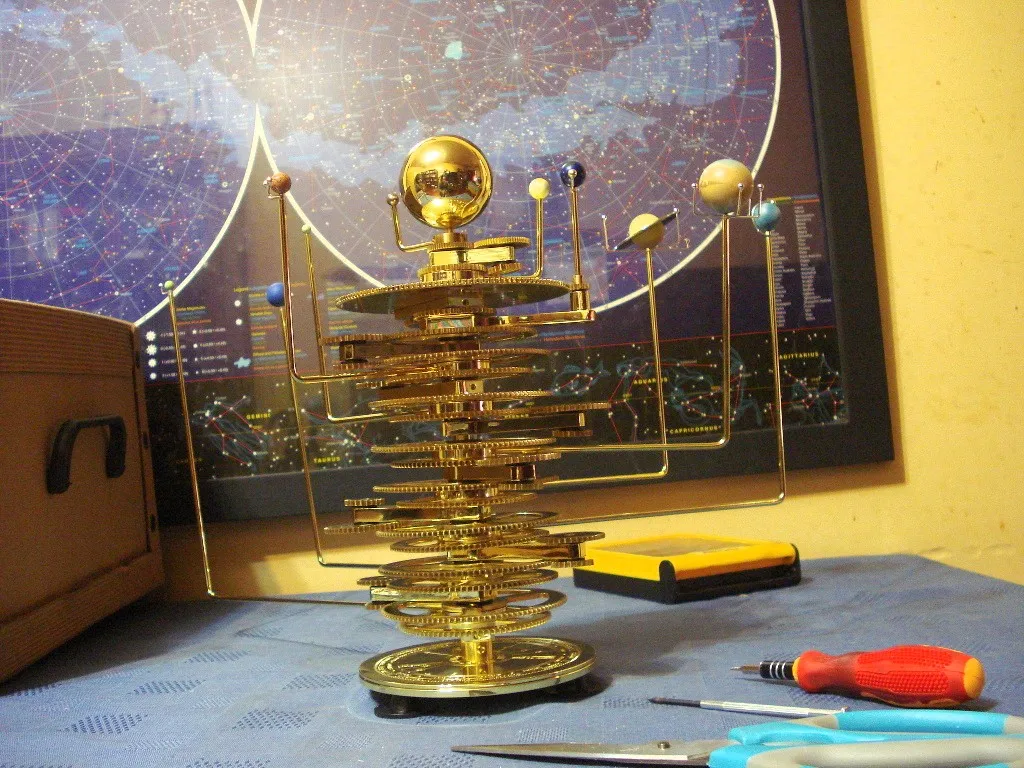
A sample of how the mobile Solar System to assemble is turning out.
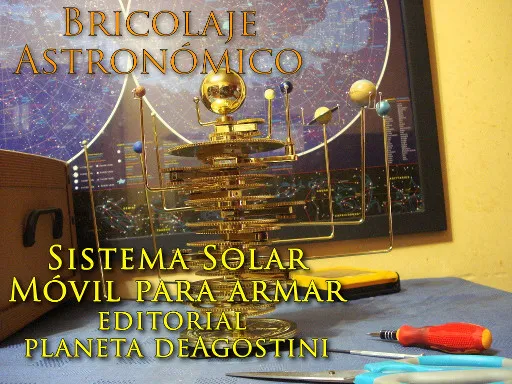
I hadn't thought until now of a category of posts that could be called "DIY", even though a couple of previous posts could be labeled that way, for example, a post about paper models of spacecraft.
In this case, it's about assembling a mobile planetarium through the biweekly installments, distributed through newspaper kiosks, from the publisher Planeta DeAgostini, which is designed in 104 installments, of which 45 have been released.
The planetarium is assembled in stages that, so far, correspond to each planet (plus Ceres, Pluto, and Eris). For each stage, you need to have the parts from 4-5 installments. I assembled the first stage in due time, when I gathered the required parts, but since then I hadn't continued the assembly and only collected the issues with the blister packs of parts. The work holidays were a good opportunity to advance the assembly, given that I already had all the parts for the celestial bodies (except Eris).
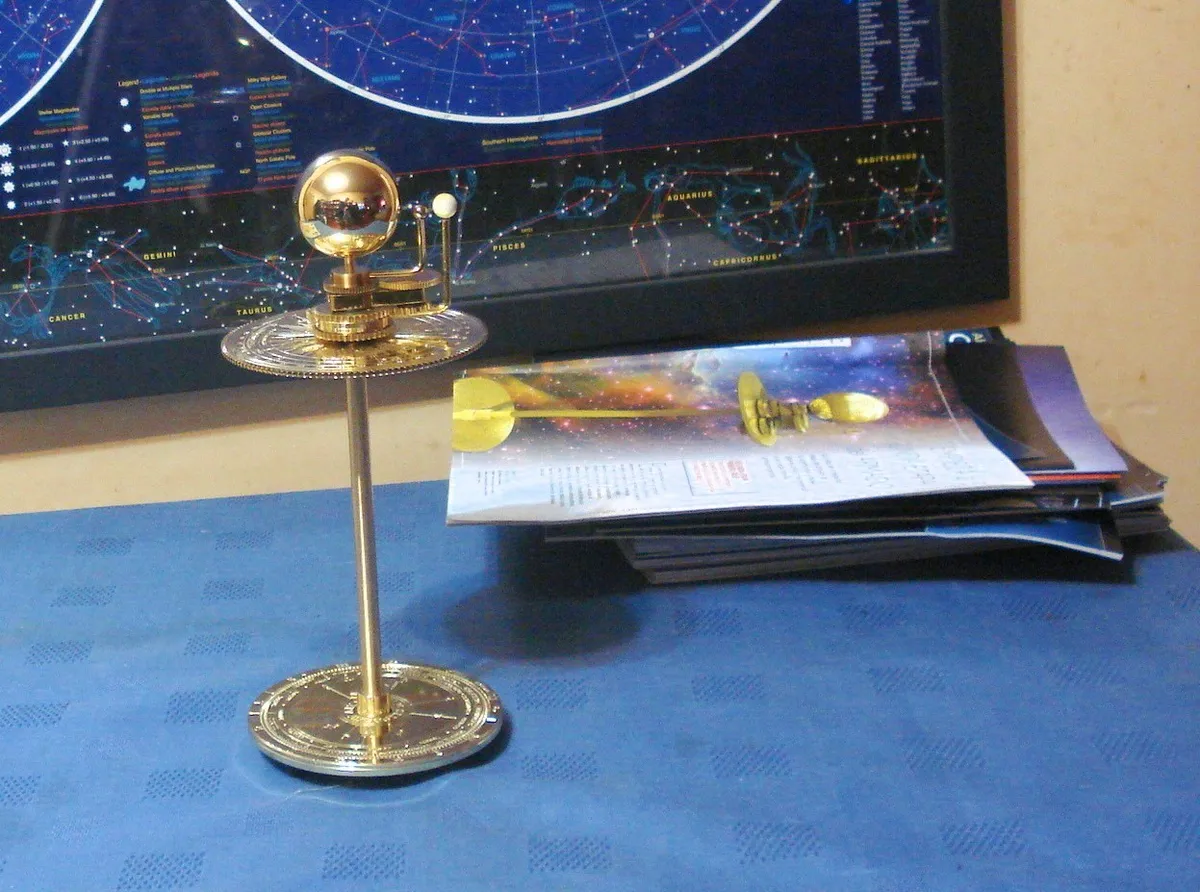
The mobile system has a central axis on which the Sun is placed and, below, goes the mechanism for each planet. This mechanism consists, in each case, of two sets of gears. Since the assembly is the same, once you've assembled a couple of sets, the rest is simple and faster.
The materials are adequate and the overall design of the collection is very careful, which is noticeable in quality details like the caution with which the parts are delivered, included in a plastic and cardboard blister pack inside which the screws come in their own plastic bags and the washers are secured with tape. Other details are the holes in the gears which have a notch so that the screws don't protrude in the end. So far, there hasn't been any installment with "spare" parts, so it's necessary to be careful and not lose parts, particularly the screws which are small.
On the other hand, the base of the structure is not very firm, for the moment, since the motor will go there, to be delivered in upcoming parts, so it doesn't have the necessary weight firmness.
The necessary tools are few, but important. In the first photo, you can see, at the bottom right, the three main tools:
A sturdy pair of scissors to open the plastics; a crosshead or Phillips screwdriver, and a long screwdriver like the ones used in watchmaking, for adjusting the set screws. It's also convenient to have a 2 mm Allen key for a bolt that adjusts the central axis.
Each installment includes a booklet with data and photos related to Solar System objects and the first one of each stage includes the assembly instructions.
Each planet goes on its own arm which is mounted on one of the gear sets and adjusted with a set screw. Another similar screw is used to adjust the second gear set, below. There is also a screw of that type to adjust the planet's axis to the gear collar. These screws may need adjusting later, as moving the structure loosens them. For that task, the long, watchmaking-type screwdriver is ideal.
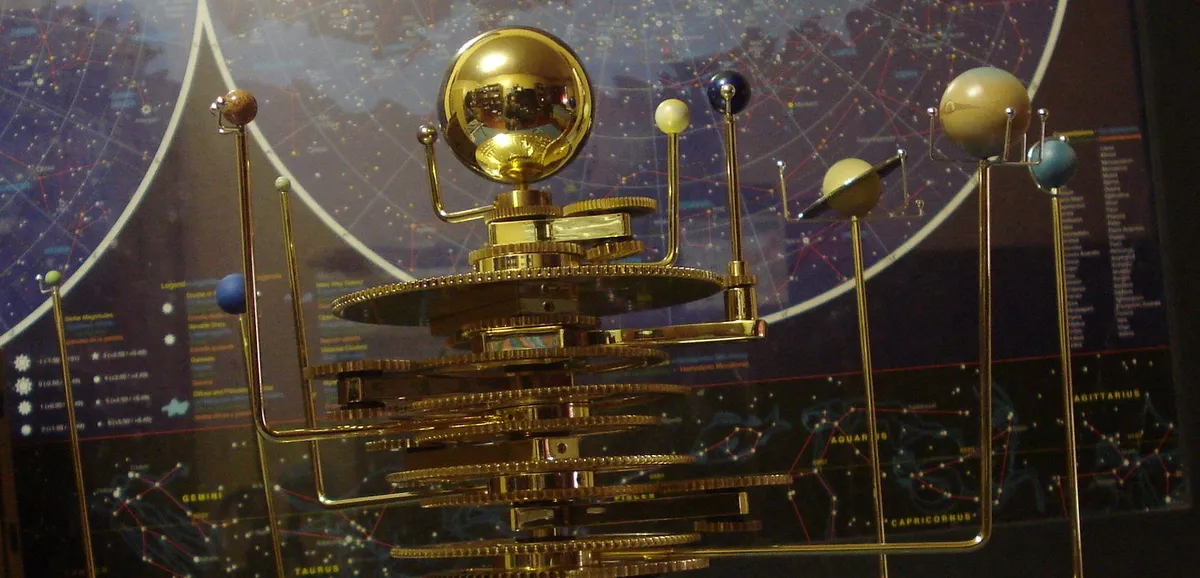
As indicated, the planetarium will be operable manually, but will also have a small motor. In any case, it will be necessary for the adjustment of each gear to be optimal so that the parts rotate without difficulty, in sync.
It is important to take precautions during assembly, such as having a flat table and a safe place to store the structure so it doesn't get damaged.
The images seen on the publisher's website, as well as some photos and videos of already assembled models, show that it is a beautiful piece of engineering. Although the price of each issue is somewhat onerous, the truth is that it's worth it. However, you need to have patience to collect all the issues.
Besides being a showy and decorative object, it is an instrument that could be used for astronomy outreach. We'll see when I finish assembling it what explanatory uses can be given to it.
Sources and related links
Mobile Planetarium Collectible Planeta DeAgostini https://www.planetadeagostini.com.ar/modelismo/sistema-solar