The difference between what is said and reality.
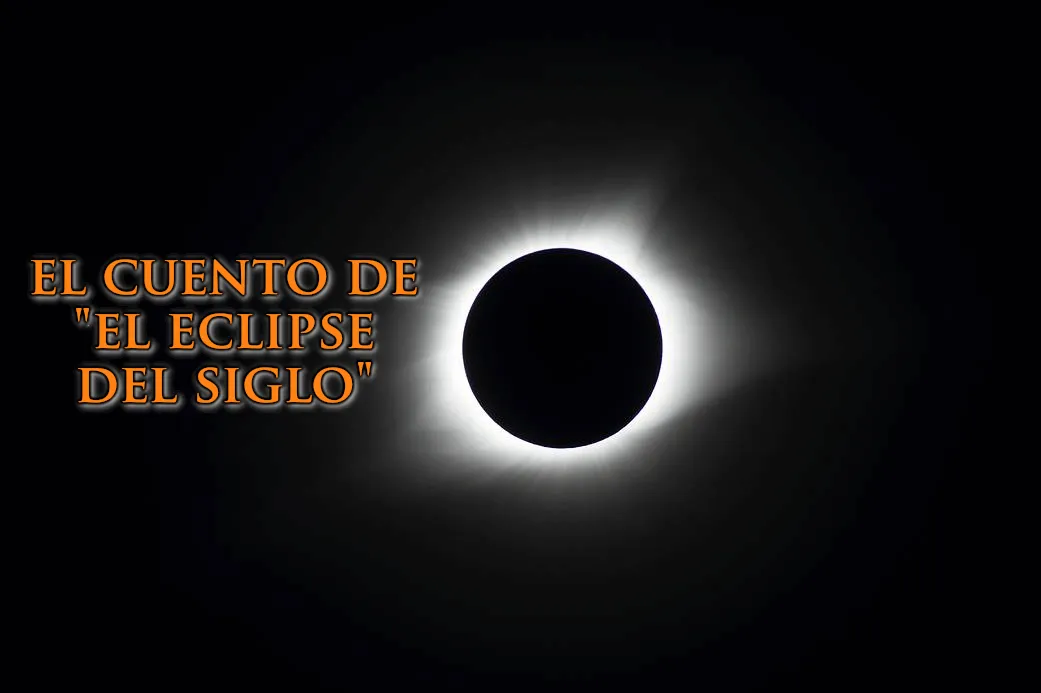
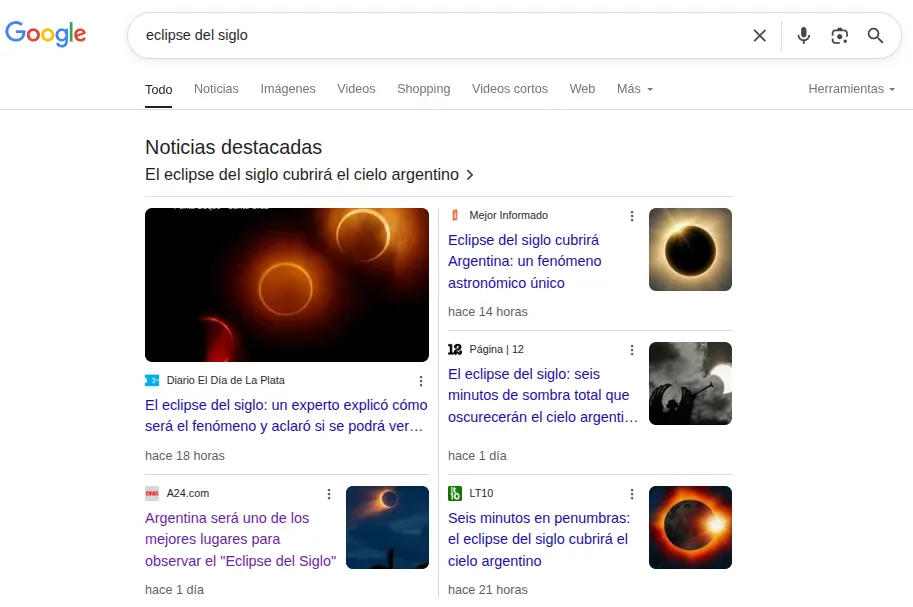
In recent days, several media outlets in Argentina have pointed out that on August 2, 2027, there will be a total solar eclipse lasting 6:23 minutes (the totality) and that is why it is called "The Eclipse of the Century".
Several points to note:
1-If we search for "Eclipse of the Century" we will first see the recent news, but if we keep searching we will see that other eclipses that have already occurred since 2020 have been called by that same name.

2-At the same time this "news" was published, the Infobae site published an article titled "When will the longest solar eclipse in 12 thousand years be and where can it be seen" referring to an eclipse to occur on July 16, 2186. It is not titled nor is the event mentioned as "the eclipse of the century", but it is a publication mixed with the others in the searches.
3-El Día de La Plata published two articles on the matter: in one it says the same as the other media. In another, published the next day, it is correctly explained -thanks to Claudio Martínez- that there will be an annular solar eclipse on February 6, 2027 visible from Argentina.
THE FACTS
1-Although it is no longer updated, the Fred Espenak/NASA website remains ideal for consultation in case of doubt, with a lot of information. It is found at the site: https://eclipse.gsfc.nasa.gov/
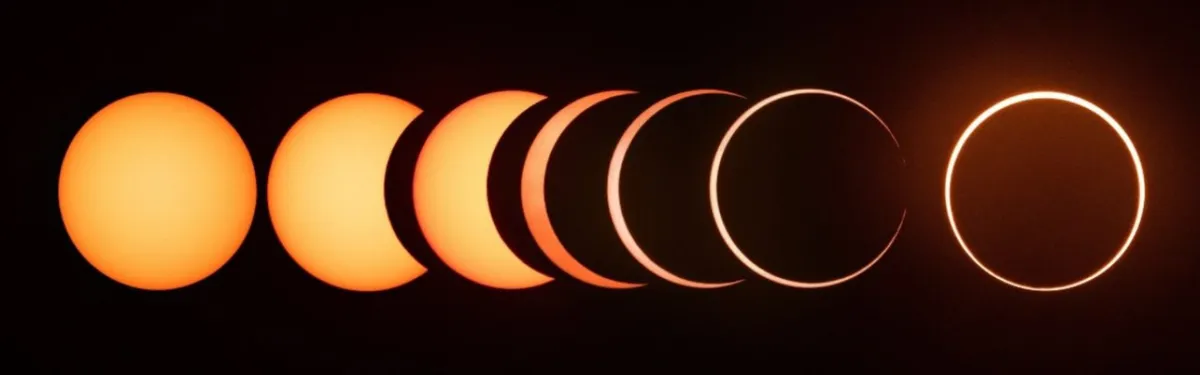
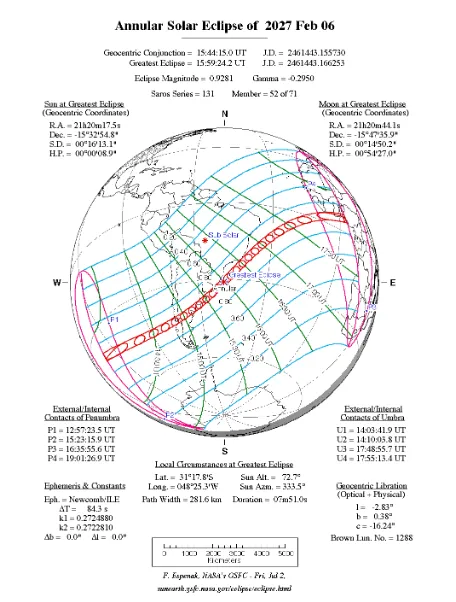
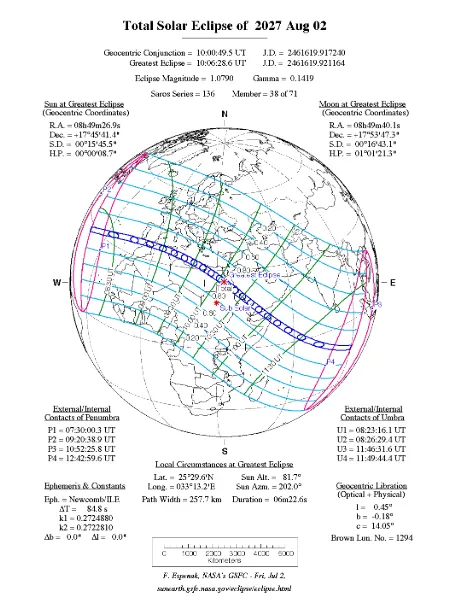
2-There we can see that in 2027 there will be an eclipse on February 6, annular, visible in Argentina; another on August 2, Total, not visible in Argentina. In both cases the duration is also indicated and there is a graphic for each one.
3-This year we already had a solar eclipse on March 29, not visible from Argentina. And there will be another on September 21, partial, which also will not be visible from these latitudes. Next year there will be one on February 17, annular, yes visible from Argentina; and then on August 12, not visible from here.
4-In addition to the very good Espenak site indicated above, in Argentina you can consult the Servicio de Hidrografía Naval. There they have a free Astronomical Ephemeris program to download: https://www.hidro.gov.ar/observatorio/Astronomia.asp?op=10
5-You can use other computer programs or mobile applications. A very simple and useful program for Windows is gSky Digest: https://gskydigest.sourceforge.net/installing.html
6-Some of the websites that published the note about The Eclipse of the Century have paper newspapers in which the news was not published. It seems they use different criteria.
7-Final Comment: There seems to be a search for the spectacularization of eclipses, which are already spectacular in themselves. However, they are narrated as if not seeing them were a waste of life. The narrative implies that one MUST observe them because they are unrepeatable...in some sense. Everything in life is unrepeatable, in some sense. Astronomy (like anything else) is enjoyed if the person likes it, not by social imposition. We discussed this some time ago in The Frequency of the Unrepeatable in Astronomy.
In any case, it is most likely that these clickbait news stories will be repeated. Until then...☉
Sources and related links
The eclipse of the century: six minutes of total shadow that will darken the Argentine sky https://www.pagina12.com.ar/836908-el-eclipse-del-siglo-seis-minutos-de-sombra-total-que-oscure
Six minutes of darkness: where will the "eclipse of the century" be best seen in Argentina?
Debunking myths: An expert explained what the eclipse of the century will be like and clarified if the "ring of fire" will be seen in Argentina https://www.eldia.com/nota/2025-6-25-11-45-0-el-eclipse-del-siglo-un-experto-explico-como-sera-el-fenomeno-y-aclaro-si-se-podra-ver-en-argentina-informacion-general
Six minutes in penumbra https://www.eldia.com/nota/2025-6-24-20-5-0-seis-minutos-en-penumbras-el-eclipse-del-siglo-cubrira-el-cielo-argentino-en-una-escena-de-ciencia-ficcion-informacion-general
When will the longest solar eclipse in 12 thousand years be and where can it be seen https://www.infobae.com/america/ciencia-america/2025/06/24/cuando-sera-el-eclipse-solar-mas-largo-en-12-mil-anos-y-donde-podra-verse/
About the images
Credits: "Eclipse Predictions by Fred Espenak, NASA's GSFC"
NASA/MSFC/Joseph Matus