On how frequent are events narrated as unrepeatable.
Often, when astronomical phenomena are disseminated, such as the apparent closeness in the sky of two planets, forms of language related to endowing the phenomenon with a "unique" characteristic are used, which at the same time would imply the "necessity" of observing on a specific day and time a process that would be unrepeatable.
It is not arbitrary to point out that there seems to be in society an intrinsic value to the unique and unrepeatable that, at the same time, is related to luxury [1], that is, to that which only some will be able to have/observe, even though it is not about material objects, but about experiences.
How much truth is there that those astronomical processes are truly unique and unrepeatable?
A first possible approach is to concede that, since those processes are linked to the "location" of the objects, be it apparent in the sky or objective in space, every process is unique and unrepeatable since space-time expands and the celestial sphere changes due to the movements of Earth.
Thus, in this type of astronomical phenomena there is as much unique and unrepeatable as in ANY OTHER social and earthly process. This moment that the reader uses to read this text is unique and unrepeatable. Never again, nor ever before, has this that is happening to the reader right now occurred. And we can say the same about any other process that, ultimately, will always and in all cases be unique and unrepeatable.
If EVERYTHING is unique and unrepeatable, then the category of "the unique and unrepeatable" what value does it have?
Evidently, value is given to that category because it is assumed that SOMETHING is unique and unrepeatable and NOT EVERYTHING. The unique and unrepeatable is, therefore, EXCLUSIVE (hence it is not a whim to link it with the category of luxury).
However, something (be it an individual, a group, a process), can be unique and unrepeatable in some aspects and not be so in others. The fingerprints on my hands are uniquely mine, and this implies that no other person would have the same "configuration" of fingerprints. Despite this, other human beings, like me, have two ears, two eyes, limbs, kidneys (although there are none like mine)...
Celestial phenomena are normal because they are natural. Some are more frequent than others, even though they are not identical. That is, ALL are, in some sense, unrepeatable and -in another sense- they are not.
Recently the Planetarium of the City of Buenos Aires, on the occasion of the celebration of its 49th anniversary, invited to observe the apparent closeness in the sky of Mars and Saturn.
The phenomenon was not proclaimed as unique (although, as we already said, in some sense it is) since this closeness is frequent. Sometimes, on the other hand, those approaches are disseminated as if they were unrepeatable in every sense, as if not observing them on a specific day and time implied not being able to observe them ever again, that is, because they are considered unrepeatable. [2]. But let's see:
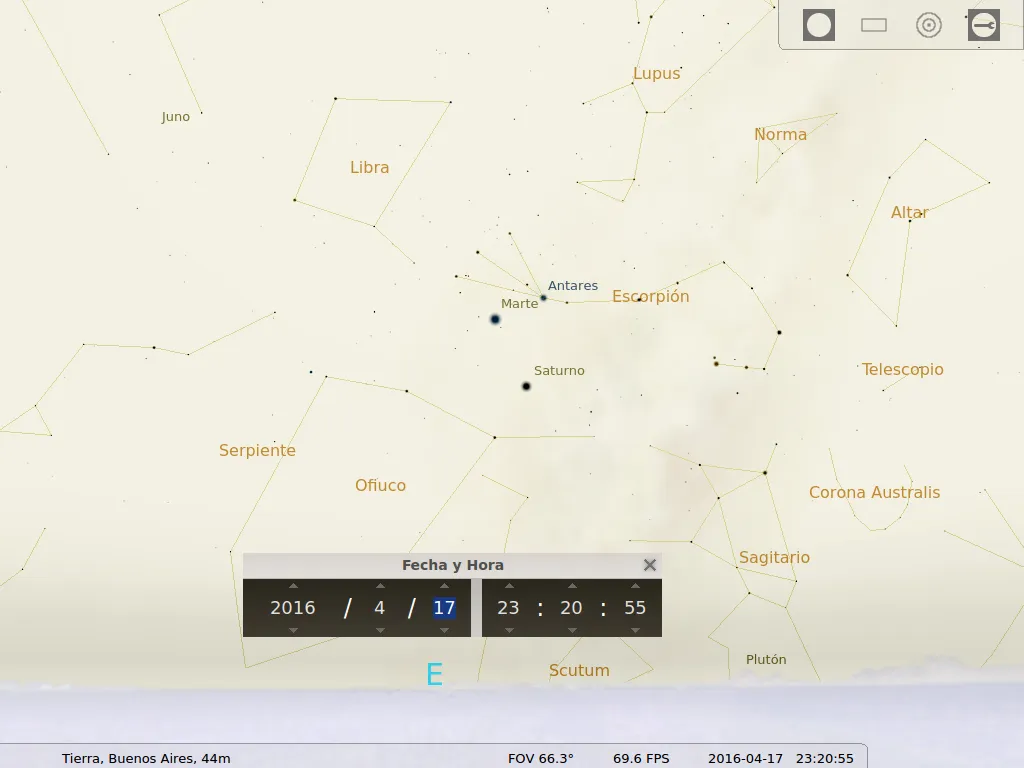
This is a screenshot of the simulation program Stellarium for Buenos Aires, on April 17, 2016, around 23:00 hours. An apparent closeness of Mars, Saturn and the brightest star of Scorpius, Antares, is noticeable.
We advance the simulation one week, to April 24, keeping the time and place. And we see this:
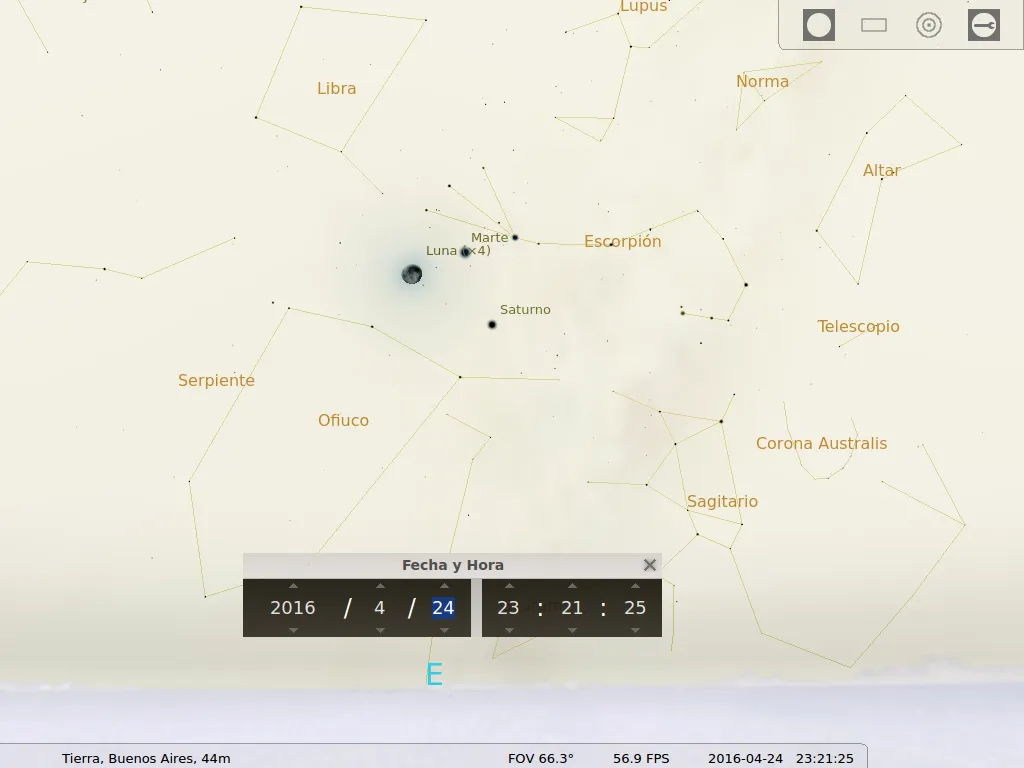
The apparent closeness is "more or less" the same, it is not possible to distinguish with the naked eye and without instruments a notable difference, except for the accompaniment of the Moon. If we had set the simulation date as April 23 or 26, the Moon would not have been there, but the difference between the other three objects in question would have remained. Just for this we could say that this "configuration" Mars-Saturn-Antares-Moon is less frequent than the configuration without the Moon. But...
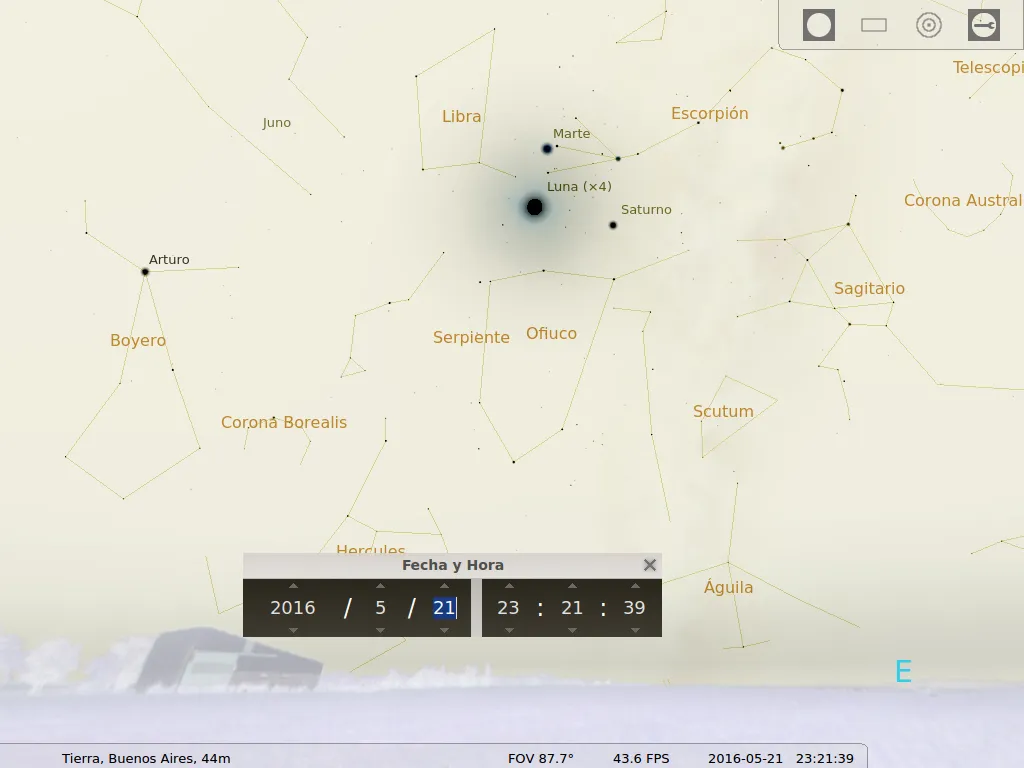
We advance the simulation again, one month, to May 21 and we see a configuration similar to the previous one, although not identical. The Moon placed itself again between the planets, although its phase was a little different.
Clarification: The images have inverted colors. The common thing is for the sky to appear dark and the stars and planets bright (in white). For this case I decided that the images have a light background and dark stars, to be easier to perceive in static images on the internet. The phase of the Moon in both cases is close to the full Moon.
Therefore, that configuration of April 24 was not so unique, by virtue of the fact that almost a month later it repeated itself, not in an identical form, but what is observed is almost the same.
Let's go a little further: May 30, same time and place.
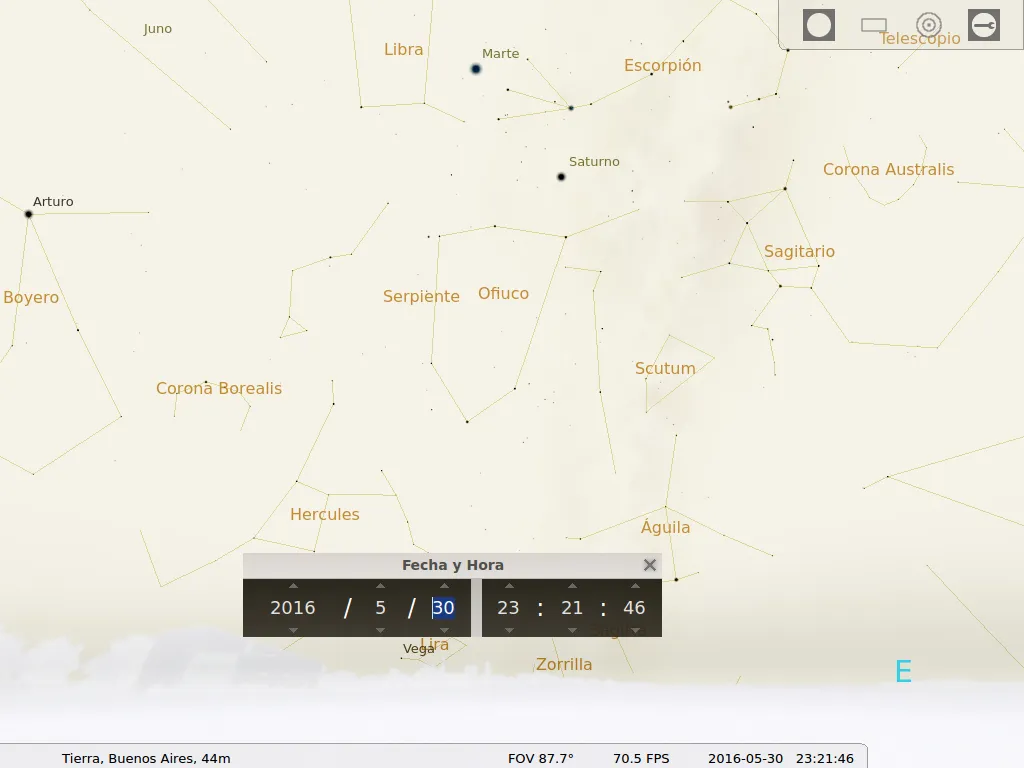
The Moon is not there. The distance between planets increased, but in general terms we can say they are still very close to each other, in a similar, but not identical, way to the first image, from April 17.
Finally, for June 11, the image is this:
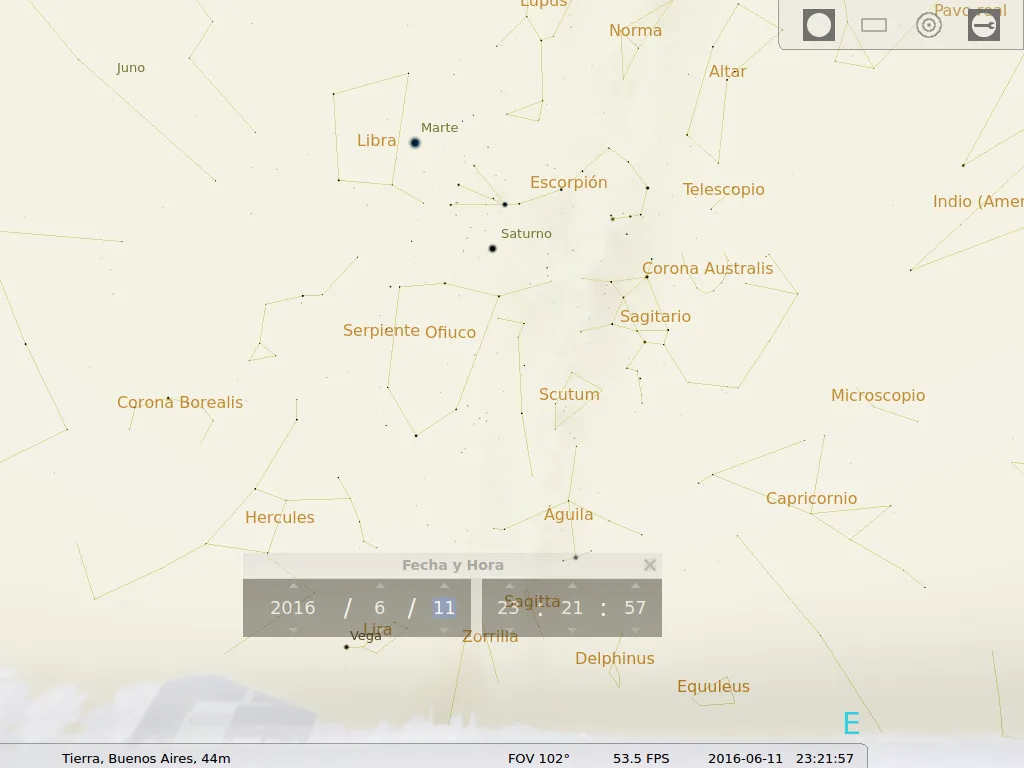
Without the Moon, equally the red planet and the gas giant are, more or less, at the same apparent distance. If it had been disseminated that Mars and Saturn would be incredibly close as a unique and unrepeatable event on April 17, would it have been true?
Yes, in one sense: EVERYTHING that happens is unique and unrepeatable. But in another sense it would be false.
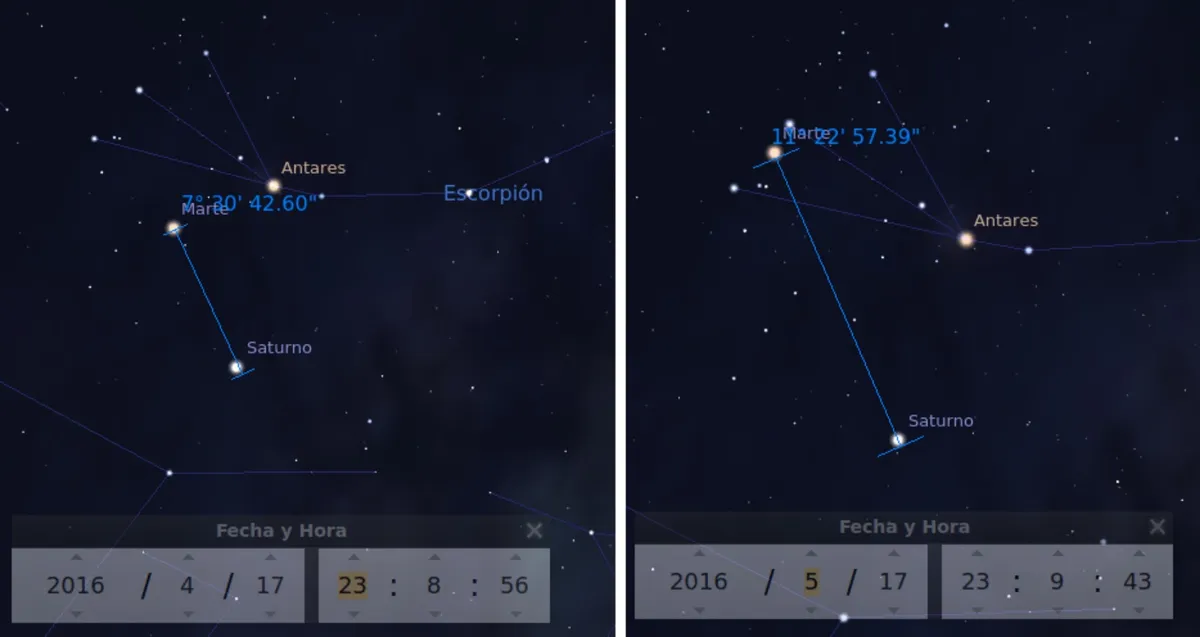
Stellarium incorporates an add-on to measure angular distances. Using it we have a more objective measurement of how distant two objects were in the apparent perception of the sky: between April and May: 4 degrees, approx.
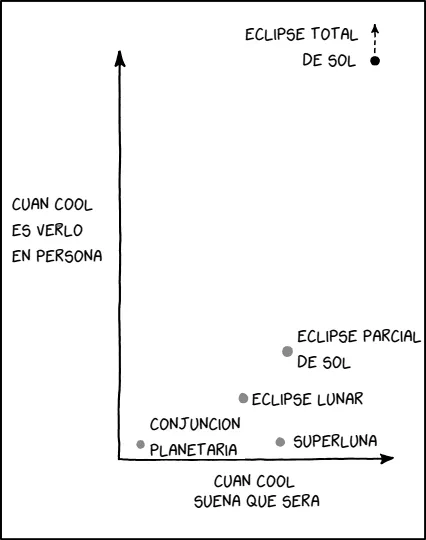
Eclipses are also astronomical events that are normal. Are they common? They are more common than supernova explosions perceptible to the naked eye and less common than sunrise or sunset. That a process is infrequent does not mean it will not happen again or that it never happened before, but only that its frequency is lower than other phenomena. How common or uncommon will depend on what we compare it with.
And this, despite the fact that in reality, every eclipse is unique and unrepeatable, like everything else.
Scientific outreach is directed at the general public to arouse interest, sometimes appealing to an unnecessary and false spectacularity. We cannot create false expectations and we also cannot have a very high degree of precision (unnecessary for outreach objectives). With an enormous degree of precision, every phenomenon is unique and unrepeatable.
But since what distinguishes those phenomena can be very difficult to detect (unless precision instruments are used), what is observable is more or less the same in broad strokes. Counting that as something unrepeatable is not, therefore, without something deceptive.
If we understand the category of the unrepeatable as something in the sole sense of that which has no identical antecedent or consequent and -therefore- as that which has frequency = 1, then, I insist, every second of every life is unrepeatable. If by this concept we give value to things and processes, then a conjunction has as much value as the change of a traffic light.
On the other hand, if we consider the unrepeatable as the infrequent (in comparison with other things, with other frames of reference), then processes will be more or less repeatable. The unrepeatable acquires a frequency. The unrepeatable is that which repeats. It seems, but is not, a contradiction. What repeats is not identical, exactly the same in all its points or senses.
The unrepeatable, understood as an exclusive category, becomes a luxury and, therefore, unnecessary.
Astronomy, in this sense, is it a luxury?
In a historical sense, yes it is. What is possible to observe today was not possible to be seen, detected, investigated and known millennia ago, thanks to technology, especially the telescope and other instruments.
Also from an empirical point of view, as Nobel physicist Lawrence Krauss has pointed out [3].
But, unfortunately, it can also be a luxury in another sense: in that only a few have access to the knowledge produced by professionals, whether theoretically or practically. That is why it is necessary to close gaps, for example with scientific outreach, so that knowledge does not remain exclusively with those who produce it, but is transmitted to the rest of society. That is why astronomy is done.
The spectacular, the extraordinary thing about astronomy is that, being small living beings on a faint pale dot in the cosmos, we have been able to gather information like the one we have today. It is extraordinary that we can calculate enormous, sidereal, astronomical distances, infer astrophysical processes, forecast the regular motion of objects in the sky. Is this not enough for us that we try to turn into extraordinary that which is not?
Could it be that the spectacular mobilizes society to read sensationalist articles on websites full of commercial ads? If that were the case, then the "extraordinary" is used as a modus operandi already very well known, for its frequency...
Ultimately it is about using our cognitive capacities to distinguish what is equal from what is different. It may seem a simple task, but evidently it is astronomically difficult.
Sources and related links
- [1] The luxury of the unrepeatable
https://web.archive.org/web/20150415223833/http://in-lan.com/reportajes/el-lujo-de-los-irrepetible/
http://in-lan.com/reportajes/el-lujo-de-los-irrepetible/ - [2] Mars, Earth, Saturn and the Moon will offer a celestial spectacle
http://www.elonce.com/secciones/sociedad/462931-marte-la-tierra-saturno-y-la-luna-ofrecernan-un-espectnaculo-celestial.htm - [3] The death of cosmology
http://www.noticiasdelcosmos.com/2007/05/la-muerte-de-la-cosmologa.html
About the images
Credit: Stellarium www.stellarium.org/es/