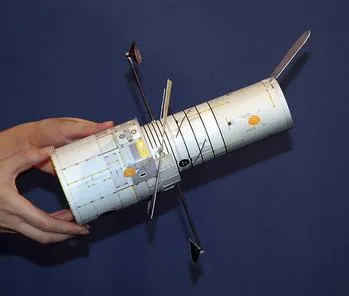
The Calar Alto observatory in Almería has an AstraLux camera on its 2.2-meter telescope capable of capturing extremely detailed images of the Universe, with a resolution similar to that of Hubble, which is 2.4 meters.
Via Terra
On Sunday, September 3, Calar Alto, together with the European Space Agency's Optical Ground Station (OGS) installed in Tenerife, will follow the impact of the SMART-1 spacecraft against the Moon.
This is a worldwide observation that will be carried out together with the VLBI interferometer (network of telescopes), the South African SALT, the Brazilian CEA Cariri, the National one of Argentina, the robotic telescopes of Florida (United States), the Japanese ones and NASA's IRTF in Hawaii and the ODIN space observatory.
The high-speed AstraLux camera captures images in which the blurring caused by the atmosphere is dramatically reduced, something that in Astronomy is called 'lucky imaging', because what is captured is composed only of those 'lucky' moments when atmospheric conditions are optimal.
The highest resolution photographs obtained over several minutes at a rate of several tens per second are selected and, compared to usual observations from Earth, it allows capturing details 5 to 7 times more precise.
AstraLux is capable of distinguishing details as tiny as a one-euro coin located at a distance of 50 kilometers and takes the telescope to the ultimate limit of its optical performance (about 0.1 arcseconds at a wavelength of 900 nanometers, a value that reaches the telescope's diffraction limit).
Compared to Hubble, Calar Alto's high-speed camera covers a smaller field of view and can be applied in the observation of relatively bright stars.
The astronomical objects accessible to AstraLux include binary stars, star clusters, as well as sources of rapid variation such as certain eclipsing binary stars or rotating neutron stars known as pulsars.
In one of the first observations with AstraLux, it was pointed at the globular cluster M15, a relic from the early days of the Galaxy, which contains about a million stars and is located 36,000 light-years from the Sun.
The team that operates the camera belongs to the Star and Planet Formation department of the Max Planck Institute for Astronomy in Heidelberg, Germany.
Terra Actualidad - EFE