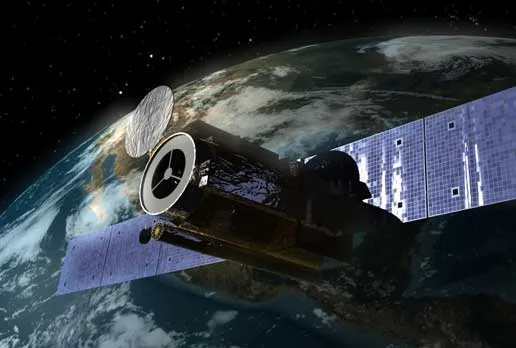
Image credit: NASA/GSFC/C. Meaney
The Japanese spacecraft Solar-B will depart in a few days with the goal of contributing, with its three telescopes, new information about the gigantic flares that emerge from the Sun's surface.
Via BBC and NASA
The optical solar telescope will be the first space instrument created to measure the strength and direction of the sun's magnetic field in its lower atmosphere, also called the photosphere.
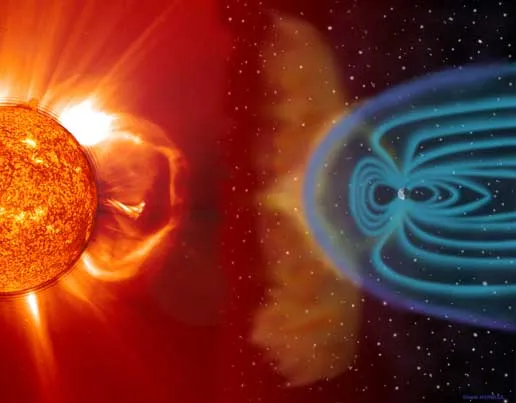
Image credit: NASA/Steele Hill
The outer atmosphere, the corona, will be captured by the x-ray telescope. The explosive activity of the corona produces significant effects in the space between the star and our planet. By combining the instruments scientists will be able to study how changes in the magnetic field contribute to these powerful events.
The extreme ultraviolet spectrometer will measure the velocity of solar particles.
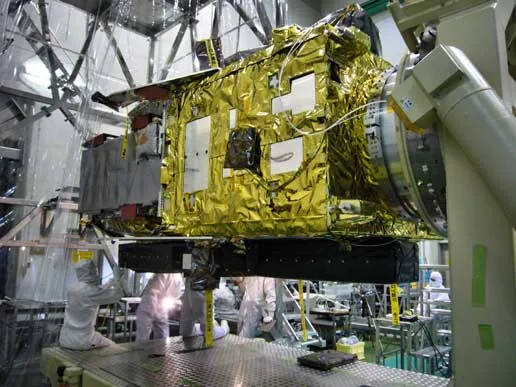
Image credit: Mullard Space Science Laboratory (MSSL)
This instrument provides a crucial link with the other two, measuring the chromosphere, the transition between the photosphere and the corona. It will also measure the temperature and density of the solar plasma - the hot ionized gas that surrounds the star.
"The information that Solar-B will provide is significant for understanding and forecasting solar disturbances that can interfere with communications satellites, electric power transmission and with the safety of astronauts traveling beyond Earth's magnetic field," said John M. Davis, Solar-B project scientist at NASA Marshall.
Solar-B is a collaboration between the space agencies of Japan, the United States, the United Kingdom and Europe.
The probe is scheduled to depart on September 22 from the Uchinoura Space Center of the Japan Aerospace Exploration Agency (JAXA) in southern Japan.
For more information visit:
http://www.nasa.gov/solar-b
Information on the BBC site