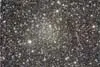
The chemical composition of stars in clusters can tell us the history of our galaxy.
Via EurekAlert
Using ESO's VLT (Very Large Telescope), an international team of astronomers has shown how to use the chemical composition of stars in clusters to understand the formation of our Milky Way.
The formation and evolution of galaxies, and in particular of the Milky Way—the 'island universe' we live in—is one of the greatest puzzles in astrophysics: certainly, a detailed physical scenario is still lacking and its understanding requires the joint effort of observations, theories, and complex numerical simulations. ESO astronomer Gayandhi De Silva and his colleagues used the Ultraviolet and Visual Echelle Spectrograph (UVES) on the VLT to find new ways to achieve the goal.
"We have analyzed in great detail the chemical composition of stars in three clusters and show that each one has a high level of homogeneity and a very distinctive chemical signature," said De Silva, who began this research while working at Mount Stromlo Observatory in Australia.
"Star clusters are witnesses to the history of galactic disk formation," commented Kenneth Freeman, another team member. "Analyzing their composition is like studying ancient fossils."
Open clusters are one of the most important tools for studying stellar and galactic evolution. They are composed of a number of stars ranging from a few tens to a few thousand stars bound together by gravity and possess different age ranges. The youngest are a few million years old while the oldest (and rarest) can be up to 10 billion years old. The Pleiades, also known as the Seven Sisters, are a bright and young open cluster. In contrast, Collinder 261, which was the target of the present study, is one of the oldest. Astronomers used UVES to observe a dozen red giants in this cluster, located 25,000 light-years from the galactic center. From these observations, the great abundance of sets of chemical elements for each star can be determined, convincingly demonstrating that all the cluster's components share the same chemical signature.
"This high level of homogeneity indicates that the chemical composition survived through many billions of years," explains De Silva. "Thus, all the stars in the cluster can be associated with the same prehistoric cloud. This corroborates what we have found in two other groups of stars."
A comparison with the open cluster of the Hyades (an open star cluster in the constellation Taurus) and the group of stars moving with the bright star HR 1614 shows that each contains the same elements but in different proportions. This indicates that each cluster formed in a different primordial region of a different cloud with a different chemical composition.
The goal will now be to measure the composition in a larger sample of open clusters. Once the 'DNA' of each cluster is inferred, it will be possible to trace a family tree of the Milky Way.
The research is published in a paper in Astronomical Journal, volume 133, pages 1161-1175 ("Chemical homogeneity in Collinder 261 and implications for chemical tagging", by G.M. De Silva et al.).
The team consists of Gayandhi De Silva (ESO), Kenneth Freeman, Martin Asplund and Michael Bessell (Mount Stromlo Observatory, Australia), Joss Bland-Hawthorn (Anglo-Australian Observatory, Australia), Remo Collet (Uppsala University, Sweden).
Translated from EurekAlert.