Astronomers have captured an image packed with supermassive black holes thanks to data from the orbital observatories Chandra and Spitzer, as well as from ground-based observatories.
Via EurekAlert and Chandra
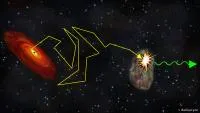
Material falling into these black holes generates large amounts of energy that is observed at different wavelengths from the galactic nuclei.
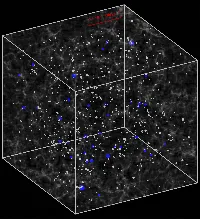
The study found more than 600 obscured black holes, covered by a dense veil of gas, and about 700 unobscured AGN, that is, active galactic nuclei, located between about 6 to 11 billion light-years from Earth. The detection was made with a new search method. By observing objects in the infrared, Spitzer can separate them from stars and galaxies. Chandra and optical observatories then verify that they are indeed AGN. This multi-wavelength observation method appears to be especially efficient at finding obscured AGN.
The Chandra image is the largest continuous field obtained by the observatory. It is about 40 times longer than the full Moon. The study was conducted in a region of the constellation Bootes, including 126 separate points of 5000 seconds of exposure each. The researchers combined this image with infrared data from Spitzer and optical data from the 4-meter Kitt Peak telescopes and the 6.5-meter MMT, both in Tucson, Arizona, of the same part of the sky.