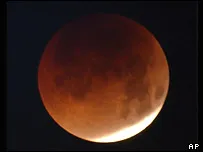
According to modern folklore, a Blue Moon is the second full moon during a calendar month. Normally months have only one full moon, but occasionally a second one slips in. Full moons are separated by 29 days, while most months are 30 or 31 days long; so it is possible to place two full moons in the same month. This happens, on average, every two and a half years.
Kostian Iftica
As reported by Télam, this time, the first full moon phase occurred on Tuesday, May 2 at 07:09:31 Argentina Official Time (HOA) and the second will occur this Thursday at 22:03:40.
"This does not mean that the moon will look bluish," warned the coordinator of the astronomy area of the Galileo Galilei Planetarium in Buenos Aires, Mariano Rivas, and indicated that the name dates back to the 18th century and is a tradition in the northern hemisphere, where they call it "blue moon".
From the steering committee of the Ibero-American League of Astronomy (LIADA), Julio Guerrieri explained that the only way the moon appears "blue in color" is after large volcanic eruptions like those of Krakatoa, Mount Pinatubo and Mount St. Helens.
So the name "Blue Moon" that designates the repetition of the Full Moon twice in a month, alludes to the rarity of both phenomena: that the first phase of the lunar cycle repeats in the same calendar month, is as infrequent as the moon appearing bluish.
However, the representatives of the Galileo Galilei Planetarium and LIADA warned that another peculiarity was added to this unusual phenomenon, which is the occultation of the star Antares, one of the brightest in the sky.
"It's as if the Moon 'parades' in front of Antares, which is the brightest and most famous star in the sky," Rivas recounted and said that in the City and Province of Buenos Aires, privileged areas for observers, the phenomenon will be visible between 19:38 and 20:42, which is when the Moon will cover the star.
Guerrieri added that the spectacle will be visible from the entire national territory, with a few minutes difference from Buenos Aires, and said that the Moon will transit through the Constellation of Scorpius and at only 5 degrees of arc distance, "a Total Lunar Eclipse will not occur that night".
For his part, astronomer Roberto Venero, secretary of the extension area of the Astronomical Observatory of the University of La Plata (UNLP), specified that Antares is a "red supergiant" star the size of Saturn's orbit, which is usually seen "with the naked eye".
Related links
http://ciencia.nasa.gov/headlines/y2004/07jul_bluemoon.htm
http://www.cielosur.com/notas_anteriores/lunazul.php