Large galactic clusters are typically considered the metropolises of the Universe, and for many years astronomers focused their attention on these 'capitals'. However, new research shows that the action happens in the galactic 'suburbs'.
Via Physorg
"The most interesting thing we have found so far is the incredible amount of activity that is occurring in the periphery," commented Lori Lubin, principal investigator of the ORELSE study (an acronym for Observations of Redshift Evolution in Large-Scale Environments). "We see an unusually large number of galaxies with high rates of star formation, producing more than 100 new suns per day, and with central supermassive black holes."
ORELSE is one of the first large-scale studies around very massive clusters between 6 and 9 billion light-years away. With the study, Lubin and her colleagues hope to better understand the physical properties that affect galaxies in clusters and the interactions that change them forever.
Like grapes, galaxies cluster together, and those also gather to form even more massive structures, or superclusters. Scientists refer to the large clusters at the heart of a supercluster as the 'Los Angeles, New York or London'. As if they were highways connecting large cities with smaller towns, a network of galaxies connects these large clusters with smaller groups of galaxies.
In the past, telescope limitations forced astronomers to focus their studies either on the centers of large clusters or random regions in the cosmic web. Now, with the latest ground-based and orbital telescopes, scientists are able to map larger areas.
"We have already discovered the largest known supercluster - a cluster of clusters - present when the universe was half its current age."
To see what happens in the suburbs of clusters, the team collected data with nine different telescopes, including Keck I and II, Subaru and the UK Infrared Telescope on Mauna Kea; the 5m Palomar telescope in California, Kitt Peak in Arizona, and the VLA in New Mexico. Furthermore, the team used three large orbital observatories: Spitzer, Hubble and Chandra.
"With Spitzer we hope to discover more galaxies containing voracious black holes that may be hiding behind a thick curtain of dust, but Spitzer will find them," commented Gordon Squires, co-investigator belonging to the Spitzer Science Center.
Team members think this study could provide valuable clues about the future of our Milky Way. They comment that our galaxy is currently in the suburbs and that our closest cosmic metropolis is the Virgo cluster, located about 100 million light-years away.
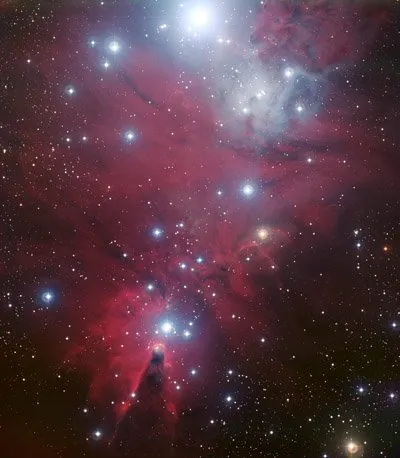
In the image: Large clusters (cities), consisting mostly of less active galaxies (in red), are connected by filaments of small groups (highways and suburbs) with younger and more active galaxies (blue). Galaxies with supermassive black holes, in yellow, tend to be outside the cluster centers.
University of California press release
Spitzer press release (with more detailed image)