In light of the recently chosen new wonders of the world, Astroprof decided to make its own list of the wonders of astronomy.
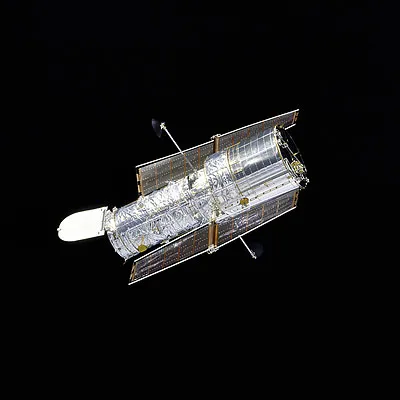
Hubble is one of the wonders of modern astronomy. Credit: NASA.
The list on Astroprof is as follows, with comments translated from the blogger:
1) The Hubble Space Telescope: Well, after all, what list of the seven wonders of telescopes would not include the HST?
2) Arecibo Observatory: The antenna is a giant radio telescope, the largest in the world.
3) Yerkes Observatory: Home of the world's largest refractor.
4) The Very Large Array: This is a radio observatory that uses more than two dozen radio telescopes that combine signals to achieve very high resolution.
5) Mount Palomar Observatory:
It is no longer the largest telescope, by far, but it was for decades.
6) The European Southern Observatory: The only observatory in the southern hemisphere on my list, although there are many others that could justify being on it.
7) Mauna Kea Observatory: This is a collection of telescopes, including the Keck telescopes, on the summit of Mauna Kea, in Hawaii.
I'm not saying the list is wrong, but I disagree in some cases.
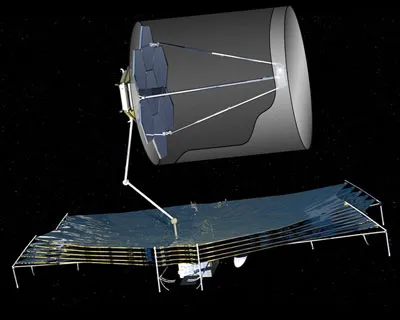
It's hard not to include Hubble, although to be fair, other orbital observatories also deserve a place, like Spitzer and Chandra. And although it is not yet in orbit, James Webb will far surpass the very good work done by Hubble.
Regarding Yerkes and Palomar, there is no doubt they have played a prominent role in astronomy, but they have certainly long been surpassed. On a list of the historical wonders of astronomy, they should undoubtedly be included.
I think the GTM, the Gran Telescopio Milimétrico, a 50 m diameter antenna optimized for astronomical observations at millimeter wavelengths, cannot be missing from the list.
Nor can the recently inaugurated Gran Telescopio Canarias, it is a telescope with a segmented primary mirror 10.4 meters in diameter and high performance whose installation is being completed at one of the best sites in the northern hemisphere: the Roque de los Muchachos Observatory (La Palma, Canary Islands).
On the list of the largest optical reflecting telescopes, SALT, Southern African Large Telescope (SALT) in Spanish Gran Telescopio Sudafricano, cannot be missing; it is an optical telescope with an 11-meter segmented mirror, located on the Great Karoo plateau, near the town of Sutherland, in South Africa. The telescope is part of the South African Astronomical Observatory.
Hobby-Eberly, if we talk about a large aperture at low cost, no one can beat the Hobby-Eberly Telescope. Its segmented primary mirror measures almost 11 meters, although the telescope's effective aperture is 9.2 meters.
The Large Binocular Telescope (LBT), the great Binocular Telescope, is so powerful because it combines the light from its twin 8.4-meter mirrors to act as a single 11.8-meter observatory. In addition to this, its adaptive optics system, which compensates for atmospheric disturbances, makes it even more powerful.
The Magic Cherenkov telescope: it is 17 meters in diameter (as tall as a 6-story building) and has been taking data for two years at the Roque de los Muchachos observatory on the Canary Island of La Palma. The observatory is part of the facilities of the Instituto Astrofísico de Canarias (IAC). With this instrument, the world's largest Cherenkov telescope, we can detect gamma rays at an energy threshold of less than 100 GeV.
A special observatory will be Pierre Auger, designed for the detection and study of ultra-high-energy cosmic rays, with unprecedented precision and statistics.
When the construction of Pierre Auger is finished, estimated before the end of the year, it will occupy a Malargüe area of 3,000 square kilometers, east of the Andes mountain range. The complete Observatory will include 1,600 detectors that will record the charged particles created in the atmospheric shower. In addition, a set of 24 telescopes will complete the design. These instruments observe, during clear, moonless nights, the ultraviolet fluorescence light produced when the cascade of particles travels through the atmosphere.
We cannot forget COROT, (Convection, Rotation and Transits), it is a small space telescope dedicated to photometry with extremely high precision in long-duration observations.
Or Akari: the AKARI infrared telescope, a mission of the Japan Aerospace Exploration Agency (JAXA) with participation from ESA.
Other modern astronomical wonders are neutrino telescopes like Amanda and Amanda II. The AMANDA telescope, Antarctic Muon and Neutrino Detector Array, consists of 677 optical modules, each the size of a bowling ball, connected by electrical cable in the ice beneath the South Pole and arranged in a cylinder 500 meters high and 120 meters in diameter... the plan is to build a much larger detector known as IceCube (ice cube).
The European Agency also plans to launch two other future wonders, Herschel and Planck.
COBE will undoubtedly go down in history, followed in 2001 by WMAP, Wilkinson Microwave Anisotropy Probe (WMAP) is a NASA satellite whose mission is to study the sky and measure the temperature differences observed in the cosmic microwave background radiation, a remnant of the Big Bang.
ESO should undoubtedly be on the list by virtue of La Silla and Paranal, ALMA, APEX and the announced Extremely Large Telescope.
I find it impossible not to mention the Square Kilometre Array, although in the future, this mega-project that will begin construction in 2010 with an investment of one billion dollars, under the charge of a consortium made up of more than 15 nations.
What do you think? What wonders are missing? Is it possible to make a list of only the top 7?
I suppose it is also feasible to compile a list of the wonders of space exploration to include the fascinating probes that swarm through our solar system and, of course, a very difficult list of the wonders of the cosmos could also be made, although I think I will try it soon.
Suggestions?