A new book in the Ciencia que ladra collection. It was written by Gabriel Gellon and is titled Había una vez el átomo. O cómo los científicos imaginaron lo invisible.
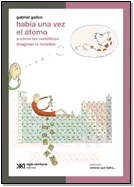
As we all know, the Universe is made of atoms: discrete particles of matter separated by vast distances in an absolute vacuum. However, although the atom is one of the most profound, simple and accepted truths that science has revealed about the world we live in, no one can say they have ever seen one. To clear this path, Gabriel Gellon proposes a fascinating journey to understand a bit more about what atoms, molecules and the vacuum are, and also to get a close look at a gallery of novel-like characters in their meditations, accidents, oddities and curiosities. Furthermore, the reader will find in this book a look at how scientific knowledge is built, how data obtained experimentally gain meaning when interpreted, and how, finally, those interpretations are modified as more data must be accommodated and previous measurements corrected. This work accounts for how scientists came to be convinced that atoms really exist, that is, how humanity came to believe that matter is made of 'packets' of matter with vacuum in between. The stories in this book thus travel the path up to the beginning of the 20th century, up to the moment when science stopped doubting their existence, but just before it began to ask what is inside atoms.
240 pp. | 19 x 13.5
ISBN 978-987-1220-93-9 July 2007
About the author
Gabriel Gellon was born in Buenos Aires in 1965. He holds a degree in Biological Sciences (UBA), a Master in Science and a Doctorate (PhD) from Yale University (New Haven, cr, USA) in 1997; he carried out his research work in the area of embryonic development genetics. His contribution to the field of biology is the result of an exhaustive search for genes that participate in the differentiation of anatomical regions of animals (for example, what distinguishes the head from the thorax, at the genetic level) and specifically of the head of the fruit fly, one of the best-studied animals in the field of genetics. He has extensive teaching experience at the secondary and university levels, and has participated in various science outreach activities as well as in the creation of various non-formal science education projects (participatory museums, science workshops, Internet portals and camps).
Presentation
This Friday, August 10, at 19 h, it will be presented at the Planetario de la ciudad de Buenos Aires, Av. Sarmiento s/n y B. Roldán. Roberto Etchenique, Pablo Kreimer, Diego Golombek, Esteban Tablón and the author will participate. Free admission
Sources and related links
- Ensayo y Error, by Valeria Román
- Ciencia que ladra Collection from Siglo XXI Editores