By the end of 2007, the assembly of ESA's far-infrared space telescope Herschel, which will study the formation and evolution of stars and galaxies, will be completed.
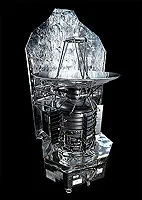
ESA and Astrium jointly invite the media to a press conference in Friedrichshafen, Germany, on September 19, 2007. During the event, the mission and its scientific objectives will be explained, and the true 'heart' of the telescope will be shown.
The Herschel mission, equipped with the largest telescope ever launched into space (with a primary mirror 3.5 meters in diameter), will provide astronomers with the best existing tool to explore the universe at far-infrared and submillimeter wavelengths. By analyzing light at these wavelengths, scientists can see the 'cold' universe. Herschel will provide them with an unprecedented view, allowing them to probe star-forming regions, galactic centers, and planetary systems.
To achieve its objectives and be able to detect the faint radiation from the coldest objects in the cosmos, otherwise 'invisible', Herschel's detectors must operate at very low and stable temperatures. The satellite carries on board the necessary equipment to cool the detectors almost to absolute zero (-273.15 ºC), specifically from -271 ºC to just a few tenths of a degree above absolute zero. This alone is considered an achievement for European industry and science.
The final integration of the various components of the Herschel satellite –payload module; cryostat; service module; telescope; and solar panels– will be completed in the coming months. After this phase, a series of tests will be carried out that will leave the satellite ready for its launch at the end of July 2008.
Herschel will be launched into space on an Ariane 5 ECA rocket. The launch will be shared with Planck, ESA's mission to study the fossil radiation from the Big Bang.
Sources and related links
- ESA press release
- Press release on ScienceDaily