A team of astronomers from the United States and the United Kingdom managed to obtain the clearest images ever seen of space.
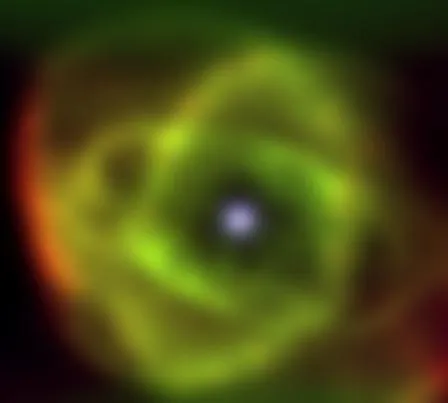
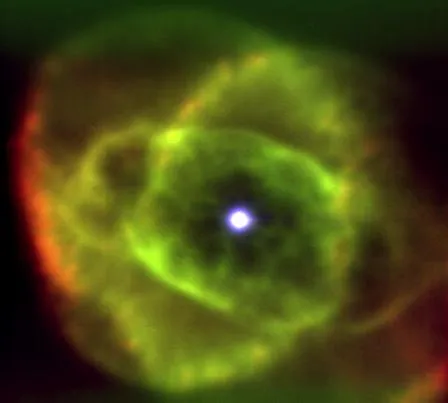
The Cat's Eye Nebula (NGC6543) seen by the Palomar 200-inch Telescope (blurry image) and seen with the Lucky camera and the adaptive optics system (sharper image)- University of Cambridge
The photographs were taken with a new system of "adaptive optics" that better defines images taken from the Mount Palomar observatory in California.
The result is photographs twice as sharp as those from the Hubble Space Telescope.
The new system, called "Lucky", is the result of work by a team from the University of Cambridge and the California Institute of Technology (Caltech).
The photographs taken by the Hubble are normally better than those taken by telescopes on Earth because the planet's atmosphere has a distorting effect.
The Lucky camera overcomes this problem in two ways.
First, it uses one of the most sensitive light detection systems to date, which consists of a chip with a very low level of electronic noise that allows seeing images in greater detail.
And secondly, the system's program can distinguish where the atmospheric distortion begins and ends.
The inventor of this system, Dr. Craig Mackay from the Institute of Astronomy in Cambridge, explains that it is like seeing an object in the haze.
"The haze distorts the object," says Dr. Mackay. "But there are moments when the haze dissipates and the object can be seen clearly."
The Lucky system concentrates the clear images and discards the distortions to produce photographs that in the scientist's opinion are the clearest ever taken of space.
"The images produced by space telescopes are of exceptional quality but are limited by the size of the telescope," he adds.
"Our techniques work very well when the telescope is larger than Hubble and intrinsically has better resolution."
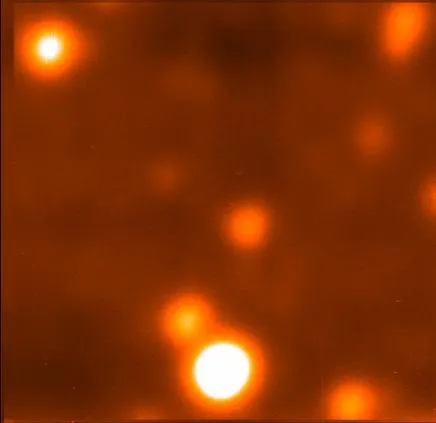
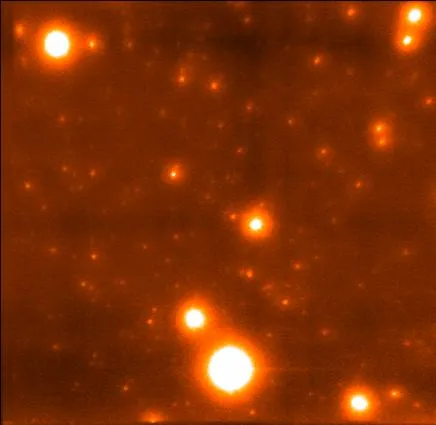
To date, two images have been published. One is of the globular star cluster M13, 25.00 light-years from Earth.
In the photograph, stars that are barely a light-year apart can be seen clearly.
The second photograph shows very fine details of the Cat's Eye Nebula (NGC6543).
Sources and related links
- BBC article
- Press release
- ScienceDaily article