The new instrument is called HAWK-I and covers about 10 percent of the area of the full Moon in a single exposure. It is a sensitive instrument that will be used to discover faint objects, such as distant galaxies or small stars and planets.
After three years of work, HAWK-I (the name comes from High Acuity, Wide field K-band Imaging) saw first light on unit 4 of the VLT telescopes of ESO on the night of July 31 to August 1. The first images obtained demonstrate its full potential.
To test the different characteristics of the instrument, some observations were made. For example, during a period of atmospheric stability, images were taken towards the central bulge of the galaxy.
HAWK-I takes images between 0.9 and 2.5 microns over a large field of view of 7.5 x 7.5 arcminutes. This is nine times more than ISAAC, another VLT infrared camera.
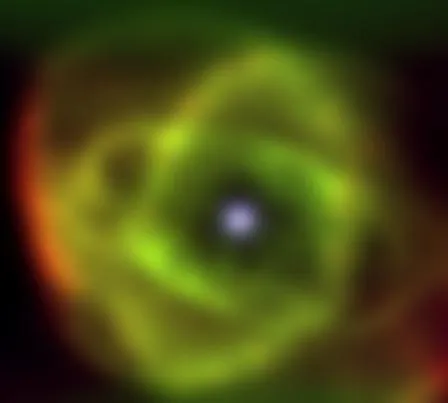
The image above shows a shot of only 1 minute of exposure in each of the three filters. A very old region with young red stars, reflection nebula and dark clouds of gas and dust is seen in great detail, in the Serpens region.
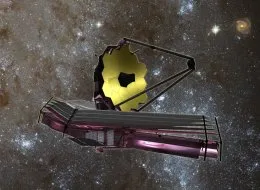
Until the James Webb Space Telescope is operational (in 2013, perhaps), HAWK-I is our best infrared eye in the sky, from which great achievements and beautiful images like this one are expected.
Sources and related links
- ESO press release
- Note on BadAstronomy