Between the launch of Sputnik on October 4, 1957 and January 1, 2008, approximately 4,600 launches have placed about 6,000 satellites in orbit, of which 400 are traveling beyond geostationary orbit or on interplanetary trajectories. Space debris is increasing noticeably, as reported by the European Space Agency in a press release that is not to be missed.
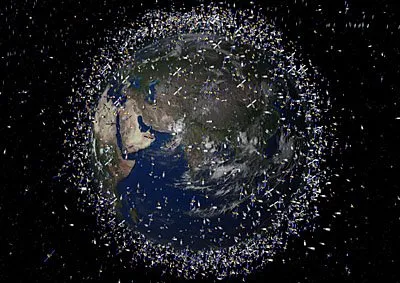
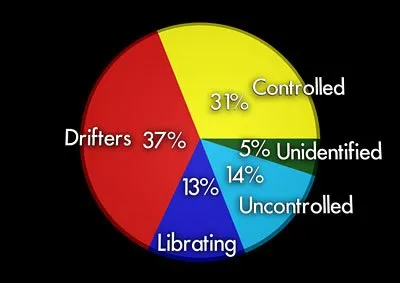
Currently, it is estimated that only 800 satellites are operational - almost 45% of these are in LEO (low earth orbit, low Earth orbit) and GEO (geostationary orbit). Space debris comprises the ever-increasing amount of inactive material (hardware) in orbit around Earth, as well as fragments of spacecraft that broke up or were abandoned.
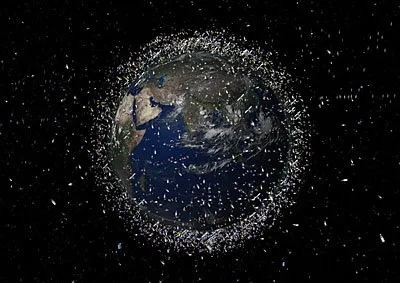
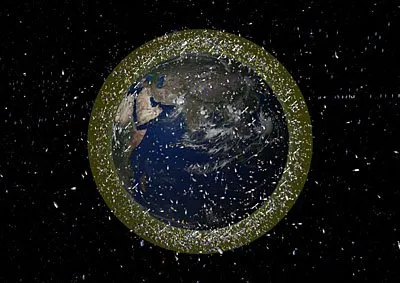
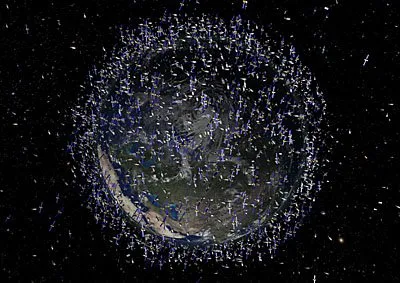
Space Shuttle program officials have said that the shuttle is regularly hit by debris and that more than 80 windows have had to be replaced over the years. The International Space Station (ISS) must occasionally perform avoidance maneuvers to avoid colliding with space debris. And of course, debris does not just sit still. In orbit, relative speeds can be very high, tens of thousands of kilometers per hour.
For the Envisat satellite, for example, ESA (European Space Agency) says the most likely relative speed between the satellite and a debris object is 52,000 km/h. If a piece of debris hits a satellite, the ISS, or the shuttle at those speeds, it could cause severe problems or a catastrophe.
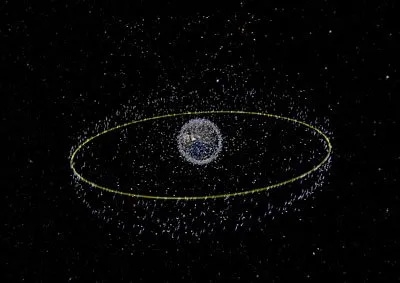
About 40% of trackable debris comes from explosions, about 4 per year.
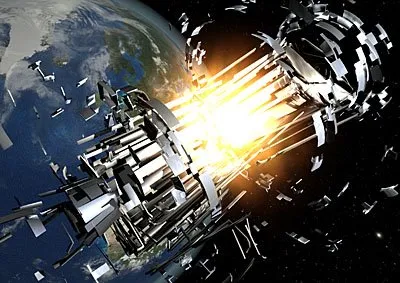
In 1961, the first explosion tripled the amount of trackable debris in space. In the past decade, most operators began to employ passive measures to eliminate latent energy sources related to batteries, fuel tanks, propulsion systems. But this alone is insufficient. At current rates, in 20 or 30 years, collisions could surpass explosions as a source of new debris.
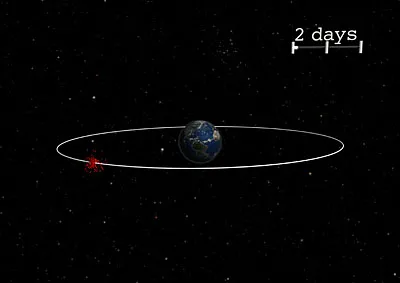
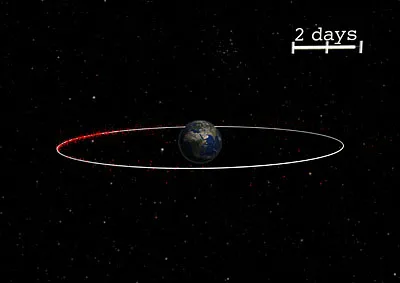
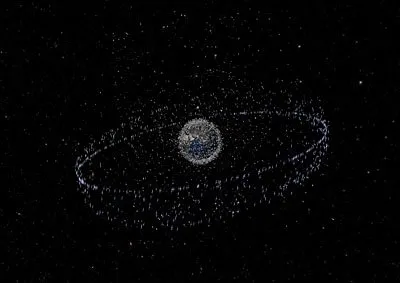
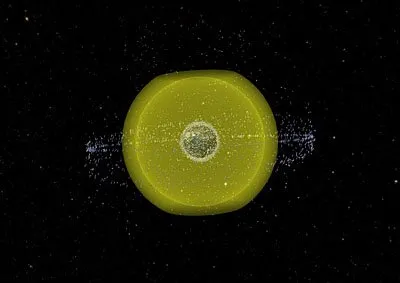
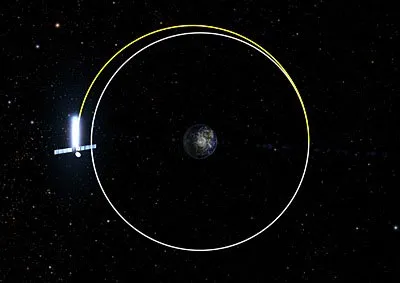
ESA says it is crucial to immediately begin implementing mitigation measures. The image below shows a simulation of the GEO environment for 2012 in the case where measures are taken (the first graph) and in the negative case (the second image). That is, a clean scenario, where the number of explosions is drastically reduced. In contrast, if the scenario is the usual one, the number of explosions and mission-related objects increases noticeably.
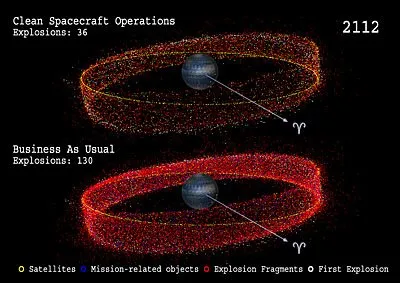
Even so, to stop the increase in space debris, more ambitious measures are needed, such as returning rockets and spacecraft to Earth after completing their missions.
Regarding this topic, we asked here Who orbits the Moon?
Sources and related links
- ESA: Space debris: evolution in pictures
- UniverseToday: Space Debris Illustrated: The Problem in Pictures
About the images
Credit: ESA. In the press release there are 27 images that can be downloaded in very good resolution.