A control system on the Hubble Space Telescope failed on Saturday causing the observatory to enter "safe mode" and cease observations. This would generate the need to reschedule Servicing Mission 4 which was expected to launch on October 14.
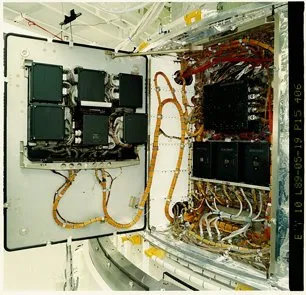
The failed system is called "Hubble Control Unit/Science Data Formatter" and aids in the transmission of data to the ground. The failure occurred in one of the two electronic channels in the control unit. Hubble managers hope that activating a backup channel, called "side B," could restore service during the week.
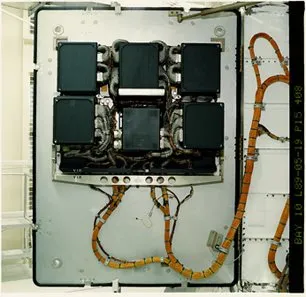
However, it would leave the telescope without a backup in case the new channel stopped working, so NASA would like the astronauts to replace the failed unit with a spare from the Goddard Space Flight Center, where equipment for Hubble is designed and tested.
"At least if it had to fail, it did so before they went," says Adam Riess, an astronomer at the Space Telescope Science Institute, referring to the crew of the STS-125 mission that was scheduled to launch on October 14 for the Hubble servicing mission.
In an email message sent to family members, the crew said that while this is good news for Hubble, in that it happened in time for the crew to fix it, it is bad news for them who were so excited to be about to leave in just two weeks.
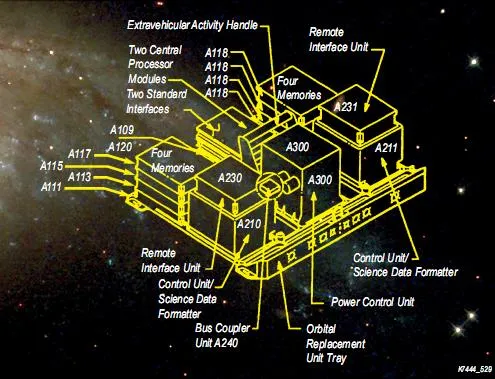
This would delay the servicing mission since testing the spare unit, integrating its installation into the crowded schedule for the upcoming mission, and training the crew could take several weeks.
The servicing mission was scheduled to last 11 days during which five spacewalks would be performed to install two new instruments and repair the telescope's best camera and a spectrograph that suffered electrical failures. In addition, the replacement of batteries and gyroscopes, among other tasks, was scheduled.
Meanwhile, the transition to operations with "Side B" will be carried out to try to restore service as quickly as possible. But it is a complex transition, according to the U.S. Space Agency, since it requires that five other modules used in data handling also be switched to their corresponding side b. Those side b modules were activated during tests in the late 1980s and early 1990s, before launch!
These preliminary assessments would be resulting in the delay of STS-125, that is, the Hubble servicing mission 4, until February 2009, at least.
There are three plans in view:
1-Keep Atlantis and Endeavour on the pads (Pad A and B), wait for the switch to Side B and if possible launch with the current schedule.
2-Launch STS-126 from Pad B before the launch of STS-125 from Pad A. STS-119 would go to Pad B as a backup for STS-125.
3-Switch pads to launch STS-126 from Pad A before STS-125. The latter would be restored to Pad B. After the launch of STS-126, STS-125 would go to Pad A and STS-119 would go as a backup to Pad B.
Everything points, for the moment, to sending Endeavour on November 16 on STS-126 to the International Space Station and Atlantis in February, when Discovery is ready to serve as a backup.
There is an issue with the pads in that NASA did not want to continue using Pad 39B (where Endeavour is currently located) since it is being prepared for the launch of the Ares rocket. That is why they are evaluating the pad change, as they would not feel sufficiently safe launching it from the current pad under renovation.
Surely there will be hours of intense work and analysis ahead for NASA personnel in search of the safest and most suitable configuration.
Sources and related links
- NASA to Discuss Hubble Anomaly and Servicing Mission Launch Delay
- New York Times:NASA Delays Trip to Repair Hubble Telescope
- Hubble control system failure - STS-125 launch date delayed to 2009
About the images
Diagram and images of the Control and data handling instrument
Science Instrument Control and Data Handling unit
Credit:NASA