Astrobiologists often mention "life as we do not know it" in the context of extraterrestrial life. But is it possible that life different from what we know exists on our own planet? This is the question posed by astrobiologist Paul Davies at the Annual Meeting of the American Association for the Advancement of Science (AAAS).
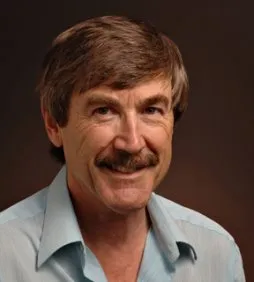
According to Paul Davies, a scientist at the University of Arizona and author of several successful books, "strange" life, that is, different from what we know, is not only possible to search for on other planets. Earth could host organisms different from us and thus provide answers to a long-standing question: How common is life in the universe?
Davies's speculation has its roots in the conclusions of a July 2007 report by the National Research Council (of the USA), on whether the search for life should include this "strange life," understood as "life with an alternative biochemistry to life on Earth."
Davies and other scientists speculate that perhaps life on Earth could have arisen more than once. The concept of a "parallel biosphere" is just a hypothesis, proposed with the aim of broadening the search for life. The fact is that, until now, the search for life on other worlds has been framed as the search for conditions similar to those that generated life—as we know it—on our planet.
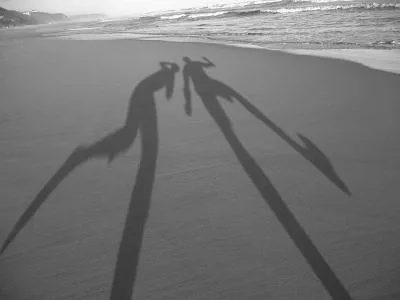
In the talk titled "Shadow Life: Life As We Don't Yet Know It" (Shadow Life: Life As We Don't Yet Know It), part of the "Weird Life" symposium he gave at the AAAS, Davies continued to explain how scientists could conduct this search.
This "strange life" would have to be sought in places inhospitable to life as we know it. For example, the upper atmosphere, bombarded with ultraviolet light, or the boiling volcanic vents in the oceans, would be two possibilities, the scientist indicated. Organisms that thrive in extreme conditions (by our standards) are called "extremophiles."
If, on the other hand, this "shadow life," as Davies called it in an upcoming book, lived among us, scientists would have to be more clever in their searches. One way could be, he added, to look for organisms that break the rules of known biochemistry. For example, all terrestrial life builds its proteins from left-handed amino acids. Organisms that used the opposite orientation could be candidates.
Another possibility lies in the genetic code, Davies pointed out. All life stores its genes in RNA or DNA created from five chemical elements—nitrogenous bases—(Adenine, Cytosine, Guanine, Thymine. In RNA, thymine is replaced by uracil). "Shadow life" could write its genomes using another code or another type of chemical.
Following these lines, this "strange life" could be formed from chemical elements not used by other life forms. Davies expressed skepticism about the possibility of silicon replacing carbon in any form of life. Instead, arsenic could be a good substitute for phosphorus, which links the "letters" of DNA and stores cellular energy.
Another clue to this "shadow life" on Earth could come if scientists managed to create it in the laboratory. Recently, scientists reported having created a self-replicating strand of RNA to understand what primitive life on Earth might have looked like. (See article on CienciaKanija: An artificial molecule evolves in the laboratory)
Sources and related links
- NewScientist: How to hunt for shadow life
- ScienceDaily: Cosmologist Explores Notion Of 'Alien' Life On Earth
- ASU cosmologist explores notion of ‘alien’ life on Earth
About the images
Image Shadow: Wikipedia
Paul Davies (Photo by Tom Story)