NASA's CIO has some ideas about the agency's future on the internet.
Inspired by Barack Obama's recent call to bring government into the 21st century and his memorandum on transparency and openness, Chris C. Kemp wants to start a conversation about the agency's future online.
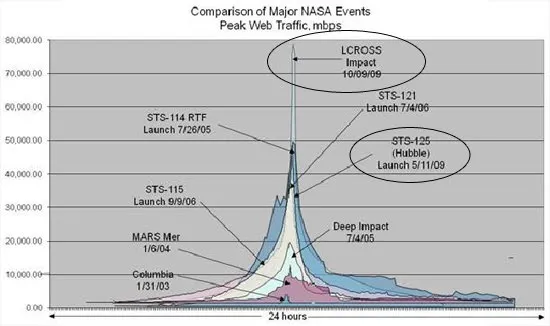
The IT Chief of NASA's Ames Center started a blog at the beginning of the year, to start a conversation with the public about his role and his vision for the future.
He begins with a brief introduction of himself, as CIO of NASA's Ames Research Center in California. His position makes him responsible for the IT infrastructure (networks, data centers, systems, etc.). Before this position, the executive led strategic business development where he forged new alliances for the agency, for example with Google. Before joining NASA, he helped create businesses like Classmates and Escapia. He is 31 years old and is the youngest member of the so-called "Senior Executive Service", a U.S. government body that brings together public executives.

What does he plan to talk about?
Kemp says there are a variety of topics and projects that in his role he is passionate about, especially the web. A long-standing interest of his has been, he tells us, how it is possible to "weave" NASA's data into the web and what it will mean for the future of space exploration.
Blogs, the web as a platform, Silicon Valley, are some of the topics of his interest, which he will be talking about on his NASA blog.
The correlation of the agency's objectives with global developments, in various disciplines, the CIO points out, will be essential. One example is that while NASA is actively working on testing a space communications network based on the internet, Google's Chief Technology Officer, Michael Jones, at a recent meeting in San Francisco, advocated for new models of sharing scientific data.
"My vision for NASA's future on the web is that of an open platform. A platform for sharing and hosting data, a platform that will leverage the data in new ways, for developers around the world to use our data, for the public to learn about NASA, and for scientists to collaborate", notes Kemp on his blog on January 27 of this year.
On March 24, in a new entry, "Why Make A Universe of Data Available To The Public?", he tells us about NASA's agreement with Microsoft to facilitate the availability of data to the public.
"Working with partners like Microsoft, Google and Cisco to share our data with the world is part of a long-term strategy enrolled in the next phase of the web's evolution, as it moves from a web of linked documents to a web of linked data", comments the CIO.
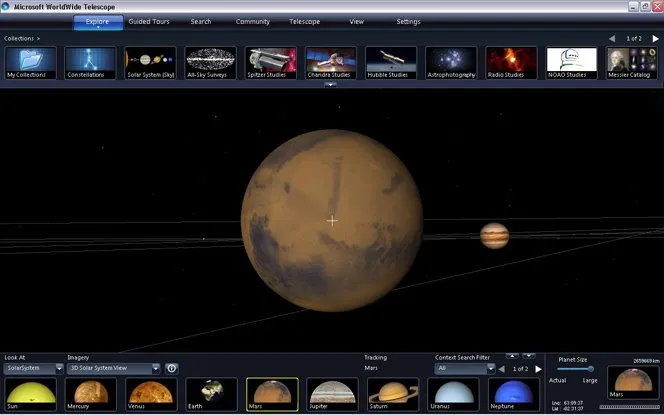
The agreement with Microsoft is unique, according to Kemp, in the sense that they will host the agency's data (more than 100 terabytes) at Ames and serve it to the web through Microsoft's WorldWide Telescope platform.
How? Didn't he want an 'open' web?
Well, as Kemp points out, the data will be hosted on a new cloud platform created with open-source technology specifically designed to host large amounts of scientific data. The platform will allow scientists to create applications within a common and secure framework.
"The dark sky is essentially a database, packed with information in the form of electromagnetic radiation, known more generally as light", concludes Kemp, quoting an article ("In a Big Year for Telescopes, Much Peering Into Wallets") by Joel Achenbach that appeared in The Washington Post.
Honestly, I hope they effectively fulfill their goals of bringing the agency's data to the general public and allow scientific cooperation. I just hope it doesn't come down to having to install Silverlight...
Sources and related links
- Lets Start A Conversation About NASA's Future On The Web
- Why Make A Universe of Data Available To The Public?
- NASA image website
About the images
Credit:Photograph of Chris Kemp from NASA blogs
Screenshot of WWT.