On a NASA blog, the most important online events of the U.S. agency during this year are reviewed.
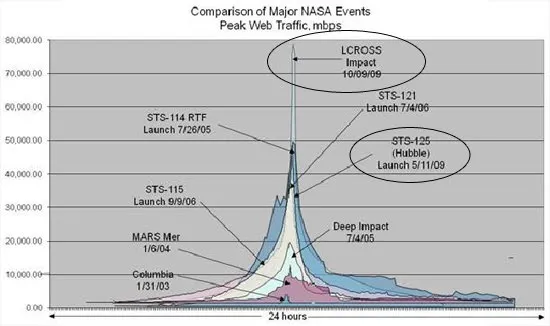
Jason Towsend points out on the "Behind the scene" blog that almost 392,000 people watched the live video of the LCROSS impact, with 5.4 million simultaneous visitors to the NASA.gov site, the second largest online event in the site's history.
He also notes another bandwidth record during the same impact, transferring data at 75.5 gigabits per second. The total amount of data the event moved equals 85 terabytes, which is like 127 thousand CDs.
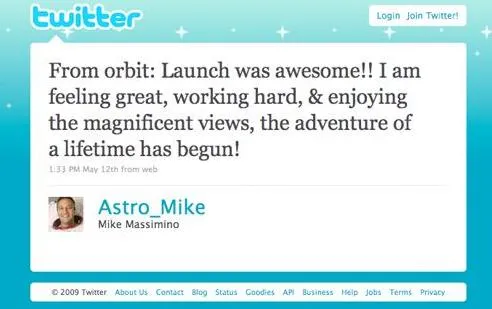
Another milestone for the agency's site occurred during the STS-125 mission to Hubble. In addition to the usual activities of a shuttle mission, astronaut Mike Massimino captivated enthusiasts around the world via Twitter by sending the first tweet from space. @Astro_Mike currently has 1,206,090 followers on his account. And he is competing for Tweet of the Year, in the Open Web Awards, where you can vote until December 13. Furthermore, the STS-125 launch resulted in the fourth largest event in the agency's site history.
NASA organized "Tweetups" at JPL California, the Washington offices, and Kennedy Center in Florida, where users of the microblogging site learned about space programs and spoke with astronauts.
The unprecedented media coverage of Operation Ice Bridge, with tweets, webisodes, photos, and blog, exceeded all expectations and they hope to repeat the success in the future.
Another important event, Townsend notes, was the launch of Ares I-X on its test flight.
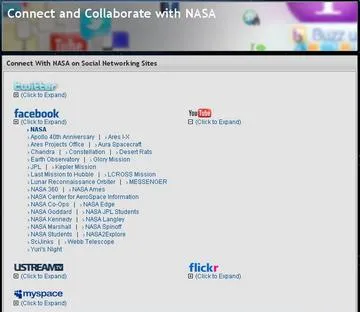
NASA is using social networks to communicate more easily and faster with the public. To connect with NASA, they have a list of social accounts at NASA Connect.
To learn about the agency's blogs we must go to NASA Blogs.
Even in June NASA launched Spacebook, a kind of internal Facebook for the agency, an intranet. (NASA Goddard has a video about Spacebook featuring an interview with Emma Antunes, Web Manager of NASA).
Not everyone thinks this communication policy is the right one. Ryan Wyatt, in the latest issue of CAP Journal, or Keith Cowing from On Orbit, have something to say about it.
However, although it's good to be critical and evidently some things didn't turn out as planned (or the opposite), I think the U.S. space agency has made great strides in its public communication. Hopefully, in the coming years they will continue to improve the quantity and quality of information services they provide through an increasingly broad network of sites.
Sources and related links
- 2009: An Online Year of Milestones, by Jason Townsend
About the images
- Graphic: Comparison of major NASA events
- Mike Massimino's tweet from space
- Screenshot of NASA Connect