Science uses different symbols for its variables and constants. What does e=mc2, lambda, or imaginary numbers mean?
A new project is translating, through simple videos, the mysteries of equations that scientists use.
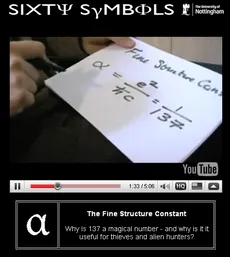
Sixty Simbols, or Sixty Symbols, is a project from the University of Nottingham, with the goal of shedding light on the world of science, explaining the meanings of several of the symbols used and what their role is in modern life. It has one drawback: All the videos are spoken in English.
The speed of light, Planck's constant, gravity, the fine-structure constant, the Hubble constant, frequency, angular velocity, entropy, are some of the terms explained. The site is presented with a black background on which the symbols stand out in white. Clicking a symbol opens a window containing a YouTube box with several linked videos on the same topic.
The videos are created by the filmmaker Brady Haran, and cover varied topics: from the physics of nanoparticles to the structure of the galaxy. It is also possible to subscribe to his YouTube channel.
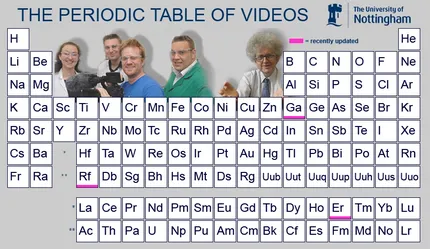
The project has a couple of siblings. The Periodic Table of Videos is a site already widely visited on the web, where short videos explain the properties of each element of the periodic table.
There is also TestTube, the behind-the-scenes of the scientific world. "I wanted to show what scientists are really like and how they work," Brady Haran states on the site.

Sources and related links
- Sixty Simbols
- The Periodic Table of videos
- Test Tube
- 'Sixty Symbols' -- unravelling the secret language of science
About the images
The images are screenshots of the respective sites.