A documentary about the Las Campanas Observatory, located at a prime site in Chile and operated by the Carnegie Institution, which reflects how this community of astronomers, operators, and maintenance staff works, featuring advanced technology and a high scientific profile.
Recently, I was telling here (see the note "What Do Astronomers Laugh About?") about a documentary that had really caught my attention. As I said then, I saw the documentary already started, through the defunct program "Televisión Regional" broadcast by Channel 7 of Buenos Aires. Even though what I had seen was incredibly interesting to me, since it tells how a real community of astronomers and technicians works, from the human and technical point of view, I didn't know the documentary's name, to be able to search for it and watch it in full. Thanks to the publication of that note, Mr. Ricardo Benítez contacted me to tell me that he had made that documentary, titled "The Silence of Las Campanas." That communication finally led to a meeting at the Observatory of the Faculty of Astronomy and Geophysics of La Plata. Ricardo Benítez resides in the capital city of the Province of Buenos Aires and works for a television channel there. Through his wife he met Nidia Morrell, when the latter was taking piano lessons. She is a distinguished Argentine astronomer, who has been working for several years at the Las Campanas Observatory. This is how Ricardo got the idea to make a documentary about this outstanding astronomical site, which he did entirely on his own. According to what Ricardo tells me, it was very well received at Las Campanas and had the collaboration of the staff, even making a vehicle available to him for transportation. The film is particularly well made, but above all, what distinguishes it is its focus. Throughout its 49-minute duration, it allows us to learn the behind-the-scenes of a real astronomical community.
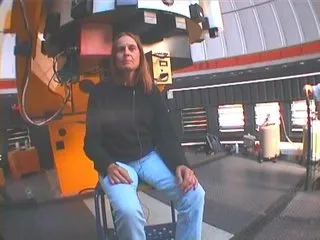
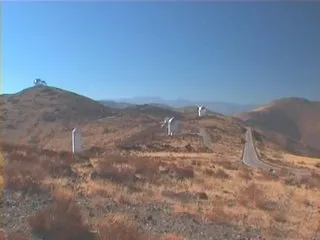
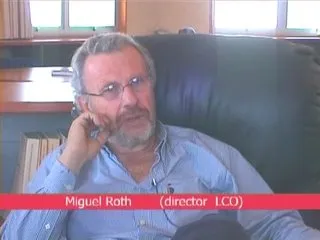
The film begins by describing the place where the observatory was installed and the reasons why the Carnegie Institution chose that location, in the voice of its current director Miguel Roth. At about 2,400 meters above sea level and about 156 kilometers from La Serena, Chile, in a region of dark and clear skies, this observatory was established in a prime location. Only Hawaii and the Canary Islands could compare, in terms of the quality of their skies and climates. Miguel Roth has been there since 1989, after directing the San Pedro Mártir National Observatory of Mexico. His task was to reorganize the site and prepare the ground for what would be the twin Magellan telescopes. The Magellan Project came at the perfect time for the observatory and was a rebirth for Las Campanas. The observatory has the twin Magellan telescopes (Magellan in English): the Walter Baade which saw first light on September 15, 2000 and the Landon Clay, which began scientific operations on September 7, 2002. It also has the du Pont (2.5 meters, since 1976), the Swope (1 m, since 1971). Poland has a 1.3-meter telescope at this site, operated by Carnegie. These are Newtonian or reflecting telescopes. The documentary allows us to learn, if we didn't know, how these instruments work and their difference from refracting telescopes, as well as the techniques for creating large mirrors. It also allows us to learn about the scientific advances that currently allow astronomers to obtain spectra of celestial objects, which provide very important information about them, such as their temperature and chemical composition.
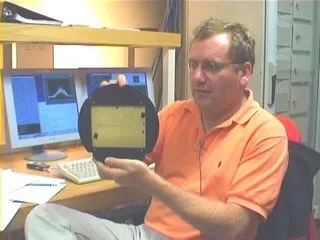
To capture these spectra and study them, it is necessary to install copper masks with a thin slit in the instruments. Mario Hamuy, an astronomer from the University of Chile who studies supernovae, tells us about the use of these masks. To make these masks with their slits, there are instrument makers, like César Muena and Mauricio Navarrete, who tell us about their work. In particular, Cristoph C. Birk talks about IMACS, an instrument that saw first light in August 2003 on the Baade telescope. It is a multi-object spectrograph with 8 CCDs that allows taking spectra of multiple stars simultaneously.
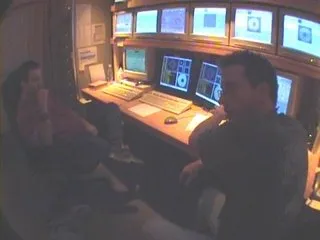
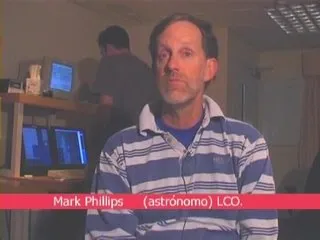
Mark Phillips, associate director of Las Campanas, also tells us about the tests that are periodically performed on the system. Two nights per month, tests of the instruments and new configurations are performed, he explains from the control room. This is because, currently, everything is managed with electronics, through computers. Thus, the dome, the movements of the telescopes (elevation and azimuth), the rotators (where the instruments go) and the cells, everything is operated from the computers, as explained by electronic engineer Patricio Jones. Day by day, the capabilities of astronomical instruments are improved and there is already a Carnegie project for the construction of the so-called Giant Magellan Telescope (GMT), planned for 2018, with a 24.5-meter primary mirror.
However, it is still possible to perform observations that produce real scientific impact with much smaller instruments. An example of this is the OGLE project, which Argentine astronomer Nidia Morrell tells us about. From the 1.3-meter Warsaw telescope of the University of Warsaw, a group of Polish astronomers has been conducting systematic sky observations for more than a decade. The project's goal is the search for dark matter using the microlensing technique. The Magellanic Clouds and the galactic bulge are ideal locations for conducting these investigations due to the number of background stars that are potential targets for this gravitational lensing phenomenon. This project began using the Swope telescope during the first phase from 1992 to 1995. Then the construction of the 1.3-meter telescope began, which started operating in 1996. In 2001, OGLE entered its third stage. What Morrell emphasizes is that, although the goal is gravitational lenses, the long-term systematic monitoring allows creating an extensive database of variable light objects. Thus, a catalog of variables of different types (Cepheids, eclipsing, cataclysmic) was created, as well as supernovae and planetary transits.
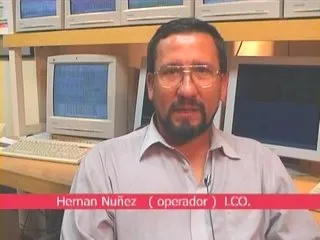
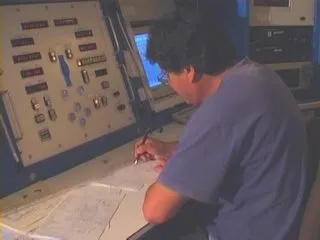
Astronomical observations that later yield their fruits in scientific impact could not be carried out without the indispensable work of the operators. Víctor Meriño and Hernán Núñez are two of the operators at Las Campanas, who tell us about their work. It is a joint effort, between operators and astronomers that, according to Núñez, is comparable to that of a driver (operator) who takes a passenger (astronomer). The smoother the ride, the better. Both share the astonishment at the efficiency and precision of these instruments.
Another operator at Las Campanas is Herman Olivares. In the previous note I referred to this particular operator for the creation of his "cahuines". Olivares livens up the observing nights with his comic strips, linked to life at the observatory. "Humor is like an antivirus," says Herman, who has more than three decades of work as an operator, a true record and an irreplaceable value in the Las Campanas community. His cahuines combat with a smile the stress of cloudy or humid days, or the technological inconveniences that may arise. And the astronomers have taken it very well, according to Olivares, telling him their anecdotes so he can draw them. For this community to be well organized, good logistics and optimal supplies are necessary. More than 25 people rotate their shifts every seven days, plus the transit of astronomers who must travel to Santiago to fly to their respective countries. Mobility is, therefore, essential. For this they have a workshop, which mechanic Ricardo Alcayaga tells us about, dedicated to maintaining heavy machinery and vehicles.

Astronomers, who so much rely on observational data for their research, also need to be nourished by good food. Chef Héctor Balbontín tells us about the importance of his work, which feeds the staff during breakfast, lunch, and dinner.
Although food is health, it is also necessary to have medical assistance. Thus, Javier Rivera, paramedic, points out that he has an ambulance, which although a bit old, has the necessary elements for primary care. And so, we have toured, almost without realizing it and wanting more, the inner life of a very well-organized astronomical community with the goal that scientists worry only about science. For this to be achieved, the warmth of the members of this community is essential. Miguel Roth points out that without some of his collaborators it would not have been possible.
Ricardo Benítez's documentary is a window into a highly organized world, but with a very human and warm focus, made with great quality and deserving of being broadcast in the media. There is a trailer, a 15-minute preview of the documentary, which can be viewed thanks to the contribution of its creator and is available on YouTube. This demo of the documentary is divided into two parts (due to the 10-minute duration limit imposed by YouTube), which can be viewed one after the other right here. I note that both parts can be viewed in high definition (through the "HD" icon) and that both have an annotation that is accessible by pointing the mouse at the small red square seen in the upper right corner of each part. That annotation contains the creator's email address, in case any institution or media outlet wants to contact him. To conclude, I want to highlight the warmth of Ricardo Benítez, whom as I told before, I met personally and who provided me with the demo for dissemination, as well as a copy of the documentary so that, finally, I could watch it in full. The final result, as I was able to verify, is of very good quality, undoubtedly due to the great personal effort in its filming and editing. My meeting with Ricardo allowed me to get to know the Observatorio Astronómico La Plata and there Federico Giudici, who is part of a group that uses the Virpi Niemela Telescope to conduct photometric studies of Eta Carinae. But I will tell about that another time. The two parts of the demo can be seen on YouTube at: http://www.youtube.com/view_play_list?p=168B612EBBD6373B Hopefully, in this International Year of Astronomy, the documentary can be seen through mass media, not only in Argentina, but also of course in Chile and other Spanish-speaking countries. In Argentina, the channel Encuentro, which has been airing such good documentaries on astronomy and related topics, could be an ideal space for the dissemination of this material. The Silence of Las Campanas Duration: 49 minutes Narration: Erasmo Games Perez Musical advice: María Verónica Álvarez Sound recording: Pedro Mariño Camera, script and editing: Ricardo Benítez Digital Editing: Cecilia A. Pucacco. Interviews with: Miguel Roth, Patricio Jones, Mauricio Navarrete, Mark Phillips, Javier Rivera, Hernán Nuñez, Ricardo Alcayaga, César Muena, Héctor Balbontín, Herman Olivares, Víctor Meriño, Nidia Morrell, Cristoph C. Birk. A documentary by Ricardo Benítez, La Plata 2007, All rights reserved. Sources and related links
- "What do astronomers laugh at?"
- Las Campanas Observatory
- Carnegie Observatories
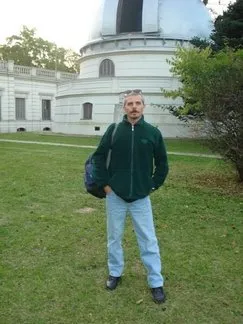
About the images Screenshots from the documentary "El silencio de Las Campanas". Ricardo Benítez.