"The Matter of Everything" is a documentary that explores quantum reality and the interconnections of nature, from quanta to the universe.
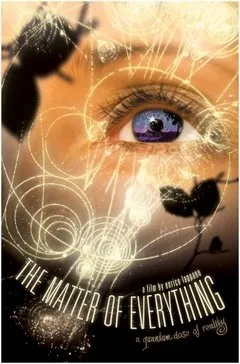
"The Matter of Everything: a quantum dose of reality"
Director: Enrico Lappano
Script by the director and Olga Antzoulatos
Documentary 2007-2009 Canada
Duration: 100 minutes (1 hour, 40 minutes)
Through interviews with prominent scientists, Olga Antzoulatos, a non-scientific educator, finds the knowledge necessary to understand the quantum world and its interconnection with the cosmos. The documentary can only be seen in Canada for now, but its release on DVD is expected during the course of the year.
Challenging us to see beyond our everyday senses, this "quantum dose of reality" reveals what we are, at one billionth of a billionth of the human scale. At that level, physicists at Fermilab, the world's most powerful operating particle accelerator, describe a world more unified than ever imagined.
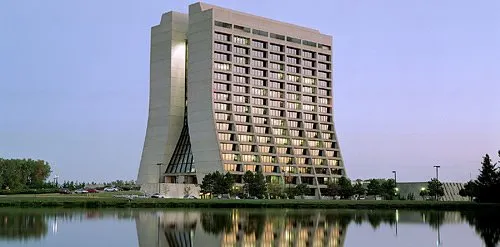
This particle accelerator in the United States, which competes in the race to find the hypothetical missing particle in the standard model -the Higgs boson- with the Large Hadron Collider, was also the subject of another documentary. Here we commented on it, pleased to see an Argentine scientist participating in the great science developed at Fermilab and who participates in the filming. See: "Atom Smashers: The Documentary".
The scientists featured in the documentary are Scott Menary (Professor at York University); Dr. Paul Nienaber (physicist at the University of Minnesota); Dr. Chris Quigg (theoretical physicist at Fermilab); Dr. Edward W. Kolb (Director of the astrophysics center at Fermilab); Dr. Peter Skands (theoretical physicist at Fermilab); Dr. Arlene Lennox (Fermilab); Dr. Enrico Lunghi (Theoretical physicist at Fermilab); Paul Delaney (Physics professor at York University); and Janet Conrad (Professor at Columbia University and part of the MiniBooNE experiment at Fermilab).
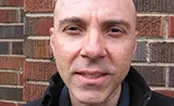
The documentary is directed by Enrico Lappano, a Canadian graduate of York University. He has been directing, producing, editing, and composing an original soundtrack for the documentary for the last three years.
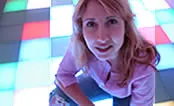
Olga Antzoulatos is Greek and graduated from the University of Toronto as an educator. For the film, she conducted research and interviewed the physicists. She then shared her new knowledge with her students, which was captured in the documentary. She also helped with the filming and script of the film.
The key word of the documentary is "understand." Clearly, it is what the creators tried to achieve and convey throughout the 17 chapters presented in its 100-minute duration. The awe that arises from understanding the quantum world and its connection to... everything. This, at least, is what is hinted at in its trailer.
The quote of a phrase by Carl Sagan makes this intention clear: "It is suicidal for a society that depends on science and technology to know nothing about science and technology".
On the web
The Matter of Everything has a website (http://www.thematterofeverything.com/) with photographs and, surely, when the DVD is available it will be announced there, so it may be timely to subscribe to its feed channel.
The site also offers a synopsis and a trailer of the documentary, which we offer below:
Synopsis
Particularly in the last decade, it has become clearer that quantum particles shaped our universe as it exists today. The more we understand the quantum realm, the more we understand ourselves. The particles that form our bodies, explains Peter Skands, formed the elements that "began their life inside a massive exploding star... we are children of stardust."
Each chapter of The Matter of Everything develops a deeper picture of nature. We learn that our visible range is only a small part of the entire light spectrum, there is much more that we do not see than what we perceive with our eyes. Everything, including us, is made of atoms, which in turn are made of quarks. We think of space as something empty, but if we had quantum eyes, we would see what Edward Kolb describes as "a boiling foam" with particles existing and ceasing to exist. Finally, things that seem "solid," adds Scott Menary, are actually "just interactions of energy fields."
Einstein's famous equation E=mc2 revealed that matter and energy are really one. As demonstrated by dropping the atomic bomb on Hiroshima and Nagasaki, a small amount of mass (matter) creates an enormous amount of energy. Serious questions remain about the ethical use of these powerful forces now and in the future.
The director of astrophysics at Fermilab, Dr. Edward Kolb explains: "We need reason to conquer sensations..." Currently, the Standard Model of particle physics describes everything we observe in nature, except gravity, in one equation. And physicists believe a particle is missing from the Model that gives all others their mass. The excitement at the LHC (Large Hadron Collider) at CERN is the possibility of finding the Higgs boson, the missing particle, if Fermilab doesn't discover it first. Peter Skands, a theoretical physicist at Fermilab and CERN emphasizes: "When you encounter quantum mechanics as a student, it bends your mind and you can't believe it could be like that. And you'll think it's ridiculous. Except you can go and do experiments that show it's really what happens, that's how nature works. So, beyond what you might think makes sense or not, better to try to understand it."
The knowledge of the connection between quantum physics and the universe is a global achievement and represents "a triumph of the human mind" in going beyond ourselves toward the deepest reflection of nature, the matter of everything.
Sources and related links
About the images
- Images of the creators and cover of the documentary:
Credit: Riverchoir Feed Inc. - Image of the front of the Fermilab building
Credit: Fermilab