The behind-the-scenes of one of the most beautiful images of the cosmos, a mosaic of Orion. Step by step, its creator tells how he made such astronomical beauty.
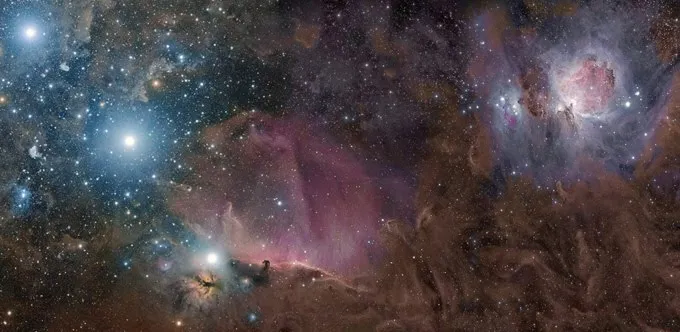
One night in 2007, Rogelio Bernal Andreo and his wife were driving along Highway 1 along the California coast when his wife opened the sunroof. What spread out above them was unlike anything else.
"It was as if the Milky Way were in front of us," said Andreo, a former eBay employee, who runs a Spanish-language internet company: Deep Sky Colors. "It looked like it was going to fall on us."
He took out his digital SLR camera and spent two hours trying to capture the vast galaxy. When he got home, he downloaded the photos and caught the astrophotographic bug.
"I started looking on the internet and seeing all those images, really beautiful. How do people do that?" Andreo wondered.
Two years of intense study, rigorous practice and perhaps about $10,000 in equipment later, he knows. And he told Wired about his process, step by step, from black and white to the wonderful image that opens this post.
Thanks to cheap, high-quality digital cameras and editing equipment, creating beautiful images of galaxies, nebulae and star clusters is now within reach of anyone with a few hundred dollars to spend.
We live in a golden age of space photography, but when looking at colorful images of the sky we wonder if it really looks like that.
As we will realize in this "behind-the-scenes" of the making of an incredible photo, the answer is yes, but not only for our eyes, which are poor sensors compared to specialized photographic equipment.
That doesn't mean the photos aren't real. Astrophotographers have an ethic: they will not add something that isn't there. They only show the data better, they don't add it. They use editing tools to find the truth within the noisy data in the celestial images.
"The things up there are really faint. The good thing is that the camera records all that and the trick is to bring it out," comments Andreo.
The first step to getting a space photo is to choose a place without light pollution from cities. In Northern California, Andreo prefers Lake San Antonio, Henry Coe State Park and Fremont Peak, depending on how much he wants to drive.
His equipment list is long. He packs a Takahashi telescope, a mount from the same firm, a tripod, an SBIG STL11000M camera, adapters, cables, long-cycle batteries, an Asus eee laptop, food and coffee, of course.
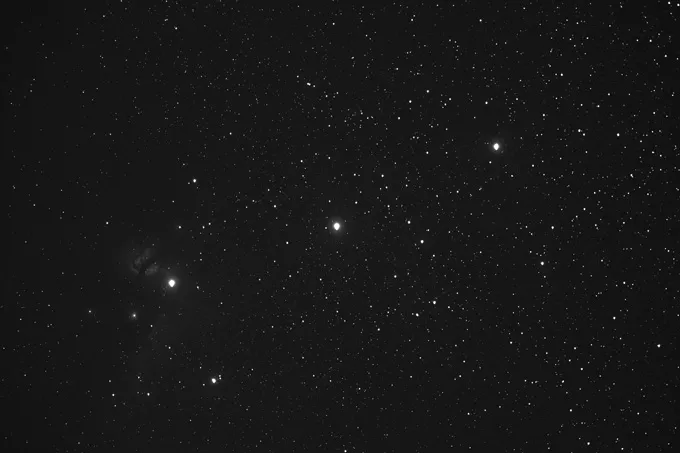
This photo is how the process begins. It is the first of the 11 black and white exposures he will take. The field of view is one third - the area around the bright blue stars of Orion's belt - of the full panorama seen as the first image of this post, the final result.
"This is just one shot, a 15-minute exposure. This is how it comes out of the camera. The original image size is 20 megabytes," noted Andreo.
Of course, he shoots in uncompressed RAW format, to maximize the amount of data retained in the image.
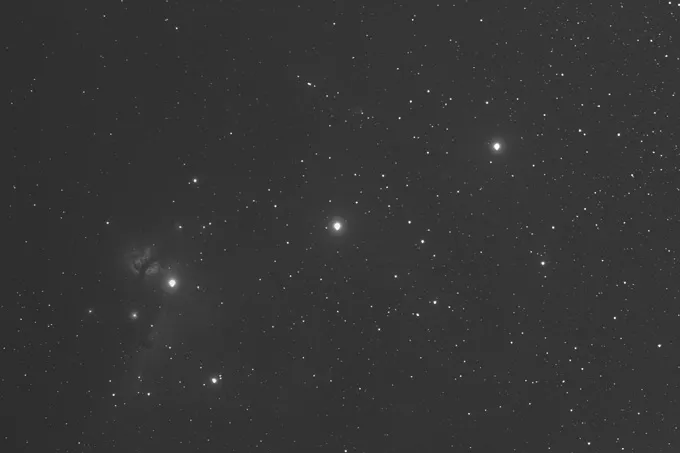
Now the process begins. Andreo takes his eleven exposures and preprocesses them in Deep Sky Stacker, software for that purpose, one on top of the other. Then, he averages their data to remove noise. Each exposure has a set of noise in some subset of pixels. By combining them, the good pixels outweigh the bad and the result is a shot with less noise.
"What is really there will remain, but the noise - since it is random - will disappear," explains the expert.
At this stage he also calibrates the background, which tends to brighten the image and make it more "creamy".
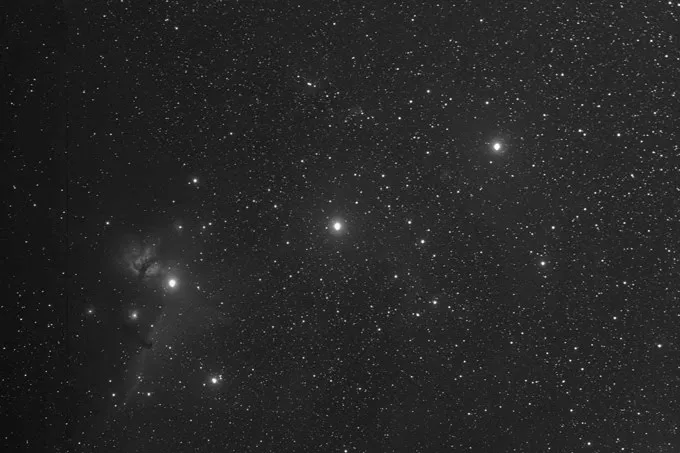
Here, Andreo has begun to "push the histogram," as an astrophotographer would say.
"You raise or lower the image levels and more data begins to appear. It's the first thing most will do. Once you stack your images, you adjust your histogram, a little to see how much stuff is really there."
Here, more stars are apparent and the creaminess has gone with the higher contrast processing. Then comes the color.
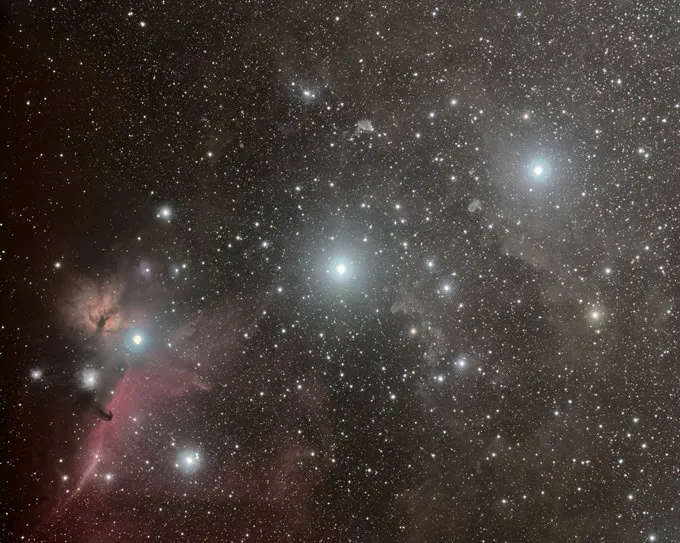
Then he takes shots of an area of the sky with the high-resolution monochrome filter, separating red, blue and green. He does the same for each of those filters as he did for the black and white image. He takes multiple exposures, combines them, and calibrates the background.
"It's just red, green and blue combined and a bit stretched to reveal everything in detail."
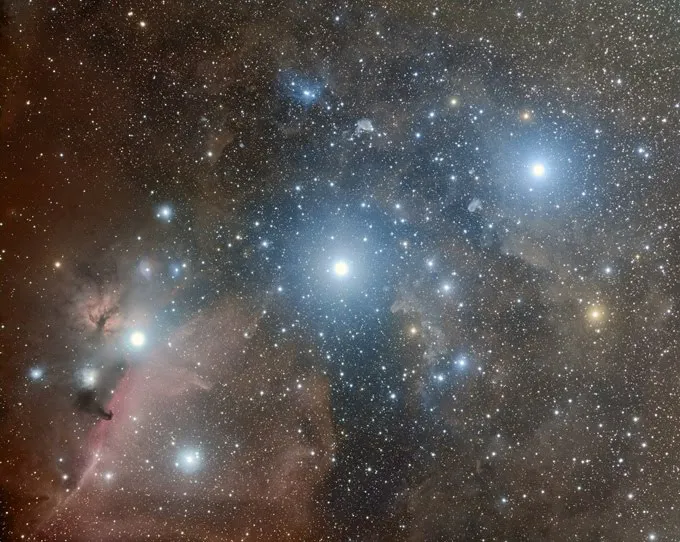
Now Andreo covered the color data with detailed luminosity.
"I take the RGB you saw in the previous image, and put it on top of the luminosity, but I don't want the details, I only want the color information."
Once that is complete, he adjusts the histogram a bit more and the image levels.
"Since there is a lot of creativity, with the same set of raw data, two different people will end up with different results," he adds about the artistic seasoning.
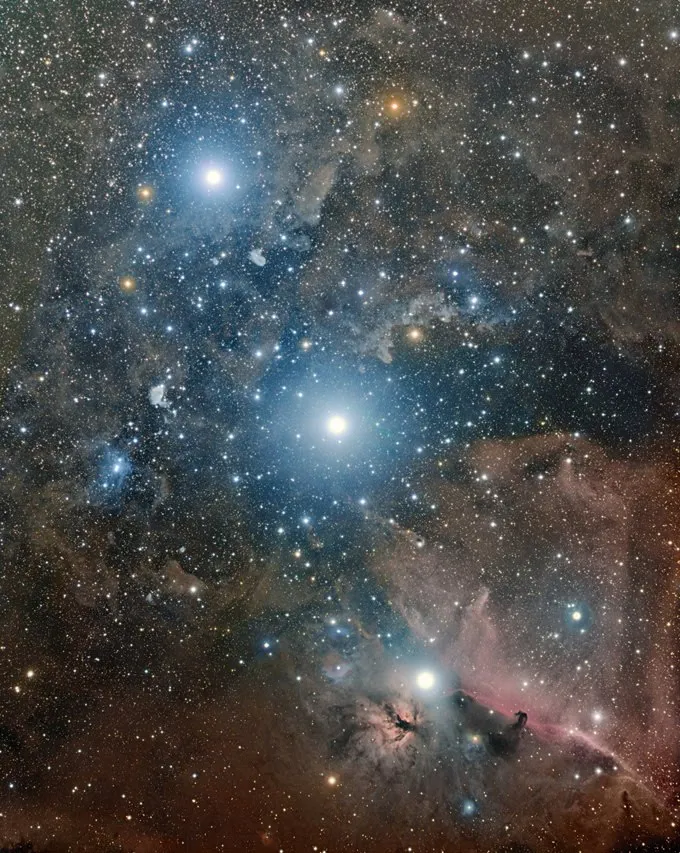
The last step was simply to rotate it vertically simply because he liked it better that way. After all, the number of objects or targets for astrophotographers is limited. So framing is a key component.
"I hope my final image escapes mediocrity. Maybe it's not the best you've seen, but at least it's not just another one."
Then, the rotation changed fortuitously when a friend saw the image and suggested that he combine it with some photos he had taken of an adjacent region of the sky.
Working with a program called Registar that helps photographers join images by identifying common stars in different shots, he was able to join them. It required rotating and cropping his original Orion's Belt, but when the mosaic was finished, it was absolutely incredible. Last month, it was selected by NASA for the astronomy picture of the day on September 18.
The image made a long journey from its initial incarnation to the finished product, but is the first one more real than the last?
After learning the steps of the transformation, we are not convinced of either, but we are certainly grateful that someone takes images of space that look like pieces of the sky.
Sources and related links
- Wired: The Making of a Mind-Blowing Space Photo
- Orion's Belt, by Rogelio Bernal Andreo at Deep Sky Colors (Large image)
- El Sofista: Orion in gas, dust and stars
About the images
- All images belong to Rogelio Bernal Andreo