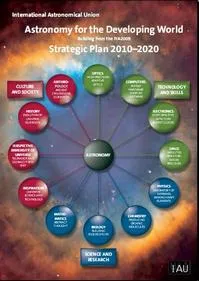
In many developing countries there is a tradition or cultural awareness of the skies, but astronomical knowledge among the public is low. The Global Astronomy Survey attempts to determine the state of the situation.

We have already commented here on the efforts of the International Astronomical Union (IAU) regarding promoting and planning the development of astronomy globally.
(See "The future of astronomy: beyond 2009")
With the same objective, the Global Astronomy Survey (GAS) is being produced as part of the DAG (Developing Astronomy Globally) project and aims to identify the strengths and weaknesses of countries as a basis for generating an astronomy development plan.
The survey is conducted by the countries themselves as a self-assessment in the following fields:
Professional Astronomy (research): the level of tertiary/university education, research training and infrastructure.
Public understanding of astronomy: the levels of activities and events that stimulate an interest in this science among the general public
Astronomy in schools: in primary and secondary education.
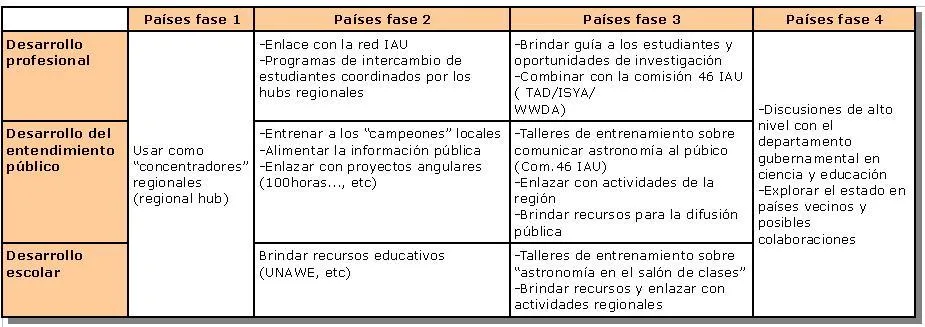
A country's status is classified according to four "phases" of development:
Phase 1: Countries with well-established relations with the IAU and with good research and outreach.
Phase 2: Countries that have research and outreach but need support for astronomy to be well established.
Phase 3: Countries without astronomical communities but showing strong potential in physics or mathematics and wishing to develop in astronomy
Phase 4: Countries without astronomical communities and with limited potential.
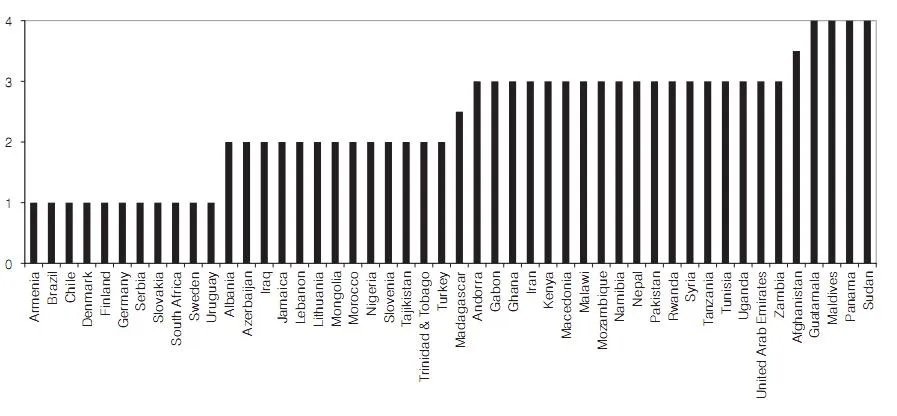
According to this classification, the higher the phase number, the more need for assistance a state will have.
The survey is used to plan education and outreach activities more effectively. According to their phase, countries will need:
(NOTE: The tables and graphs open separately, in a new browser tab)
Progress
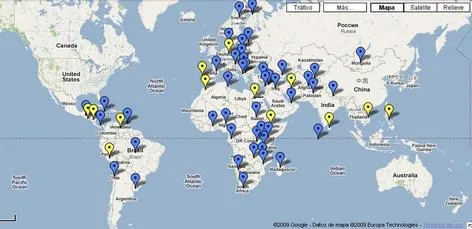
More than fifty responses from countries were received by mid-year. The geographic response is shown on a Google Map:
The classification into phases, according to the submitted responses, is shown in the following graphs:
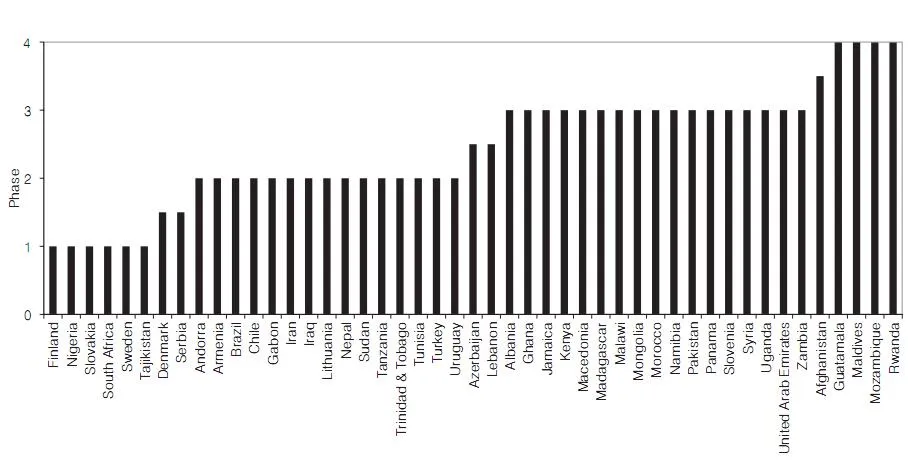
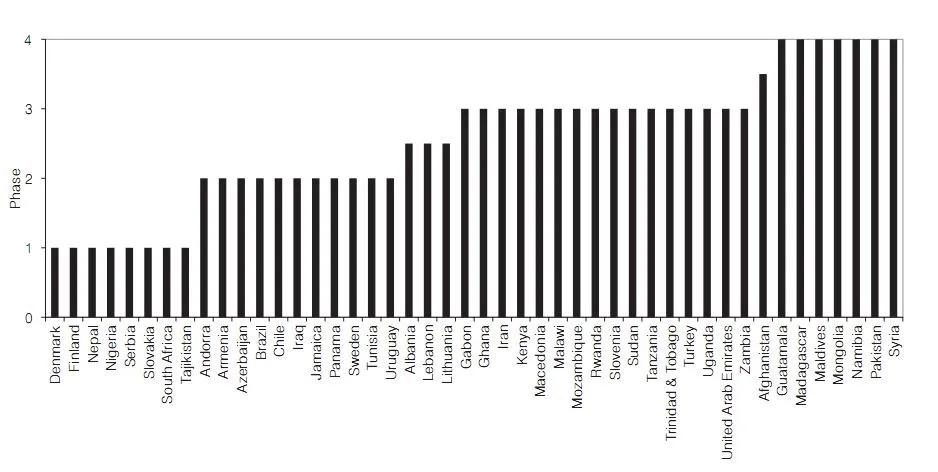
Considerations:
The survey is an internal view of the levels of astronomy in three key areas and as such contains factual responses that may be incomplete and possibly represent the opinions of only a small group within a country. The survey is completed by the Single Point of Contact (SPoC) for the International Year of Astronomy 2009 in each country. The SPoCs are individuals who voluntarily serve as the connection point for this special year in their countries.
As the DAG project focuses on needy countries, an important consideration is what a developing country means. The Human Development Index (HDI) is an indicator used by the United Nations development program as a ranking of countries by level of human development.
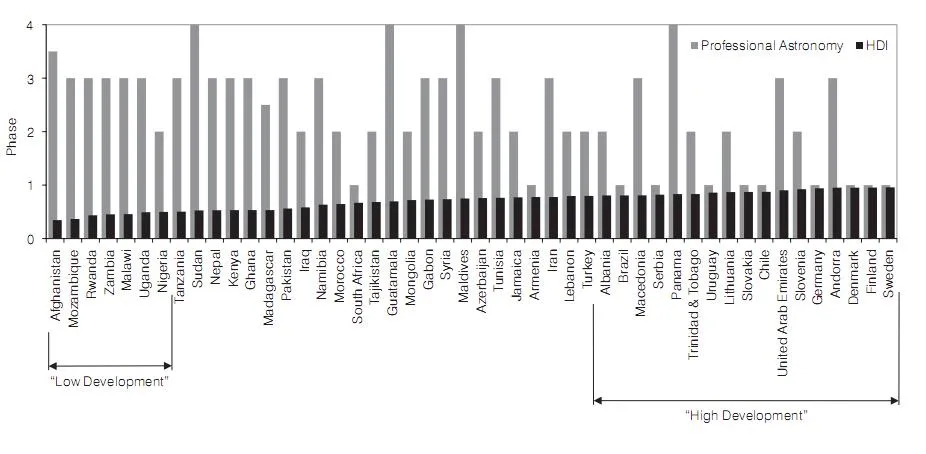
An HDI of 0.8 or more is considered high development. Below 0.5 is low development. However, it is incorrect to dismiss astronomy development activities in countries considered by the HDI as developed. Some of those countries may also need help to develop this science.
The power of the survey is that it reveals the need for development, but the ways to meet those requirements will depend on the level of each country (educational, political, etc.).
Improvements
Although only the SPoCs have the authority to approve changes to the official survey, it is important to record the comments and suggestions that arise in each state. Furthermore, this data can change over time, so it would be necessary to keep it updated to allow for a correct current view and also a historical view of the changes.
With this in mind, the GAS repository has changed to a website with a multilingual content management system (CMS) that allows recording objections, corrections, and changes.
Recommended use
1-People involved with astronomy can read the survey responses for their country and neighbors and try to collaborate with each other.
2-Educational and outreach organizations can use the survey to plan their initiatives more effectively
3-The IAU can use this data to inform future development projects
4-Sponsors who contribute funds or equipment can use the data to identify where to focus their efforts
5-Regional structures can be established with this information so that efforts in a region are optimized to benefit neighboring countries.
Among the South American responses, surveys from Brazil, Chile, Peru, Uruguay and Venezuela were received. In total, 58 responses are recorded as of July 2009.
To learn about the submitted responses, consult the surveys received.
Sources and related links
- Lolan Naicker, Kevin Govender (2009)
Towards a Global Baseline for Astronomy Development
in CAP Journal 7, November 2009, pp. 14-17. - Developing astronomy globally
About the images
- Credit for the graphs: DAG/IYA2009. Table: DAG/IYA2009 (translated by Gerardo Blanco)
- Map: DAG/IYA2009/Google Maps