Yesterday we talked about the live broadcast of the event in Italy. Today we detail its content.
The International Year of Astronomy 2009 (IYA2009) officially ended with a series of talks in the city of Padua, Italy, which were broadcast live over the internet.
The ceremony took place in the Aula Magna of the Palazzo Bo of the University of Padua. We can virtually tour the university's Aula Magna (requires Java). From the 16th to the 18th century it hosted the "Great School of Jurists" and lessons were given: Galileo Galilei also taught there, to whom the hall is dedicated today.
The welcome was given by Edoardo Vessentini, university authorities, the current president of the International Astronomical Union Robert Williams and the president of INAF, after which Catherine Cesarsky, former president of the IAU and a firm supporter of IYA2009, spoke. This concluded the first session, which continued after a break.
Next, Pedro Russo, coordinator of IYA2009, opened the II session and spoke about the 10 highlights of IYA2009:
- The global network: the final count indicates that 148 countries were involved in this event throughout the year.
- 100 Hours of Astronomy and Galilean Nights were two of the major projects that saw literally millions of people observing the skies.
- Internal bridges: IYA2009 helped people who don't normally work together to do so, creating internal bridges within the astronomical community
- Formal and informal education: IYA2009 was used as a platform to promote education at different levels
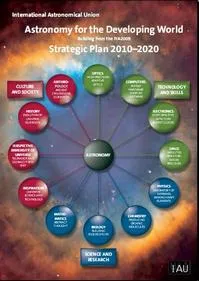
- Help for developing countries: 17 countries will receive aid to stimulate astronomy
- Non-traditional projects: The Year inspired concerts, images on trains, exhibitions of all kinds
- Numbers: Pedro put on his "white hat" to provide numerical data, among which he highlighted the 40 organizational nodes, the 12 Cornerstone projects, the 16 special projects, as well as the number of sponsors, news generated, etc.
- Media coverage: Examples of coverage in magazines and special editions were given. Social networks like Facebook and Twitter were mentioned.
- Reaching the community: It was very important that the Year reached professional astronomers, but also amateurs, educators and communicators.
- The proclamations of the IAU, UNESCO and the United Nations of the International Year of Astronomy gave it greater impetus and generated a global event.
Slides were shown during the different talks. And, in the case of those shown by Russo, the IYA2009 song made by a fan was used as background music.
Video: The song of the International Year of Astronomy 2009
http://www.youtube.com/watch?v=ekkW0K5t00U
Lars Lindberg Christensen, who managed the secretariat of the International Year, told what worked best in IYA 2009 and then some people who held the position of Points of Contact with the nodes or, in English Single Point of Contact, abbreviated as SPoCs (even though they don't have pointy ears), spoke at the annual and global event.
Six of them, from Mozambique, Egypt, Honduras, Vietnam, Ukraine and India, shared their experiences.
Then Vincenzo Gérgio, from Thales Alenia Space (sponsor of IYA2009) spoke about "unveiling the secrets of the universe". He talked about Thales' developments in Herschel and Planck and its contribution to ALMA and INTEGRAL.
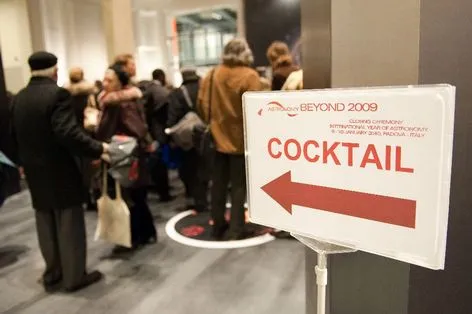
To conclude the session there was a cocktail and a concert that closed the first day of the closing of the International Year.
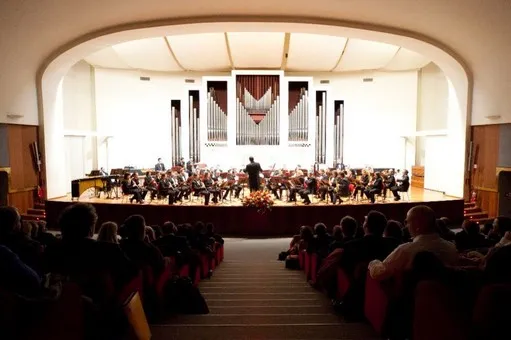
The beginning of the end
The second day began with the third session on Galileo's legacy.
Francesco Palla of INAF spoke; Enrico Bellone (Italian science communicator); and George Coyne, from the Vatican Observatory, who explained that "they learned the lesson".
After a break, the fourth session featured Giorgio Novello, Minister of Development, who spoke about astrophysics to achieve economic growth; Norio Kaifu, from the Japan Observatory, talked about the impact of the event on Asian society; and George Miley from Leiden University spoke about the importance of astronomy for education and development.
After lunch, the fifth session began with Isabelle Grenier (professor of astrophysics and researcher on the Fermi LAT telescope) on "astronomy at all wavelengths"; Roberto Gilmozzi, from ESO, spoke about large optical telescopes; Ron Ekers, from CSIRO, about large radio astronomy projects; and after a break the final session began.
Antonella Nota, from ESA, spoke about the future of space astronomy and Robert Williams from the IAU about the future of astronomy after IYA.
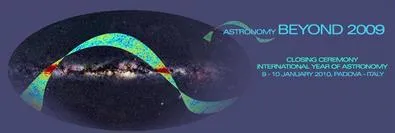
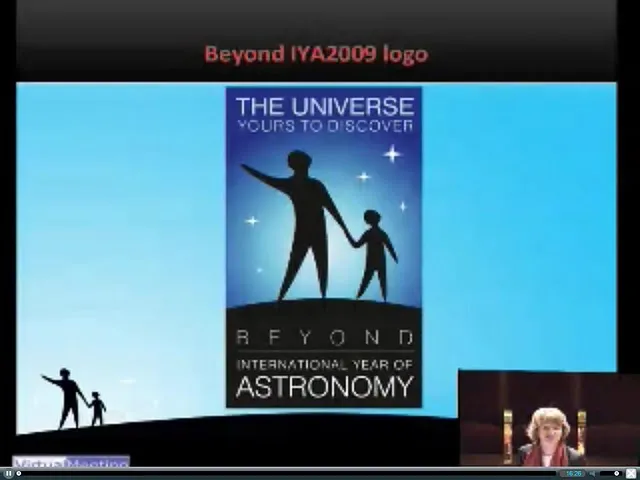
When closing the event, the logo of the International Year was shown with a slight modification, as it says "Beyond" the International Year of Astronomy, as a way to extend the event and its objectives beyond 2009. Hopefully the new logo will soon be available in the different national nodes, in Spanish.
This account of the sessions was possible thanks to the live broadcast of the events that I was able to watch, but since I couldn't see everything, thanks to the Cosmic Diary, created for IYA2009 and which, fortunately, will continue.
I hope the broadcast was recorded and will soon be available to watch again. Meanwhile, the astroblogger from Sri Lanka has a couple of videos of the ceremony on his YouTube channel.
Sources and related links
- Cosmic Diary
- International Year of Astronomy Argentina Node
About the images
- The images belong to Lee Pullen of CosmicDiary.
The image of the new logo is by Prasanna Deshapriya from http://iya2009sl.blogspot.com