To teach the phases of the Moon, is direct observation or a computer simulation better? A new study suggests that both methods are equally effective.
Furthermore, we take the opportunity to investigate the state of astronomy education in Argentina.
"These results give us confidence that computer simulations can be effective in the classroom. But now we need to study more to see if it works in other areas of science," said Kathy Cabe Trundle, author of the study and a science professor at Ohio State University.
While other studies examine the use of computers in classes, most only focus on ease of use. The few studies related to the effectiveness of computers in education have had mixed results, Trundle indicated. This study is an improvement because it compares people who used a simulation with those who had more direct observations.

The study was based on learning the phases of the Moon. Two of the taught aspects were equally effective by both methods and a third aspect was more effective using computers.
157 students training to become teachers for children participated in the study. The work seems to make sense because other studies have shown that most people, including this type of pre-service teachers and students, do not understand the phases of the Moon. For this, the pre-service teachers took a 10-week scientific method course that included a unit on the topic.
The course participants had to collect data themselves, either through direct observation or through computer simulation, and then analyzed their data to find patterns.
They divided the class into three groups: two of them used only one method and the third used both. 98% of the teachers showed that they understood the topic after the class.
Those who used simulations did just as well in learning the causes of the phenomenon and the shapes of the phases of the Moon. And they did a little better (than those who only observed) in understanding the sequence of the phases.

It is logical that to understand the phases of the Moon by observation, all the necessary information should be collected, observing the natural satellite for as long as necessary. In a course, time is limited and on cloudy nights it is not possible to acquire information, so, in the end, not all the required data is available.
On the other hand, the observation method consumes time and that is a valuable resource in education, the study indicates.
Personally, I believe a mixed method would be better. For example, using specialized software to understand the topic and then making observations to verify that it actually occurs in nature.
Those of us who are already grown up and are only now educating ourselves in observational astronomy know how valuable it would be to have early instruction.
On the other hand, Trundle indicated that simulations could be effective in teaching introductory biology. For example, students could take part in animal dissection simulations, avoiding the ethical problems of the practice. Other applications could be applied to "seeing" microscopic (or sub-atomic) particles, providing a better understanding of how particles interact.
"We are finding that technology can help students learn and understand scientific concepts in a way that might be easier for teachers and as effective for students," commented Trundle.
Simulators of the phases of the Moon

Some planetarium programs have this function integrated or via some script.
Other applications have this sole function and others simply indicate the phases by dates, which is not the same as a simulation, but can serve for that effect.
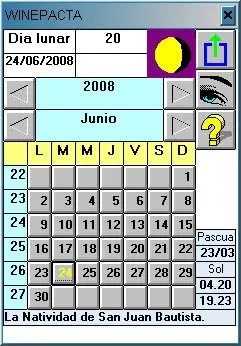
An example is Winepacta, a simulator of the phases of the Moon (AstroyCiencia).
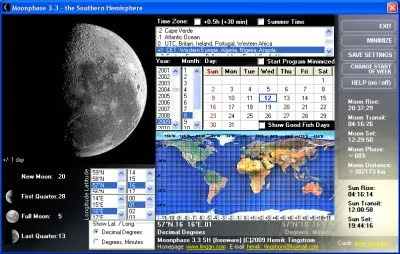
Another example is Moonphase 3.3, in English.
In Spanish and free Selene 3.0: it is a small application made by members of the Agrupación Astronómica Palentina. The program is completely free
Moon Phenomena is a script for Celestia.
The situation in Argentina
Some articles in education journals address the problem of using ICT tools in science. For example:
Creation of virtual learning spaces in the Basic Sciences area in Engineering careers
Eduardo Totter; Silvia Raichman
Revista Iberoamericana de Tecnología en Educación y Educación en Tecnología (TE&ET) Number 4
The Organization of Ibero-American States for Education, Science and Culture (OEI) has a page dedicated to Earth Sciences and Astronomy Resources from OEI, with a series of software for teaching these subjects.
Teaching astronomy to teachers

In Argentina, Dr. Alejandro Gangui, together with Prof. María Iglesias, developed a course on Didactics of astronomy last year aimed at teachers and students of Argentine teacher training colleges.
They also carried out a participatory activity for teachers at the 10th International Forum on Science and Technology Teaching, April 28-30, 2009, at the 35th International Book Fair, Buenos Aires.
Situational diagnosis of primary school teachers in training regarding some astronomical phenomena
A.Gangui, M.Iglesias and C.Quinteros, oral contribution presented at the I International Congress of Specific Didactics, Center for Studies in Specific Didactics, School of Humanities, National University of San Martín, June 19, 2008 arXiv:0809.0013v1
In summary, here they conducted a survey of future teachers to establish the state of the situation:
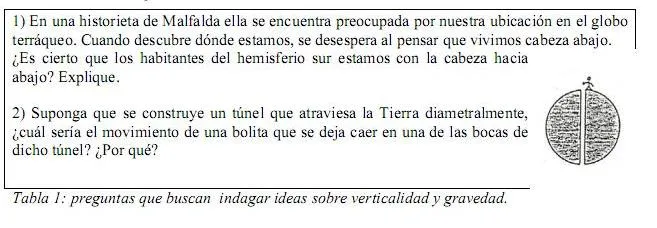
In our project we propose to contribute to the situational diagnosis of primary school teachers in training, with the purpose of developing didactic tools that contribute to improving their formal education. We work with a written and open questionnaire –although it also includes some closed questions– designed to reveal the most frequent explanatory models for a select but representative group of basic astronomy notions. In this project we work with primary school teachers in training. None of the respondents "dared" to give an explanation without feeling sure of their answer. And so, they justified themselves by not remembering the topic in question. And many of them assured –and were even surprised– that they had never noticed that the Moon always shows us the same face.
For the Bulletin 50 of the AAA Asociación Argentina de Astronomía
(BAAA, Vol. 50, 2007) they wrote the article:
Scientific literacy: astronomy in school
Where they conclude that
It is necessary not only to adequately train future teachers in astronomy topics but also to offer teaching situations that explicitly show how to face these learning obstacles.
Astronomy at school: present situation and future perspectives
Astronomy in the school: current situation and future perspectives
Maria Iglesias, Cynthia Quinteros, Alejandro Gangui arXiv:0807.0418v1
There they conclude that:
Some difficulties of students (and children in general) in astronomy topics were pointed out. Similar inconveniences are to be expected in the case of teachers in training (and even in scientists, who do not necessarily know how to transmit our knowledge). [...] Some possible interventions to consider could be: Scientists and trainers, do they work together? Is that work valued? Perhaps it would be good to do so. The training of teachers, when they are still "students," should not be neglected. Later it becomes more difficult.

The movement of the heavens: A pedagogical proposal for teachers of secondary school secundaria arXiv:0903.1387v1
Here they present a didactic sequence about some astronomy issues. It is intended for secondary school teachers, so they can bring it to the classroom.
The various articles by Gangui on ArXiv can be consulted.
Gangui has written several articles on the subject, for example:
The movement of the heavens: A pedagogical proposal for teachers of secondary school
Alejandro Gangui, Ciencia Hoy, Vol 18, Nro 106, pp. 58-62, 2008
They can be consulted on Gangui's personal page dedicated to the didactics of astronomy.
Sources and related links
- Computer simulations can be as effective as direct observation at teaching students
- The use of a computer simulation to promote conceptual change: A quasi-experimental study
Kathy Cabe Trundle and Randy L. Bell
DOI:10.1016/j.compedu.2009.10.012
http://www.elsevier.com/wps/find/journaldescription.cws_home/347/description - Using a Planetarium Software Program to Promote Conceptual Change with Young Children
Sally M. Hobson , Kathy Cabe Trundle and Mesut Saçkes
Journal of Science Education and Technology
10.1007/s10956-009-9189-8
September 2009 - The use of a computer simulation to promote scientific conceptions of moon phases
Randy L. Bell, Kathy Cabe Trundle
Journal of Research in Science Teaching
Volume 45 Issue 3, Pages 346 - 372
10.1002/tea.20227 - Plummer, J.D., Zahm, V. and Rice, R. (Accepted). Inquiry and Astronomy: Preservice Teachers? Investigations in Celestial Motion. Journal of Science Teacher Education.
Accepted in Journal of Science Teacher Education papers/
About the images
- Image from Moonphase 3.3
- Image from Winepacta. Credit: Pep Cardona