The catalogs released to the public on March 30 contain the positions and luminous flux of more than 1.3 million sources detected by its instruments.
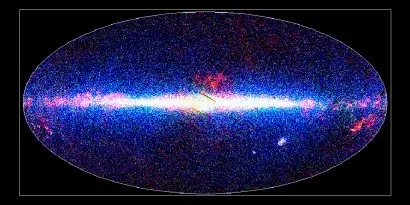
The new catalogs are called AKARI-IRC "Point Source Catalogs" (of point sources), for the IRC instrument (Infrared Camera), and the AKARI-FIS Bright Source Catalog (of bright sources) made with the Far-Infrared Surveyor instrument.
With the first instrument approximately 870 thousand objects were detected and with the second about 430 thousand.
These data are a significant advance over previous all-sky infrared surveys produced by IRAS, since the Japanese satellite was able to determine the locations of stars with a precision of arcseconds (instead of arcminutes) and is ten times more sensitive than IRAS.
According to Alberto Salama, an AKARI scientist at ESA, "Many of the objects detected by AKARI and contained in these catalogs will be candidates for future investigations in far-infrared and submillimeter wavelengths with Herschel." Thus, the new data will be very useful for astronomers preparing the next opportunity, in May, to propose observations with Herschel.
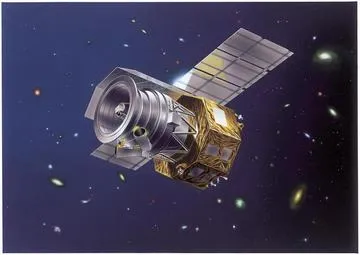
AKARI is Japan's first infrared astronomical satellite, launched in February 2006. On August 26, 2007, the spacecraft's liquid helium ran out and it entered the "hot" phase, something similar to what is currently happening with Spitzer. The helium was required to keep the instruments cold enough so that the heat from objects observed in infrared would not be "contaminated" by the heat of the instruments themselves.
The mission, in addition to generating these catalogs, has been revealing secrets of the cold and dusty universe, from splashes in rivers of cosmic gas and dust to supernova remnants.
See: Results from the Akari infrared space telescope.
A series of articles on AKARI will be published in an upcoming special edition of A&A, among them:
Evolution of Infrared Luminosity functions of Galaxies in the AKARI NEP-Deep field. Revealing the cosmic star formation history hidden by dust
Goto, T. et al.
Astronomy & Astrophysics arXiv:1001.0013v2
Star-galaxy separation by far-infrared color-color diagrams for the AKARI FIS All-Sky Survey (Bright Source Catalogue version beta-1)
Pollo, A. et al.
arXiv:1003.1949v1
Star formation and dust extinction properties of local galaxies from the AKARI-GALEX all-sky surveys: First results from the most secure multiband sample from the far-ultraviolet to the far-infrared
Takeuchi, T.T. et al.
arXiv:0912.5051v1
The AKARI/IRC mid-infrared all-sky survey
The AKARI/IRC mid-infrared all-sky survey arXiv:1003.0270v1
Sources and related links
AKARI produces two new infrared all-sky catalogues
AKARI Point Source Catalogues Public Release
Selected highlights from preliminary studies with the AKARI all-sky catalogues
About the images
Infrared vision of AKARI. Credit: JAXA
Illustration of AKARI. Credit: JAXA