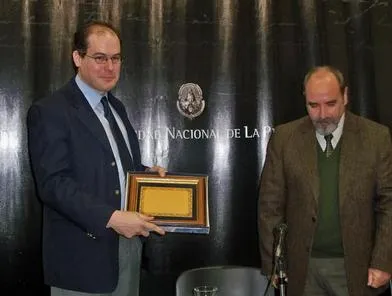
The Minister of Science and the Secretary of Scientific-Technological Articulation will participate today in the celebrations for the 60th anniversary of the National Atomic Energy Commission.
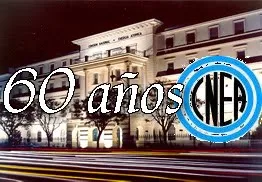
The National Atomic Energy Commission (CNEA) is an autonomous body created on May 31, 1950, although activities related to atomic energy had begun a couple of years earlier with the failed Huemul Project.
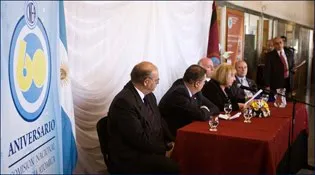
The celebrations for the six decades of CNEA's existence began in mid-May, in the Northwest Regional office (Salta). Celebrations were also held in the Central Regional office, in Córdoba, and in the Patagonia Regional office, in Trelew.
At the various events, the president of CNEA, Lic. Norma Boero, reviewed the main achievements of CNEA during its first 60 years of existence and highlighted the projects resumed after the launch of the nuclear plan in 2006, which demonstrates the importance of the Government once again defining State policies for the sector.
Today's event will be at the Ezeiza Atomic Center, which will be visited by the President of the Nation, who will tour the facilities together with the Minister of Science, Lino Barañao.
Contributions of CNEA
Since the very beginning of its activities in the peaceful uses of Nuclear Energy, Argentina has paid special attention to issues related to nuclear safety.
The country adhered to the RERTR Program (Reduced Enrichment for Research and Test Reactors), from which all of Argentina's research and radioisotope production reactors now operate with low-enriched uranium, which in some cases involved a technological effort to convert the core of the corresponding reactors.
Argentina has exported research and radioisotope production reactors to Peru, Algeria, Egypt and Australia and plants for manufacturing fuel elements and producing Mo-99, always with low-enrichment technology, which strengthens our commitment to non-proliferation and nuclear safety.
Furthermore, CNEA completed the integration of the power Solar Panels for the Argentine satellite mission Aquarius/SAC-D, under a collaboration agreement with the National Commission for Space Activities (CONAE) which, in turn, has support from the National Scientific and Technical Research Council (CONICET) and the National Agency for Scientific and Technological Promotion.
Last year, CNEA signed a tripartite agreement with Nucleoeléctrica Argentina SA (NA-SA) and Atomic Energy of Canada Limited (AECL) to expand a series of nuclear collaboration programs related to the CANDU 6 reactor and the development of the advanced CANDU reactor (ACR-1000).
The CANDU atomic fuel, whose generation stages are achieved from uranium: from a rock containing this mineral; through the stages of uranium purification; until achieving the CANDU-type nuclear fuel.
CANDU uses natural, non-enriched uranium oxide (0.7% U-235) as fuel. This type of fuel is manufactured at CONUAR S.A., an Argentine company with 33% of its shares in state hands, through CNEA.
This fuel is used at the Embalse Nuclear Power Plant, in Río Tercero, Córdoba.
Benefits and risks of atomic energy
Among the advantages of using this type of energy are nuclear medicine and the technological transfer of innovations to other industries. And undoubtedly the possibility of creating weaponry is the worst scenario, which is why this type of energy has earned a negative connotation. In between, with less agreement, is the use of nuclear energy to generate electricity, in particular, due to its impact on the environment.
Greenpeace has raised objections by stating that "The new nuclear plant approved by the deputies is the most expensive method to produce energy and combat climate change".
But there are also other environmental groups in favor of nuclear energy.
Ultimately: it reduces the consumption of fossil fuel reserves, generating much more energy with a very small amount of fuel.
But there is a high risk of contamination in case of an accident. Radioactive waste is produced that is difficult to store. There is a high cost for the installation and maintenance of nuclear power plants. And it can be used for non-peaceful purposes.
Sources and related links
CNEA: Events for the 60th anniversary began
Infobae.com: The President will lead an event in Ezeiza for the 60 years of CNEA
Fisicanet: The peaceful uses of nuclear energy
Concienciaytrabajo: Nuclear energy in Argentina
La Prensa: Argentina, in the nuclear top ten
About the images
Logo and image of CNEA. Credit: CNEA.
Image of event in Salta. Credit: CNEA