Minister Lino Barañao agreed with his Brazilian counterpart, Aloizio Mercadante, to develop projects related to the construction of a Synchrotron Light Source.
Brazil's Minister of Science arrived in Argentina as part of the delegation of President Dilma Rousseff, on an official visit.
Through the signing of this document, both countries commit to jointly develop projects related to the construction of a Synchrotron Light Source.
Research and development work will be carried out in the areas of accelerator physics, beamlines and experimental stations. Furthermore, it seeks to promote the exchange of researchers and students, joint training and the development of technologies.
But what is a synchrotron and what is it for? Do other countries also have them?
A synchrotron is a particle accelerator used as a light source. The particularity of synchrotron light is that it covers the continuous range between infrared and X-rays. This radiation is very useful for scientific research and has applications in fields from physics and chemistry to medicine and biology.
Spain has the ALBA synchrotron. Germany has DESY, Brazil has its LNLS. France, the USA, Italy, Japan, Switzerland, Canada, Sweden, England, and other countries also have their own.
It is used in physics to study the atomic structure of fluids and solids, in chemistry to analyze and improve reactions, in medicine for radiotherapy, in materials science to study matter at the nanometric scale. It is also used in the study of fossils and complex molecules. It is characterized by the use of non-destructive methods.
Regarding the Spanish synchrotron, there is an article from OIE: Synchrotron: Light for everything. The article Keys for the synchrotron from El cultural can also contribute.
Institutional Video of the Brazilian synchrotron LNLS
http://www.youtube.com/watch?v=xXHukfUpXcI
Interview with the Minister of Science
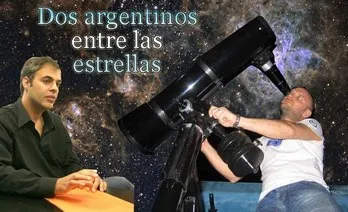
Adrián Paenza interviewed Minister of Science Lino Barañao in the first program this year of the cycle Científicos Industria Argentina. Among the statements I consider notable, the head of the portfolio created in 2006 stated that "Today it would be politically incorrect not to have a ministry of science"
They also talked about science policy, words that seem disconnected and are not at all. In this regard, Barañao declared that "Politics is the art of the possible" and that science "is the art of the solvable. Science policy is finding the possible solution to a given problem".
On whether to emphasize basic or applied science, the minister stated: "If you will, researchers have emerged who do basic science, who have been publishing in Nature, and have a patent worth hundreds or thousands of dollars. This shows that there is no dichotomy between basic and applied science", he emphasized.
Likewise, I allow myself to say out loud that, in my opinion, there is a strong efficiency-oriented view of science when planning. Perhaps I am wrong, but I do believe there is a search for applicable results. And I don't think that's bad. Undoubtedly, there are concrete problems in social and industrial reality that can well have a scientific solution. I think that's very good. More than good. But achieving a balance is complicated because money is not abundant. If it were focused exclusively on science with that criterion, what place awaits astrophysics, for example?
The criteria, surely, will be broader and more complex. Perhaps this month I can conduct an interview to delve into this point.
The minister also stated that the country today invests 0.52% of GDP in science and that to reach 1% (in response to Paenza's question on the matter) he indicated that private contribution is also needed, not just State contribution.
"In 2003, when I started with the agency, we had distributed across all projects, both public and private, 30 million dollars, today we have 300. We have multiplied by 10", he highlighted.
He emphasized that "there is a direct relationship between the investment and the human resources we have to carry the projects forward. We have 9,500 scholarship holders, there have never been so many scholarship holders nor so well paid".
But he immediately invoked a harmonious growth for the system, as there must be space to dedicate to it. He subordinated it to coordination to avoid imbalances, on the grounds that "otherwise, bottlenecks appear that make the investment become inefficient".
Since the program Científicos Industria Argentina airs only on Saturdays at 11:40 on Televisión Pública, it's possible many have not seen it. Here I leave the program divided into four parts. The interview with Barañao takes place in the first and third blocks.
Científicos Industria Argentina 11-01-11
http://www.youtube.com/view_play_list?p=BE7F95B545630F2F
Sources and related links
- Lightsources.org
- Press room- Science: sign cooperation agreement with Brazil
About the images
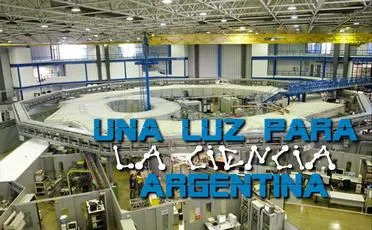
- Image of the LNLS, Brazil.