The calendar and customs in the social fabric.
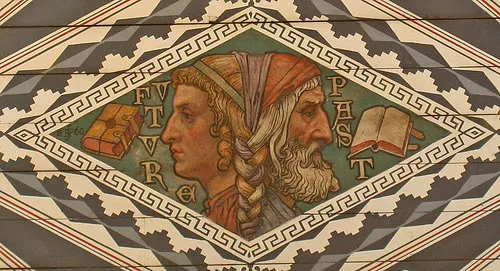
Publius Ovidius Naso was born in what is now Italy (Sulmona) in 43 BCE. Ovid, as he is known, was a Roman poet.
Two of his most important works were Metamorphoses (in which he compiles Greco-Roman myths) and the Fasti, an unfinished work in which he explains the origin of the names of the months and the festivals in the Roman calendar.
The Fasti (which means "Calendar") consists of six books, each about the first six months. The remaining books were not written due to the poet's exile by Emperor Augustus.
It is a work that has been classified as didactic poetry in which the poet used elegiac couplets or distichs, which are stanzas that rhyme with each other, in this case a hexameter and a pentameter.
In each book, he will have a god explain the origin of the month's name and its cult, drawing on knowledge of mythology, history, and astronomy. However, the poet's astronomical knowledge is scarce.
These books have reached Our Era through multiple editions. Today it is possible, though difficult, to obtain a Gredos edition with introduction, translation, and notes by Bartolomé Segura Ramos, dating from 2001. I will take that work here as a reference. Indications of the type (I 195) indicate the book and paragraph of that work.
The first book deals with January, a month associated with the god Janus.
Ovid explains the origin of the Latin calendar as a creation of the city's founder, Romulus, who "decreed that there be ten months in the year." Apparently, there was a Latin calendar of ten months associated with the gestation period. In that calendar, the first month was Mars, then Venus. (I 30-35)
So Mars was March (first month of the year), Venus was April (assuming this name comes from Aphrodite, the name of the Roman Venus). Then the poet alludes to the third month as the name of the old ("maiores," meaning "elders" is May) and the fourth, that of the young ("Iuniores," June).
July was called Quintilis (from fifth), August was Sextilis (from sixth) and the rest continue the series with ordinal or numeral names.
Ovid tells us that "Numa did not forget either Janus or the shades of the ancestors and added two months to the original ones".(I 40)
Numa Pompilius was the second king of Rome, successor to Romulus.
And so we arrive at the twelve months.
January
The poet asks the god Janus to make himself present, to which the two-faced god agrees. Ovid will then ask him questions.
Janus explains his origin (Chaos) arising from the four elements of Anaximander.
And he accounts for his figure: "Every door has two twin fronts, on one side and the other, of which, one looks at the people and the other, in turn, at the household god. And just as your doorkeeper, sitting by the threshold of the main entrance, sees the exits and the entrances, so I, the doorkeeper of the celestial court, see at once the part of the East and the part of the West." (I 135)
The poet asks him why the New Year begins with the cold. And Janus replied: "Winter is the first of the New Year and the last of the old; Phoebus and the year take the same beginning". (I 160)
Ovid asks: "Why are words of congratulation spoken on your calends and do we make and receive vows mutually?"
The two-headed one answered: "Omens are usually found in beginnings. To the first word you direct your fearful ears, and the bird that first saw is the one the augur takes into account; the temples and the ears of the gods are open, no tongue utters perishable vows, and words have weight". (I 175)
The translator explains in the notes that the Romans were seriously concerned that the first name pronounced on solemn occasions or the name of the person acting first be of good omen.
But the poet wanted to know more and asked him about the meaning of the dates and wrinkled figs and honey, offered to the god.
"The reason is the omen: that a similar taste persevere in things and that the sweet year finish its undertaken path". (I 185)
Ovid asked Janus to add the reason for the coin (which was part of the offerings).
"Oh, how little you understand your century, if you think that honey is sweeter than getting a coin! (I 190)
(...) But once the fortune of this place raised its head and Rome touched the supreme gods with its crown, riches grew and the mad desire for wealth, and however much they possess, they crave more. They compete to gain in order to consume and to replace what is consumed, and the same virtues serve as fodder for their vices. (...) Now money is valued: fortune gives honors, property, friendships; the poor are beaten down everywhere". (I 205)
From here the poet will explain the festivities as special days.
Day 3: The stars
The poet will praise the "astronomers" and their task. Is it possible to maintain this view today? (The bold is mine).
"Who prevents us from also speaking of the stars, how each one rises and sets? This is part of my promise. Happy the souls who were the first to occupy themselves with knowing these things and ascend to the mansions above! One can believe that those raised their heads above both vices and human places. Neither Venus nor wine, the duty of the forum or the toils of campaigns, broke their sublime breasts. They were not tempted by light ambition nor glory clad in tinsel nor the craving for great riches. They brought the distant stars to our eyes and subjected the firmament to their genius. (...) We too, under their guidance, will measure the sky and assign their days to each wandering star".(I 295-310)
New year, old life
It is worth reflecting then that the calendar we use is a convention, a rule, created in Rome in ancient times. But today, so "modern" as we are, we basically use the same rule and worship multiple gods and riches. And in this modernity, Rome still dictates its rules...
The calendar is a symbolism: it is the end of one cycle and the beginning of another. However, year after year, for centuries, those "new lives" have served only to do more of the same.
The past that Janus looks at is alive, although many look the other way. And the future is an unborn child, a child who will be born later. Paraphrasing Brecht: We should alert the men and women yet to be born (ourselves, in 24 hours) about how we have spent our time, how we have lived. Are we satisfied? Or have we tied ourselves to so many rules, norms and laws, has our life become so automated and routine that we don't even have time to realize it? The calendar is also a prison.
This blog in 2014
This ending year I have allowed myself to ask: what is astronomy today? What is it "for"? What is its "utility", its objective, its motive and its consequences? How is astronomy done today? Who does it and for whom is it done? Or, again, in Brecht's terms, who does astronomy belong to?
On that train of questions I embarked already at the end of 2013, after having finished the coursework of a complementary cycle in Audiovisual Communication at UNSAM.
Throughout 2014 I will dedicate myself to that general theme through different opinions I have been able to gather. I also intend to learn the thinking of other people directly or indirectly related to the topic.
Another issue I will address in this "new year" will be the public communication of science in the mass media, a topic I also began to develop in 2013. The idea is to trace in which public discourses "traces" of magical thinking can be found.
Other topics that continue to be of interest to me and to which I like to give space here is local and regional research in astronomy with the goal of making visible the work in these latitudes, often undervalued.
As a corollary, I announce that the "Multimedia Selection" that was published here for three years on Sundays will cease publication. I really enjoyed doing it and I always found it stimulating to find ways to relate different materials to some underlying theme. However, I want to dedicate time to other matters. On the other hand, pre-formatted and cyclical actions generate a certain mechanization that restricts creativity and bores.
Sources and related links
- Fasti on Wikipedia
- Ovid, Fasti, on Theoi
- The Roman calendar, on iesfuente.org
- Ovid, Fasti. Introduction, translation and notes by Bartolomé Segura Ramos. Editorial Gredos, Madrid, 2001.
About the images
- Janus: Detail of paintings on the ceiling of Waltham Abbey church, UK, depicting Janus facing the past (an old man with an open book) and the future (a youth with a closed book). on Flickr, by Steve Day.