I briefly analyze here the discourse of the series Aliados and Señales del fin del mundo in relation to the circulation of supernatural discourses that, in my view, arise from a mistaken diagnosis of reality.
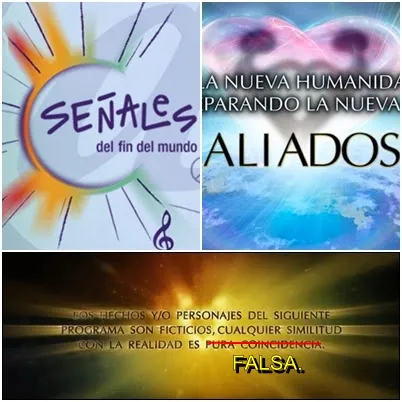
Aliados and Señales del fin del mundo are two series broadcast on Argentine television during 2013. The first has ended and the second has just begun. Analyzing discourses requires the meticulous, systematic, and methodological viewing of them based on a theoretical framework.
What follows is not exactly that, but a preliminary (undoubtedly superficial) analysis that focuses on the supernatural elements and not on other aspects of these series.
According to the TV Pública website, Señales is (bold emphasis is mine)
A musical series that tells the loves, dreams, ambitions, and rivalries of Catalina and a group of young people attending an arts school in Laguna Deseada. The life of the town is transformed by the sudden arrival of two identical boys, Adrián and Leo, cloned beings from another highly technological dimension but empty of human emotions. With the support of her family and friends, Catalina helps the twins hide their secret identities and guides them in their emotional awakening as they discover love, make friends, and are caught up in the passion for music and dance. But she will soon realize her essential mission: to prevent the twins from being detected by a powerful organization that wants to seize their secret to invade the planet.
Laguna Deseada is to the series what La Lucila was to Clave de Sol, by Maestro and Vainman, broadcast on Canal 13 between 1987 and 1991. And this location, along with the characteristics of the characters, socially places the discourse in what we could call the "middle class."
But unlike that series (and others by those authors like Montaña Rusa), Señales is also a musical series, which allows it to be related to American productions (always fond of musicals) that have had local counterparts like Aliados.
According to the Canal Fox website, Aliados is:
A series full of adventure, unconditional love, trials, transformations, egos, desires, death, and rebirth. It is a reunion between the Universe and Earth. Seven Beings of Light, sent by "The Great Creator," will join seven Human Beings, totally opposite to them. The humans and the allies have a mission: "To awaken to awaken the world without getting lost along the way."
On the Telefé website, it is possible to learn the profile of the characters, for example, that of Luz is (bold emphasis is mine):
Luz is one more of the billions of non-physical life forms that inhabit the causal world.
The causal world exists as our thoughts exist. It is a space-time of pure ideas where the atmosphere is as subtle for human perception as the tree is for fish.
Luz will live, for the time she spends on earth, inside the soul of Azul, her mission.
Her most developed chakra is the throat chakra. Her predominant musical note is G.
She is sweet, compassionate, generous, loyal, sincere, a counselor, helpful, extremely feminine, polite, grateful, sensitive. She is the complete opposite of Azul.
And we see what it says about Ambar:
Sirius is a planet of extraordinary dimensions, inhabited by beings of very low stature, who live in large spaces, where nature predominates. Cities do not exist; no superior being would build places to crowd together having so much green life within reach.
Ámbar is a different teenager, restless, full of questions. She loves science, machines, technology, and everything her family never did nor wanted to do. Her parents are dedicated to the earth, to the trees, to the birds, to the connection with nature and with their suns.
Among these small and wise beings, Ámbar is the one who most resembles her rudimentary human cousins. She is the only young person in her entire world who wants to be a little taller, at least about fifty centimeters above the average one meter that everyone has. It's not about wanting to feel superior, it's just because she would like to know what it feels like. Ámbar always wants to feel new things.
In Señales, the two main protagonists are Catalina (Micaela Riera) and Eme (Macarena Paz). They are supported by characters like Sofía (Sofía Pachano) who is:
Cata's friend. Unpredictable, dreamy, optimistic. Lover of astrology and esotericism, she sees "signs" in everything. She falls in love with Leo. Her ex-boyfriend, Santiago, will try to separate them.
Leo (José Areco) is one of the clones: Shy, conciliatory, and cautious, he blindly trusts Cata and usually obeys her. He falls in love with Sofía.
In both cases, we can find traces in their discourse linked to what has been called the "New Age," characterized by a revitalization of magical thinking and divination, the principle of interconnectedness, and an illogical relativism whereby, since there are no absolute truths, every path leads to the truth equally. It is an anti-scientific stance. Of course, it is NOT an anti-capitalist stance.
The question of verisimilitude
I have wondered why I find these discourses harmful, when other messages that have similar characteristics do not seem equally damaging to me. For example, Harry Potter or The Lord of the Rings undoubtedly have "magical" elements, but it seems to me their discursive "effects" are different. Why?
I don't have it entirely clear, but it seems to me that in those novels and films, the stories are set in a very distant space-time, less "realistic," more distant from the verisimilar. On the other hand, the "supernatural" appears there as more "tangible": there are monsters and magic wands, trees that talk and walk.
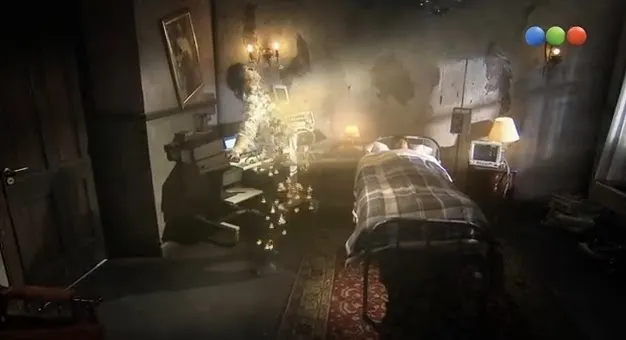
In contrast, in Aliados the supernatural is subtle, appealing to concepts like indigo children (see the character of Devi), to "sensations."
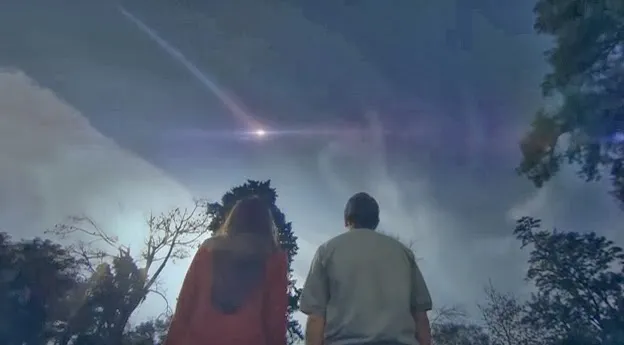
In Señales, the supernatural is also camouflaged in human life: the clones seem like human beings, they are hard to distinguish. The "evil" is associated with the human, like an organization trying to seize these clones and their power. They are "scientists": they study the lake in search of "gamma radiation." In the Lake, it is said, a meteorite fell (just as actually happens in real life and always awakens "mysteries"). But such a meteorite is not a "celestial phenomenon," it is something else, what that organization was waiting for...
There's something of "The X-Files" in these series, with the difference that in that series besides Fox Mulder (the believer) there was Dana Scully who countered the arguments of the character played by David Duchovny through reason and the scientific method.
The agents not only had to uncover "mysteries" linked to the supernatural (people with "powers"), but also had to deal with a group of powerful men ("The Syndicate") who wanted to seize that "alien" knowledge.
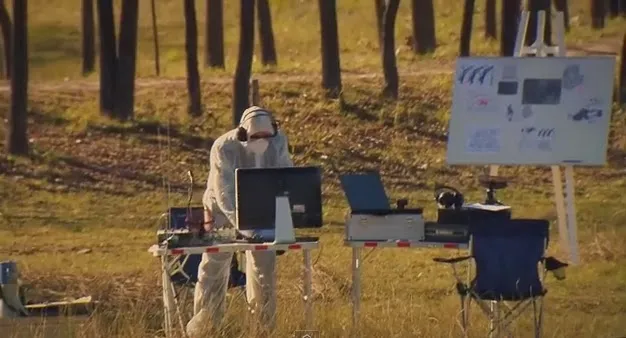
In the Argentine youth series Aliados and Señales, human evil appears as a dark power related directly or indirectly to science and technology. In contrast, artistic expressions "enlighten" the characters.
And in both cases, they appeal to the idea that a supernatural world exists, but they are no longer clearly differentiated "monsters" that we have never seen (vampires, orcs, etc.), but rather those magical elements are part of daily life, they are "other senses" that are also a "sign" of a "change of era." There's something of millenarianism, apocalyptic ideas and New Age mixed together and confronted with orthodox scientific knowledge. They appeal to an "awakening" but not of material life, but to an immaterial dimension.
Both in Aliados and in Señales, they appeal to the value of feelings and emotions, which is very good. They also appeal to the artistic abilities and talents of the characters as a way to "free themselves" and express themselves. It doesn't seem questionable to me.
A diagnosis of the world
I think I read in these discourses a dichotomy between the scientific and the emotional, which is also the opposition between the rational and the irrational, the naive and the skeptical, the optimistic and the pessimistic.
For some theorists, these are typical elements of postmodernism, which would be not a change in the production system (which remains the same), but a different perception of the world, as a continuation of the avant-garde movements (Dadaism, Surrealism) and pop art.
Interestingly, on the series' Facebook page, this image is included:
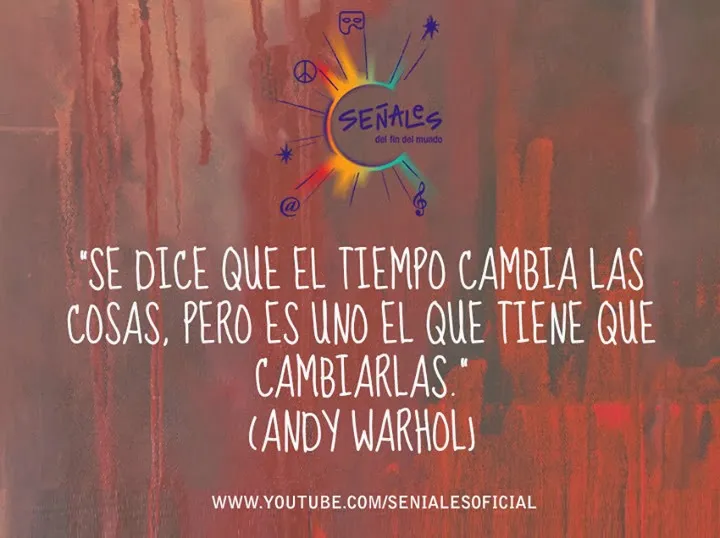
It seems to me that the message behind these series is the opposite of what we might interpret from that phrase literally.
The phrase is from The Philosophy of Andy Warhol (1975), chapter 7 (see English Wikiquote). Some interview fragments were compiled in another book, which Página/12 reported on in Radar.
Warhol was an icon of "modern" culture, without ideology, without social commitment, but with the firm desire to "be someone" based on the gaze of others, to be recognized. He wanted to be famous and rich. He wanted to be "the star of that place" (New York).
In chapter 4 of Señales...(16-12-13, 38:00) Eme rehearses a choreography with a song that says (see on YouTube):
"Step aside
Let me pass
I am the queen of this place
(chorus) She is the queen of this place
I don't know what it is to lose
I only know how to win
I tell you what's right
I tell you what's wrong
(chorus)
The boys, the girls look at me, also everything I do is news on CNN (ci-en-en)
I'm so beautiful I don't stop kissing myself I know the whole world wants to be with me
They follow me on Facebook
They follow me on Twitter
They follow me wherever I go because I am the leader
Oh, oh, I am the best...
the queen of the world...
Señales makes noise. A part of the young audience seems to like it (despite the low ratings) in the same way as Aliados or Glee. We sing, we dance and we are all happy. It's a formula, a marketing product, a series discourse.
In fact, in 2010 the production of the series "Señales, una aventura de otro mundo" was announced, by Andrea Stivel and AMJA. It was announced that the cast would include Mónica Ayos and, among others, the twin brothers from the current series. You can see the pilot of that series on YouTube whose plot is clearly identical to the series now produced by Yair Dori. And at that time it was indicated that such a series was going to be a sort of "Glee" for Latin America.
In these series, there is a supernatural message that infiltrates as plausible among songs and dance steps. False ideas that go against the possibility of change are naturalized. Because if the world is as it is because there are "supernatural forces," then it doesn't depend on us. It is the product, the commodity, the object of desire and ideal reflection for the times we live in. All mixed, ambiguous, ahistorical, de-ideologized, extreme relativist, deconstructed, post-structural, seasoned with tradition and charisma. Optimal for middle-class youth. It pairs perfectly with mobile devices obsolete after five uses and clothes that because they have five studs are "Neo-Punk" which means "nothing."
Young people are not stupid, but they are susceptible, receptive, easier to "buy." At least in the program "Una tarde cualquiera" (which seems aimed at an older audience) there is debate, which will often be weak or superficial, but at least there are questions. In Señales there's little music. Go for it.
Sources and related links
- TV Pública site about Señales del fin del mundo.
- Fox Channel site about Aliados.
- Telefé site about Aliados
About the images
- Images taken from the Señales and Aliados sites.