What is the relationship between Einstein's physical relativism and philosophical or cultural relativism? What "social" stance did the German physicist take? A century after the publication of the General Theory of Relativity.
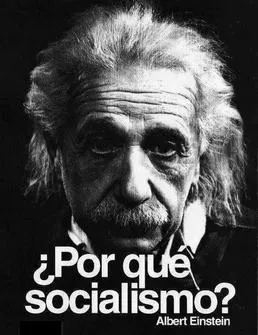
Almost a century ago, in November 1915, Einstein published his "Field Equations"[1]. A decade had passed since his Special Theory of Relativity, which did not reconcile with Newton's gravity. That agreement would come with the General Theory.
The German physicist's Theories of Relativity (and quantum mechanics) are often associated with philosophical relativism.
There are different modern philosophical relativisms. Scientific thought can be considered relativist insofar as it is not absolutist, dogmatic. If reality shows that theories are wrong, they must be changed.
Another form of relativism is extreme subjectivism by which it is considered that the world is as it seems to us, individually, therefore, everything is different, nothing is the same.
From the latter stems another current that, when asked: Why is the world the way it is? will answer that the world is that way for an infinite number of particular reasons, without "general reasons." Paradoxically, these ideas coexist with those that assume the state of the world is due to the "nature" of the human being, supposedly selfish due to biological evolution.
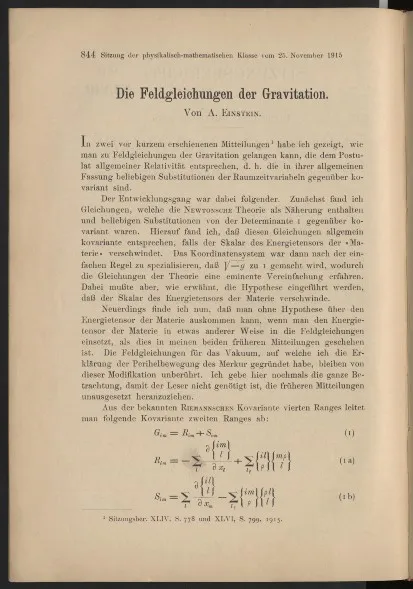
But Albert Einstein, when he asked himself the same question, answered differently. In the first issue of Monthly Review (May 1949) he published an article titled "Why Socialism?" [2a], "¿Por qué el socialismo?" [2b] from whose translation I will quote some paragraphs:
(...) It may seem that there are no essential methodological differences between astronomy and economics: scientists in both fields strive to discover laws of general acceptability for a circumscribed group of phenomena to make the interconnection of these phenomena as clearly understandable as possible. But in reality these methodological differences exist. The discovery of general laws in the field of economics is difficult because the observation of economic phenomena is often affected by many factors that are hardly evaluable separately. Moreover, the experience that has accumulated since the beginning of the so-called civilized period of human history—as is well known—has been influenced and limited largely by causes that are by no means exclusively economic in their origin. For example, most of the great states of history owed their existence to conquest. The conquering peoples established themselves, legally and economically, as the privileged class of the conquered country. (...)
Now I have reached the point where I can briefly indicate what for me constitutes the essence of the crisis of our time. It concerns the relationship of the individual with society. (...)
The economic anarchy of capitalist society as it exists today is, in my opinion, the real source of the evil. We see before us a huge community of producers who are incessantly striving while depriving themselves of the fruits of their collective labor—not by force, but in general in faithful conformity with legally established rules. In this respect, it is important to note that the means of production—that is, the entire productive capacity necessary to produce consumer goods as well as additional capital—can legally be, and for the most part is, the private property of individuals. (...)
The result of this process is an oligarchy of private capital whose enormous power cannot be effectively controlled even in a politically organized democratic society. This is so because the members of legislative bodies are selected by political parties, largely financed or otherwise influenced by private capitalists who, for all practical purposes, separate the electorate from the legislature. The consequence is that the representatives of the people in fact do not sufficiently protect the interests of the non-privileged groups of the population. Moreover, under existing conditions, private capitalists inevitably control, directly or indirectly, the main sources of information (press, radio, education). It is thus extremely difficult, and indeed in most cases absolutely impossible, for the individual citizen to obtain objective conclusions and make intelligent use of his political rights.
The situation prevailing in an economy based on the private ownership of capital is thus characterized mainly: first, the means of production (capital) are privately owned and the owners dispose of them as they see fit; second, the labor contract is free. Of course, no pure capitalist society exists in this sense. In particular, it should be noted that workers, through long and bitter political struggles, have succeeded in securing a somewhat improved form of "free labor contract" for certain categories of workers. But taken as a whole, the present economy does not differ much from "pure" capitalism. Production is geared toward profit, not toward use. It is not guaranteed that all who are able and willing to work can find employment; there is almost always an "army of unemployed." The worker is constantly in fear of losing his job. Since unemployed and poorly paid workers do not provide a profitable market, the production of consumer goods is restricted, and the consequence is great hardship. Technological progress frequently produces more unemployment instead of lightening the burden of work for all.
The profit motive, together with competition among capitalists, is responsible for an instability in the accumulation and utilization of capital that leads to increasingly severe depressions. Unlimited competition leads to a huge waste of labor, and to that amputation of the social consciousness of individuals that I mentioned before.
I consider this mutilation of individuals the worst evil of capitalism. Our entire educational system suffers from this evil. An exaggerated competitive attitude is instilled in the student, who is trained to worship acquisitive success as preparation for his future career. (The bold is mine).
It is advisable to read the entire article so as not to stay only with these excerpts. Is Einstein "relativist" here? The proclaimed genius does not respond with postmodern evasions, but with forceful answers about the evils of modernity. He responds from modernity with a critical sense not based on magical thinking, but on scientific thought, but applied to social relations. He does not object to rationality, but to the way (objective, intention) of using it.
http://issuu.com/noticiadecreacion/docs/83.-einstein._porque_socialismo/3?e=2005122/31132419
And he concludes that note by pointing out (it does not appear in the translated text): "Since under present circumstances the free and unhindered discussion of these problems has come under a powerful taboo, I consider the founding of this magazine to be an important public service".
The fact that by 1949 socialism is a "taboo" is interesting. Particularly because it seems to still be so within the scientific community. Many of those who talk big or spew ink appealing to scientific knowledge or critical thinking from a perspective of rationality and logic detached from social problems should reread Einstein before a century passes since that publication in Monthly Review.
The German physicist points out at the end that a planned economy is not yet socialism and asks how to prevent centralized power from becoming a bureaucracy. It is worth thinking about it today, when the political class does not speak of socialism and has the union bureaucracy as a caboose.
Monthly Review First Issue by Viron Papadopoulos
https://www.scribd.com/doc/238130739/Monthly-Review-First-Issue
SCIENCE AND PROPERTY: THE ELUDED PROBLEM
If we take a speech by another contemporary astrophysicist-cosmologist, Stephen Hawking, we will see that he recently made statements similar to what was highlighted in that text by Einstein, when referring to technological development and unemployment.[3]
Neither one nor the other can be considered "experts" in matters of economic policy, but both establish that the underlying problem is the private ownership of the means of production.
That is why scientific-technical development cannot be addressed separately from that issue. Note that in the speeches of those who present themselves as supposed experts, with "technical teams" and "experience" for management, that is, the political class, that point of view is eluded.
And if nothing is said about it, it is because they have already taken a clear position in favor of the owners of the means of production, although later the political class tries to differentiate itself over issues that are more about form than substance.
Therefore, their differences are "relative".
True progress can only occur after a real debate, instead of continuing to choose among the false options offered by the capitalist class.
And to have that debate, an "inertial reference system" will have to be chosen: either the independent political movement of the workers or barbarism.
Sources and related links
[1a] Einstein, Albert (November 25, 1915). «Die Feldgleichungen der Gravitation». Sitzungsberichte der Preussischen Akademie der Wissenschaften zu Berlin: 844–847.
Presentation before the Prussian Academy of Sciences.
http://nausikaa2.mpiwg-berlin.mpg.de/cgi-bin/toc/toc.x.cgi?dir=6E3MAXK4&step=thumb
Links accessed on November 4, 2015.
[1b] The Field Equations of Gravitation (1915) Wikisource.
[1c] Wikipedia: The Foundation of the Generalised Theory of Relativity https://en.wikisource.org/wiki/The_Foundation_of_the_Generalised_Theory_of_Relativity
[1d] Die Grundlage der allgemeinen Relativitätstheorie, in Annalen der Physik, Volume 354, Issue 7, pages 769–822, 1916.
DOI: 10.1002/andp.19163540702
[2a] Why Socialism?.Albert Einstein. Monthly Review No. 1, May 1949.
[2b]Why Socialism?, translated into Spanish on Marxists.org.
[3] Science AMA Series: Stephen Hawking AMA Answers! on Reddit https://www.reddit.com/r/science/comments/3nyn5i/science_ama_series_stephen_hawking_ama_answers/cvsdmkv
Lanacion.com.py: At one hundred years, Albert Einstein's theory of relativity remains valid http://www.lanacion.com.py/2015/10/19/a-sus-cien-anos-la-teoria-de-relatividad-de-albert-einstein-continua-vigente/
About the images
Albert Einstein Why Socialism? Fundación Editorial El perro y la rana