On predictions, prophecies and forecasts in the media.
It is common to find articles in the media at the beginning of the year in which journalists try to foresee the future in political, economic or technological matters, for which they usually resort to experts in each field.
For example, with all due distance from a mass media outlet, here I published a note before the end of the year, previewing some of the space missions and astronomical phenomena of 2017.
Here I pause briefly: I have been consulted about notes appearing in different sources indicating that this would be "the year of the comet," suggesting that throughout the months several comets will be visible to the naked eye.
In all cases, seeing a comet is difficult, as they are not very luminous objects.
As we know, the luminosity of an object can be thought of as apparent or as "absolute." The latter, that is, the real and objective luminosity, is the amount of energy emitted by an object in a certain period of time.
The apparent or visual magnitude arises from the relationship of that value with the distance of an observer. We see the Sun as very bright, much more so than the other stars, not because it is inherently more luminous, but because it is much closer than, for example, the star Sirius.
Comets, like planets, do not emit their own light, but reflect starlight. As part of the Solar System, they are much closer than the stars, but their relative size makes them faint luminous objects.
It is taken as a reference value that if an object has an apparent magnitude equal to or less than 6, it is visible to the naked eye. This is not entirely true due to light pollution in urban centers.
Therefore, generating high expectations for comet observation, when only some, very few, can actually be observed with the naked eye, is counterproductive.
In several cases, observation requires instruments such as telescopes and cameras can also be used to record the passage of comets across the sky. Although it is beautiful to observe comets, it requires some knowledge and experience. This does not mean it is so difficult as not to try, but overstating expectations, I insist, is almost a fraud.
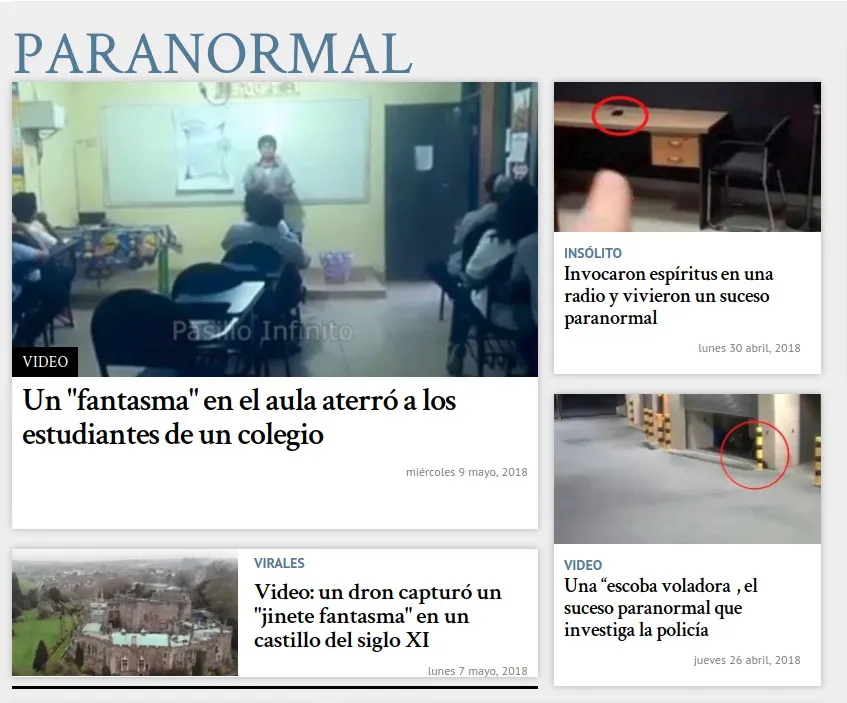
However, another type of forecast is pseudoscientific, that is, those that could be considered true by the public, although they lack evidence and research provided by scientists.
In this regard, I was sent a comment (because it is not a question, but an assertion) that compares astrology with weather forecasting, complaining -in passing- about the little certainty provided by meteorology experts.
Here, then, is a reflection on the matter.
FORECASTS, PREDICTIONS AND PROPHECIES
We could well concede that the words "forecast" and "prediction" are the same (synonyms), although the former is usually used in scientific contexts and the latter in discourses that are not, but this is not always the case. In contrast, the words "prophecy" and "divination" are usually related to pseudoscientific discourse.
In any case, they are discourses about future events, arising from some knowledge (real or fanciful).
How to know when a discourse of such characteristics is scientific and when it is not?
A false answer is that one can know the "scientificity" of a discourse about the future based on the results. If it is correct, it is scientific and true; if it is not "guessed," it is false.
But this is not so. A discourse about the future can be verified, but be a result of chance. For example, if I said that Messi will score a goal with his hand this year and then that happened, I would have "guessed right," but it is in no way a scientific forecast.
Because for a forecast to be endorsed by science, the main thing is not that the result matches, but that the method used is scientific.
With scientific methods, however, it is possible to be wrong. There are no perfect human beings. Scientific forecasts are ALWAYS approximations and have margins of error.
This does not imply that it does not matter whether one is right or not. Of course, we all surely want meteorological forecasts to be more precise, but they are valuable first and foremost because one can explain how they are made. They do not arise from someone's fantasy or their dreams or from evaluating the relationship between humidity and bone pain, but from a climate model together with data acquired by instruments. Hence the importance of funding meteorological institutions so they can build, acquire and use radars, satellites and other equipment for data acquisition.
We must consider that although there is previous data, such as relative values of temperature and humidity in certain regions during certain times of the year, and radar images indicating possible electrical formation, it is certainly difficult to forecast where and when lightning strikes that cause fires in dry areas will fall. And it is more difficult when weather conditions evolve towards values where the situation becomes complex to manage. The speed of the weather can be greater than the speed of human action and reaction. And certainly, when this happens, it is easier to get angry with the forecasters of the moment than with the political class. It is a mistake, since it is the officials who must provide scientists with adequate instruments and logistics to deal with critical situations.
Hence the importance of demanding in the presentations of candidates for elections by the parties what kind of scientific policy they will carry out, which disciplines they believe should be considered a priority, etc.
What happens in reality is that both candidates and citizens do not give science the importance it has, until the chips are down...
PREDICTIONS
On the contrary, pseudoscientific predictions, what are they based on? What data is acquired and what models are used to interpret such data? It seems that journalism forgets to ask the second question to astrologers.
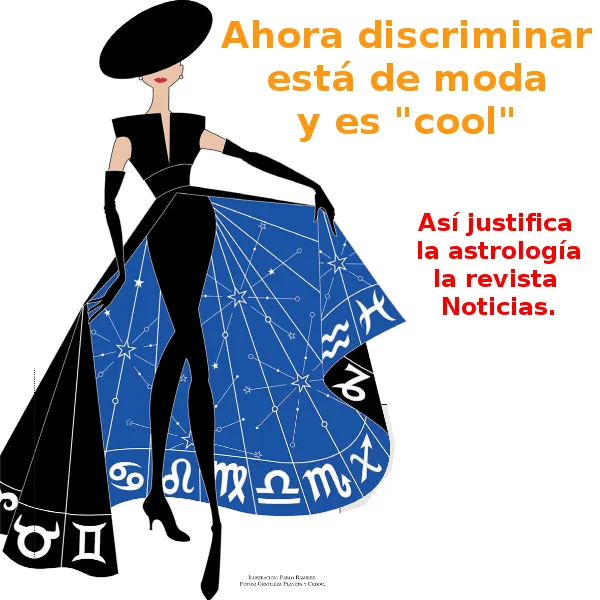
The astrological "model" is based on relating planet-gods with supposed characteristics solely by virtue of ancient Greco-Roman mythology.
Therefore, it is of little importance whether they are right or wrong, just as it is of no importance whether I was right or wrong with the previous sports prediction. Being right or wrong will be -in these cases- pure coincidence, that is, it has no value whatsoever.
The ambiguity of these discourses, moreover, makes any forecast impossible, so they are also useless.
So are those who publish them in those pamphlets that, like "Diarios de Irigoyen," interpret reality based on their desires and on media bootlicking.
For the reasons stated, weather forecasts are not "like an apocalyptic prophecy."
About the images
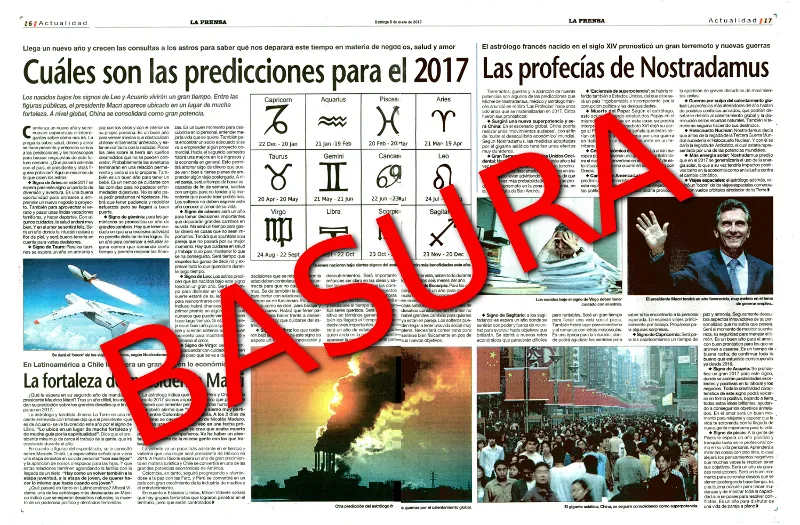
Scan of newspaper La Prensa, 08-01-2017, pp 16-17.